
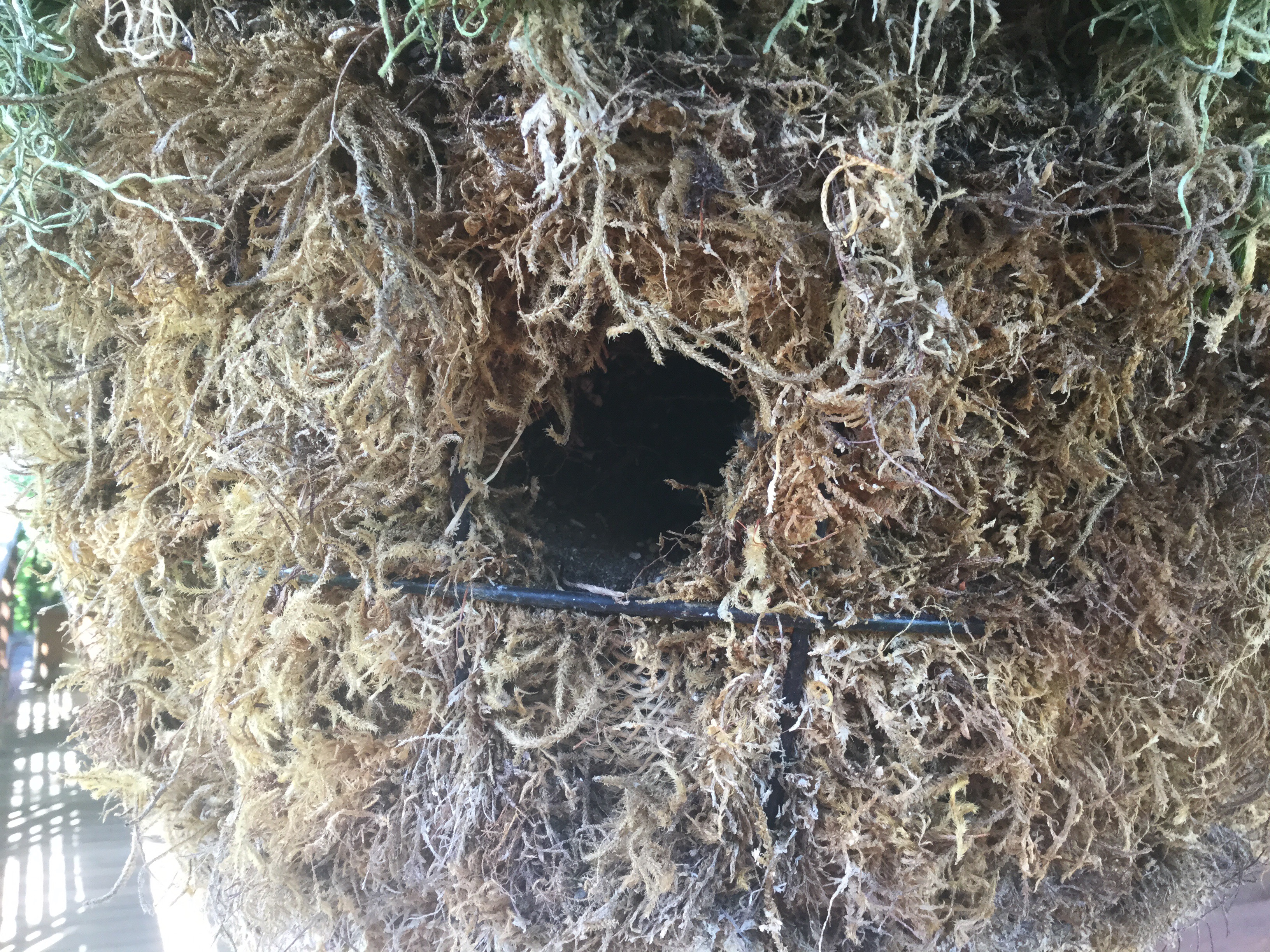
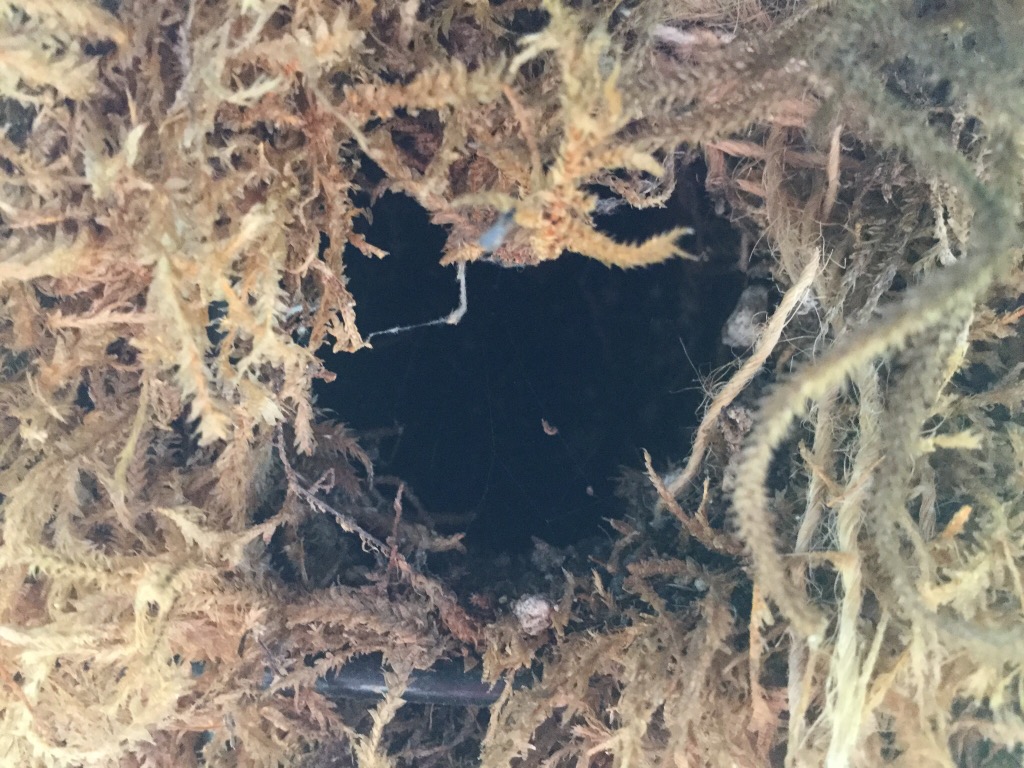
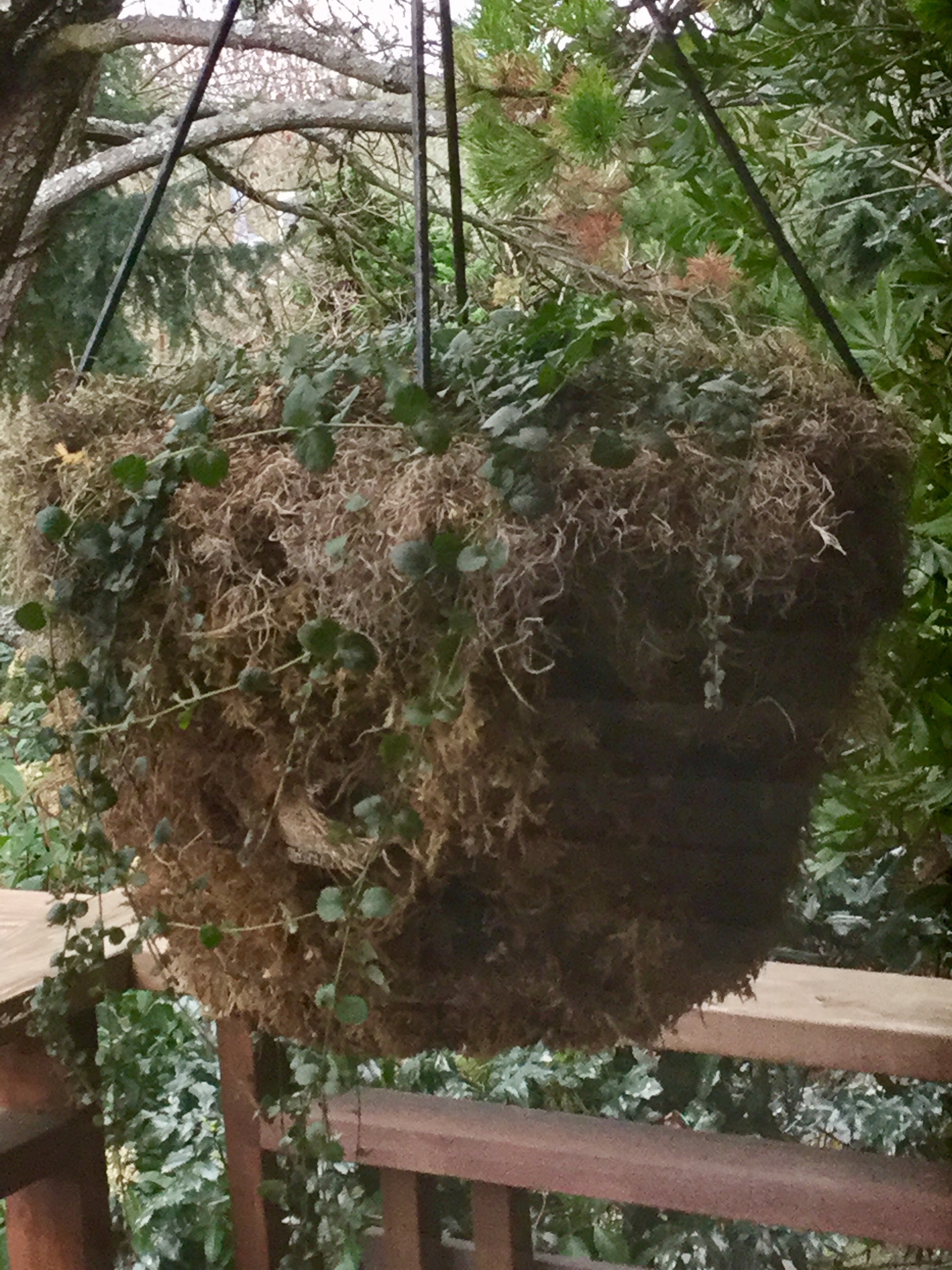
At least the wrens and maybe chickadees. The wrens have long commandeered our three hanging baskets for their hostels to sleep in overnight, except for when they are nesting. These are perfect shelter in that they hang just under the roof of the covered deck, and are heavy so they don’t swing in wind. Being within deck territory, they are predator-free. There are 3-6 holes in each which are about 1 1/2 ” wide x 3-5″ deep, horizontally oriented into the planters, dug through the moss, burlap and soil in the planter, to make individual little lofts. A couple are a little bigger, maybe they hold three or so.
I recently rehabbed these planters specifically for the wrens, and shored them up with new moss and burlap but made sure to avoid damaging the wren holes. I added garlands of Spanish moss wired along the rim, topped them each with extra soil and sand, and planted Yerba Buena vines, which grow better than most things there. When I water the plants, the water seems diverted around the wren holes, so they might be sealing them. Below are pix: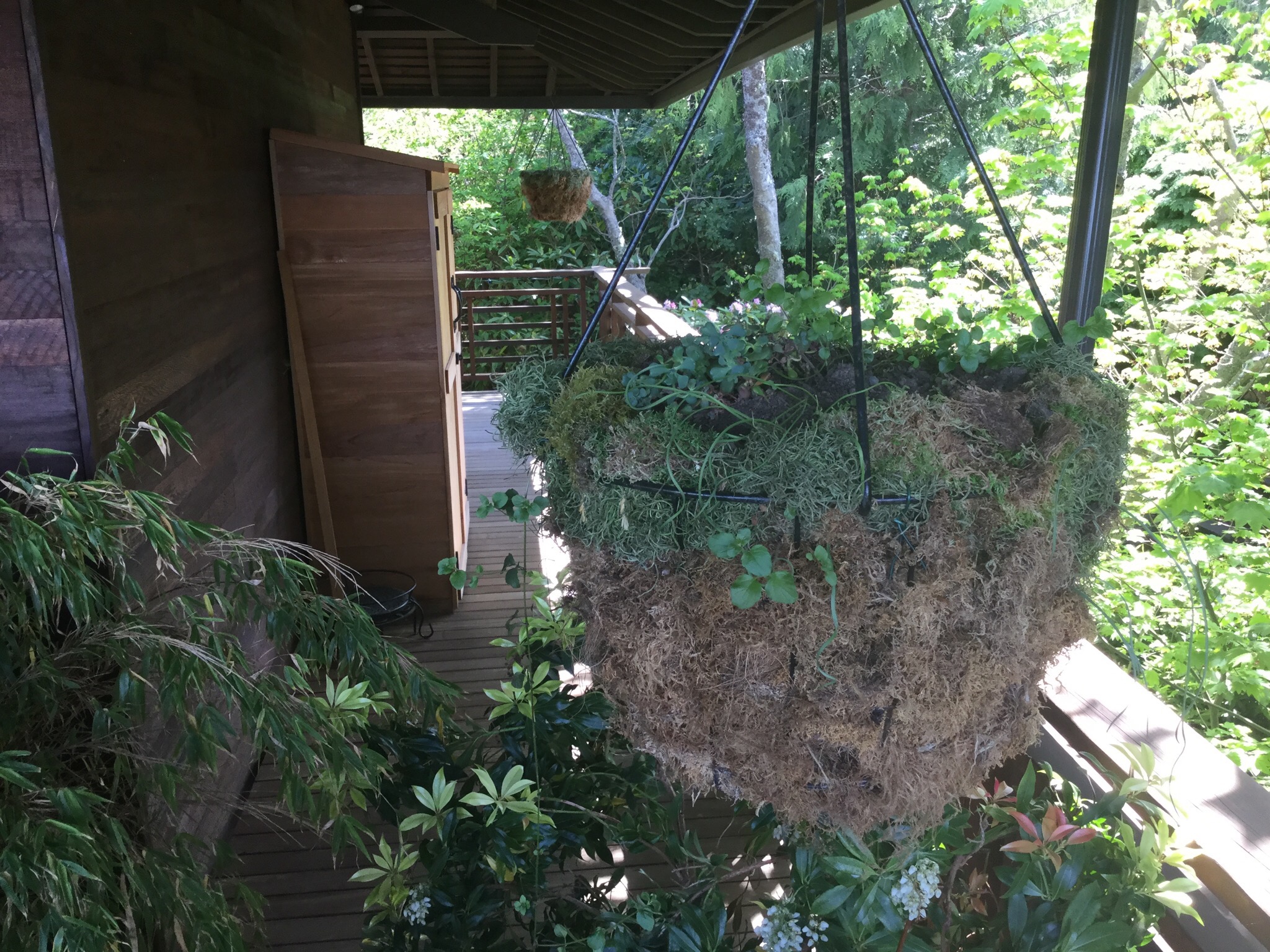
Now I’ve made a more formal abode for any leftover wrens that haven’t found a hole. I know there are a bunch of wrens out there but I don’t know where they all roost. It’s freezing weather off and on (now on) the last week or so, so I thought I’d provide some extra emergency shelter for them.
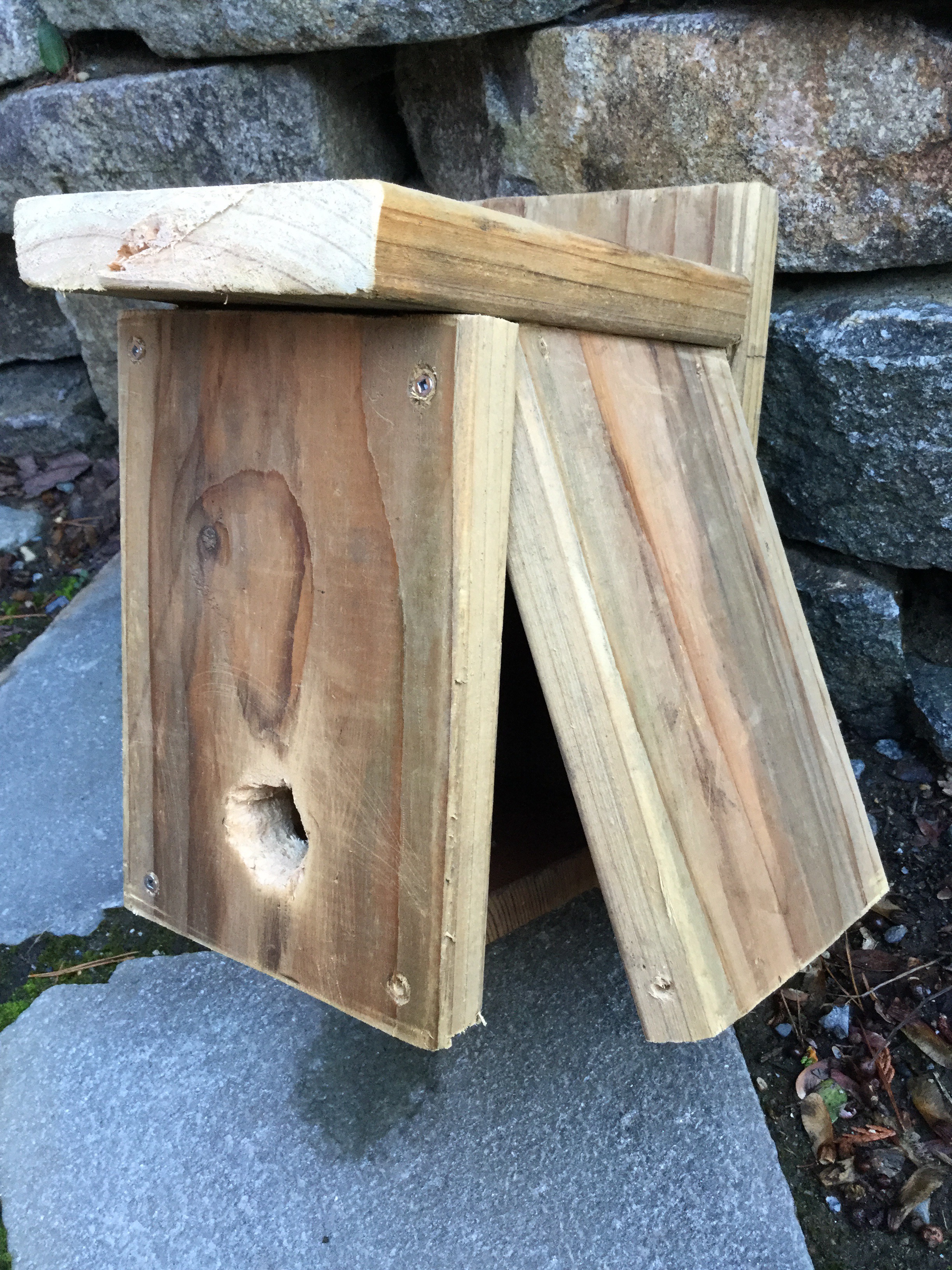
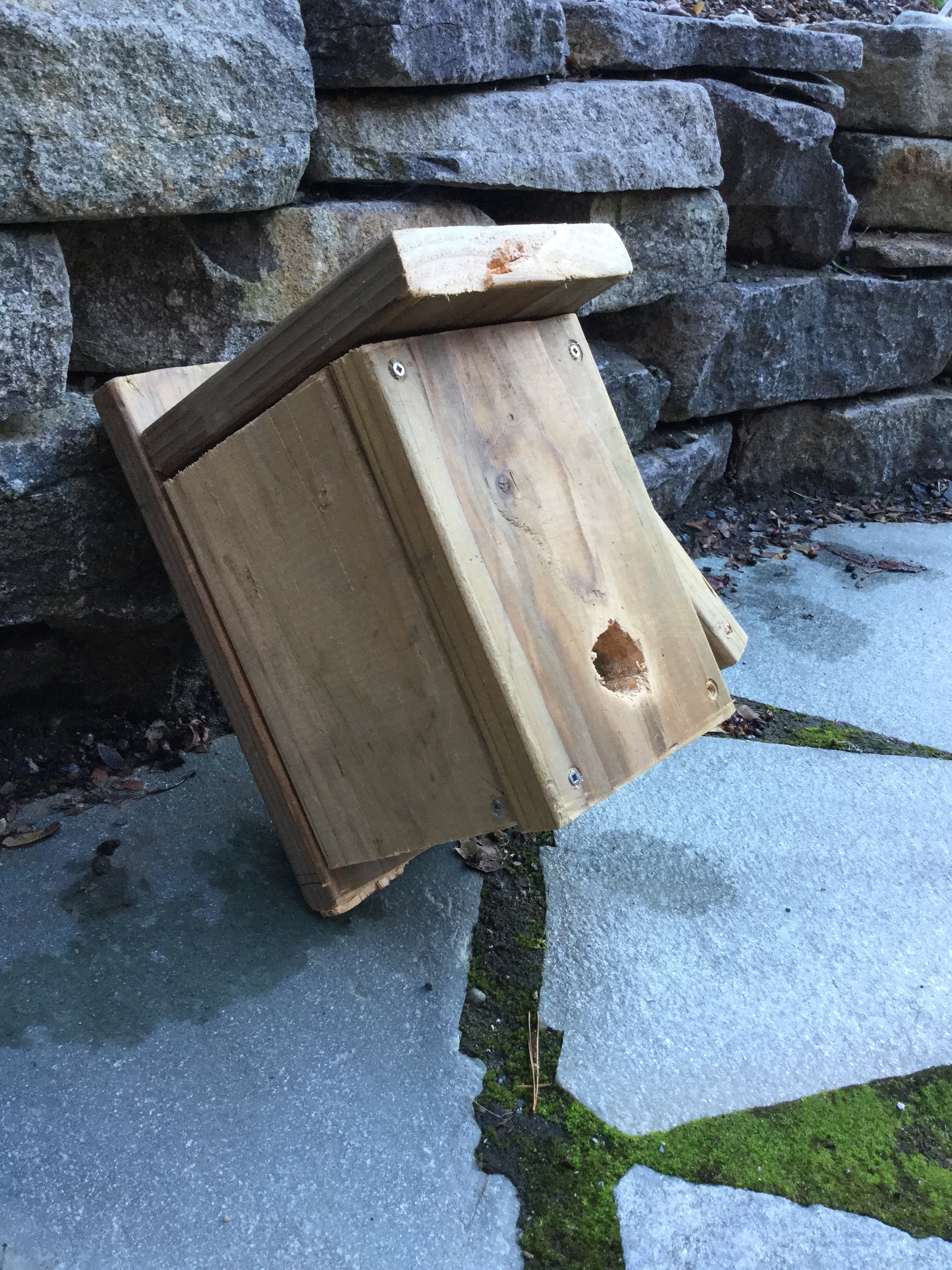
So I made a ROOSTING BOX for the wrens, wth provisions for possible chickadee use. The specs for these birds are 1 inch thick walls, 4 x 5 1/2 inches base by 8 inch height, with overhanging roof. One of the side panels swings out a bit for cleaning, secured during use by birds. Right now, I left it unsecured so I can figure this out. Roosting and nesting needs are different, so there is a twice a year clean out and modification for nesting purposes.
For Roosting:
1.the hole for bird entry should be towards the bottom, so that the rising heat generated by the congregation of shivering birds doesn’t just go out a hole at the top. Some bird types can lose up to 10% of their weight overnight from keeping warm in very cold climates.
2. Some sites advise adding pegs/dowels for perching, but other sites say that wrens and chickdees don’t need perches and that they are detrimental by encouraging their competitors. The birds sleep on the floor, and on each other as they add up. Apparently the largest number of wrens observed coming out of a bird box was 31, presumably from a larger house than mine.
3. You can add wood shavings, grass, or other material, as long as it doesn’t risk obstructing the hole and trap birds. Short yard pieces or animal hair and fur are recommended. There are some who convert bird feeders to nesting/roosting material dispensers, and in fact these are now available commercially. I put short thin strips of old t shirt to just cover the botttom.
4.The hole size of 1 inch will limit admission to wrens. A hole size of 1.125 inches will also allow chickadees, but not destructive house wrens, sparrows or other competitors.
5.No perch on the outside either, to limit larger competitors.
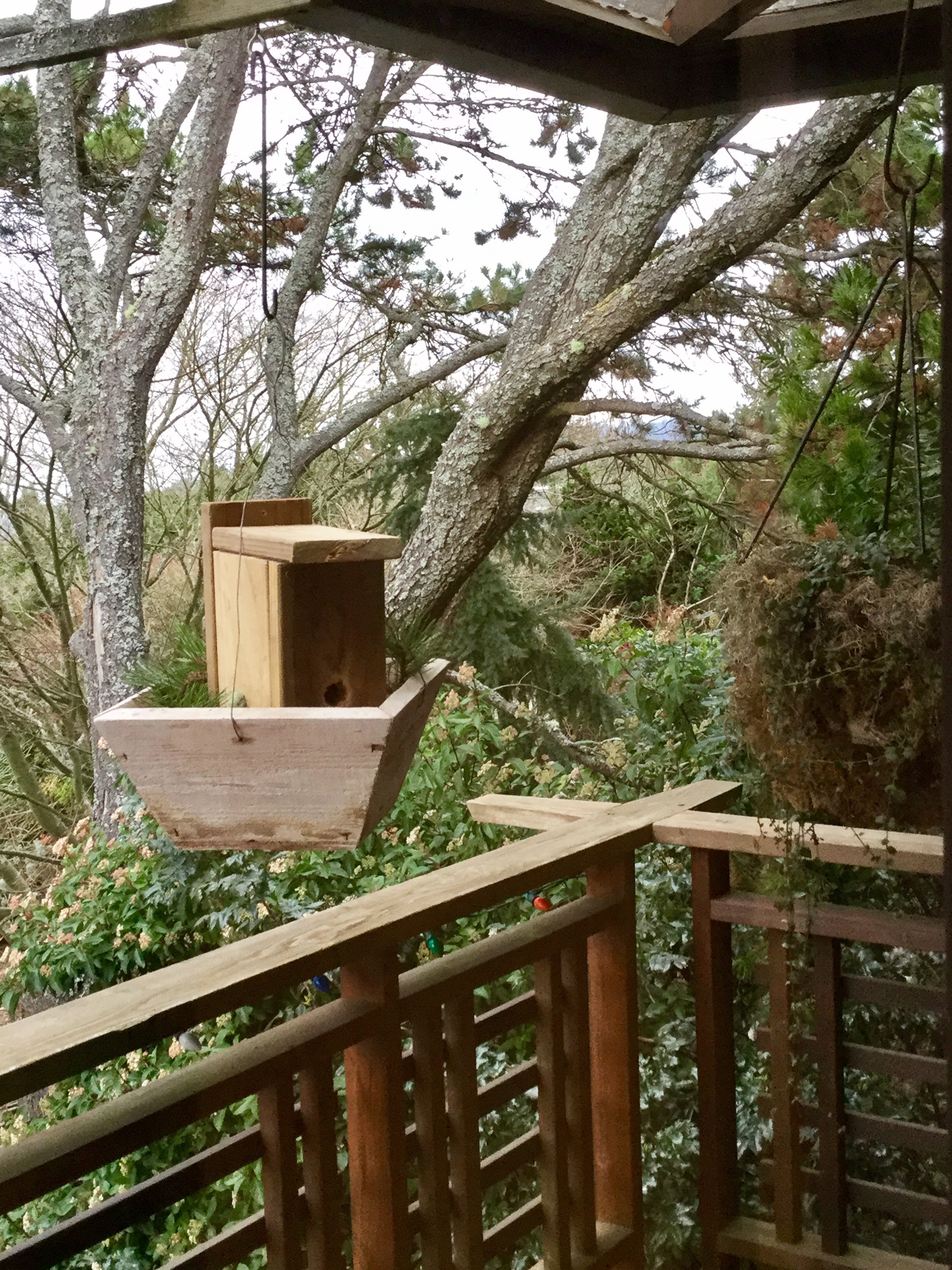
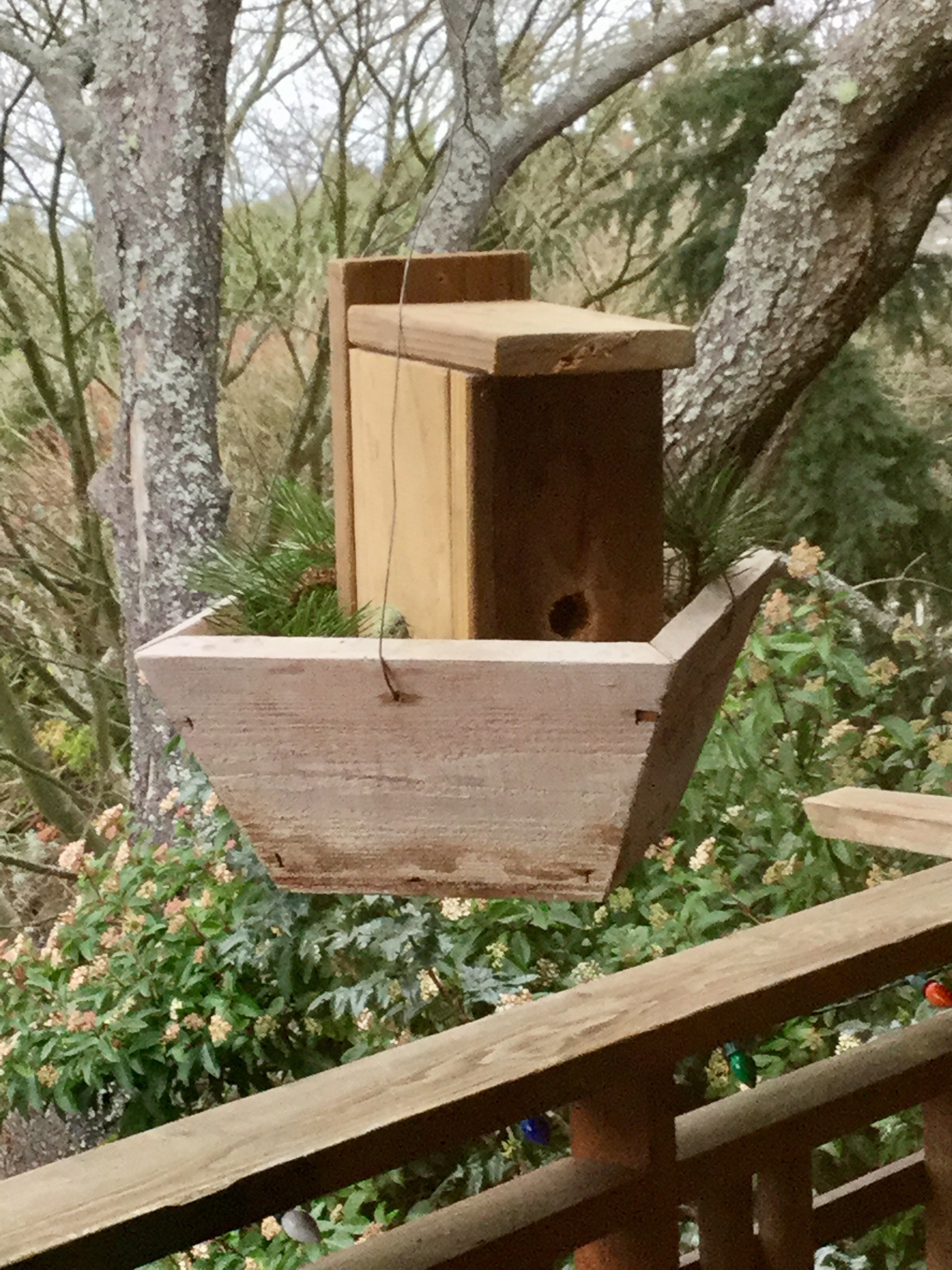
6. Wrens don’t mind a hanging house (hey, they made themselves at home at each of my three hanging baskets), but chickadees and other birds do. I don’t know what it means if the house is hanging but very stationary. I ended up using a shallow old hanging basket which was empty except for some dirt to use as a hanging device, so the bird house is sitting in it.
For Nesting: the hole should be towards the top, to allow the nest and eggs/young to be protected from predators, and it also allows better ventilation of heat during the warm months. This can be accomplished easily by removing the screws on the front panel and inverting the panel for the season during cleaning. Also add several floor drainaing holes and few top ventilation drill holes, all of which are covered over during the winter (done).
I placed the box on top of the dirt and used the planter box as a device to hang up the Roosting Box in a stable protected environment. In fact, it is about 3 feet away from the northwest hanging basket, a site they chose on their own. The new box is hanging from a wooden attachment to the overhang, then two wire hanging parts that I hope will help keep the rats out. I won’t have any food there and they won’t nest there. So, wrens, it has been hanging there 36 hours, time to wake up! I know you are out there cuz I saw you….!.

Plants poking up only include the usual, the light blue camas and the brodiaea. Few trilliums are also just visible, but they usually don’t do much for months. Lots and lots of patches of Pumice, which I placed on top of every small patch of seeds or bulbs that I put Everywhere: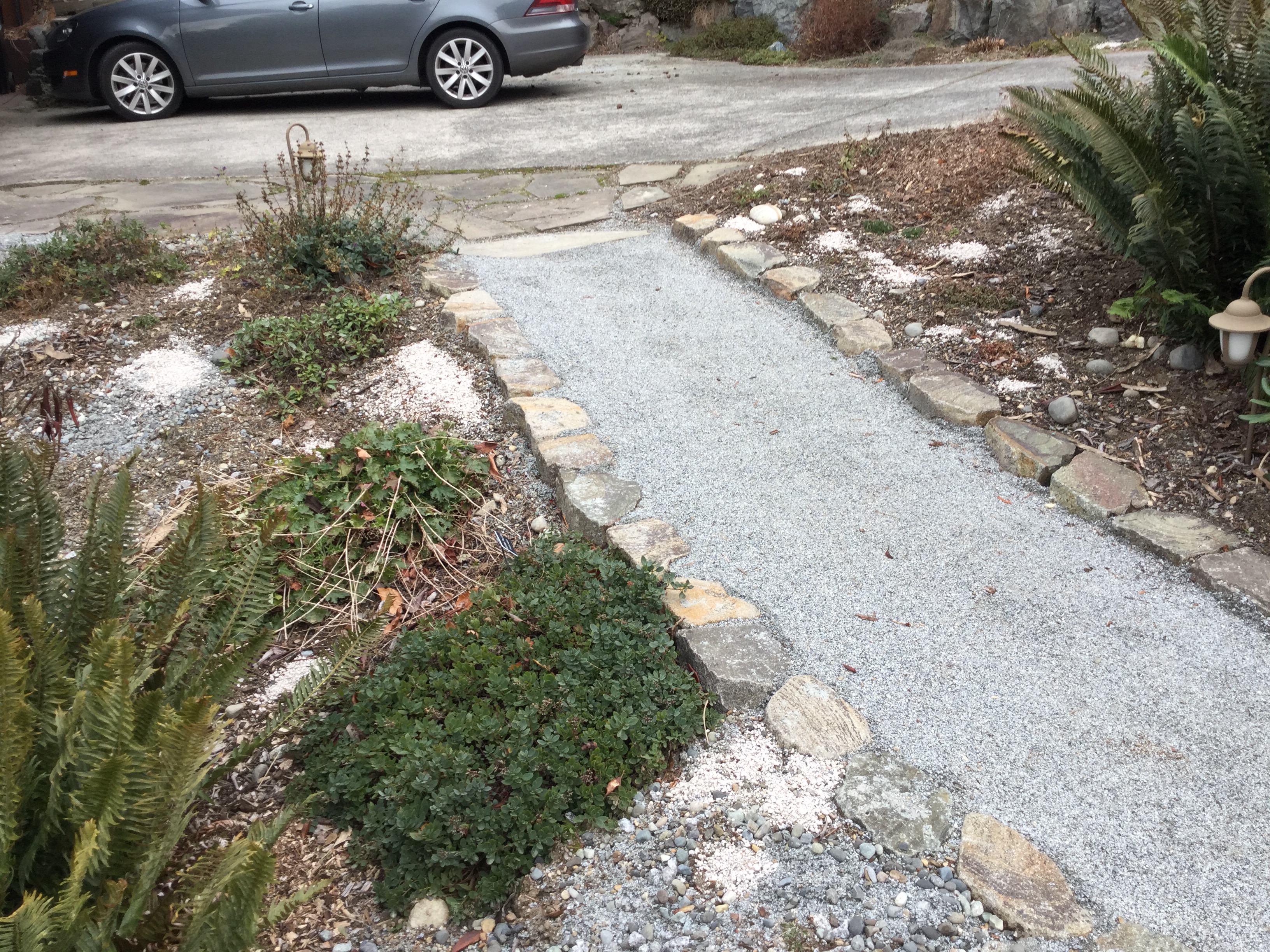
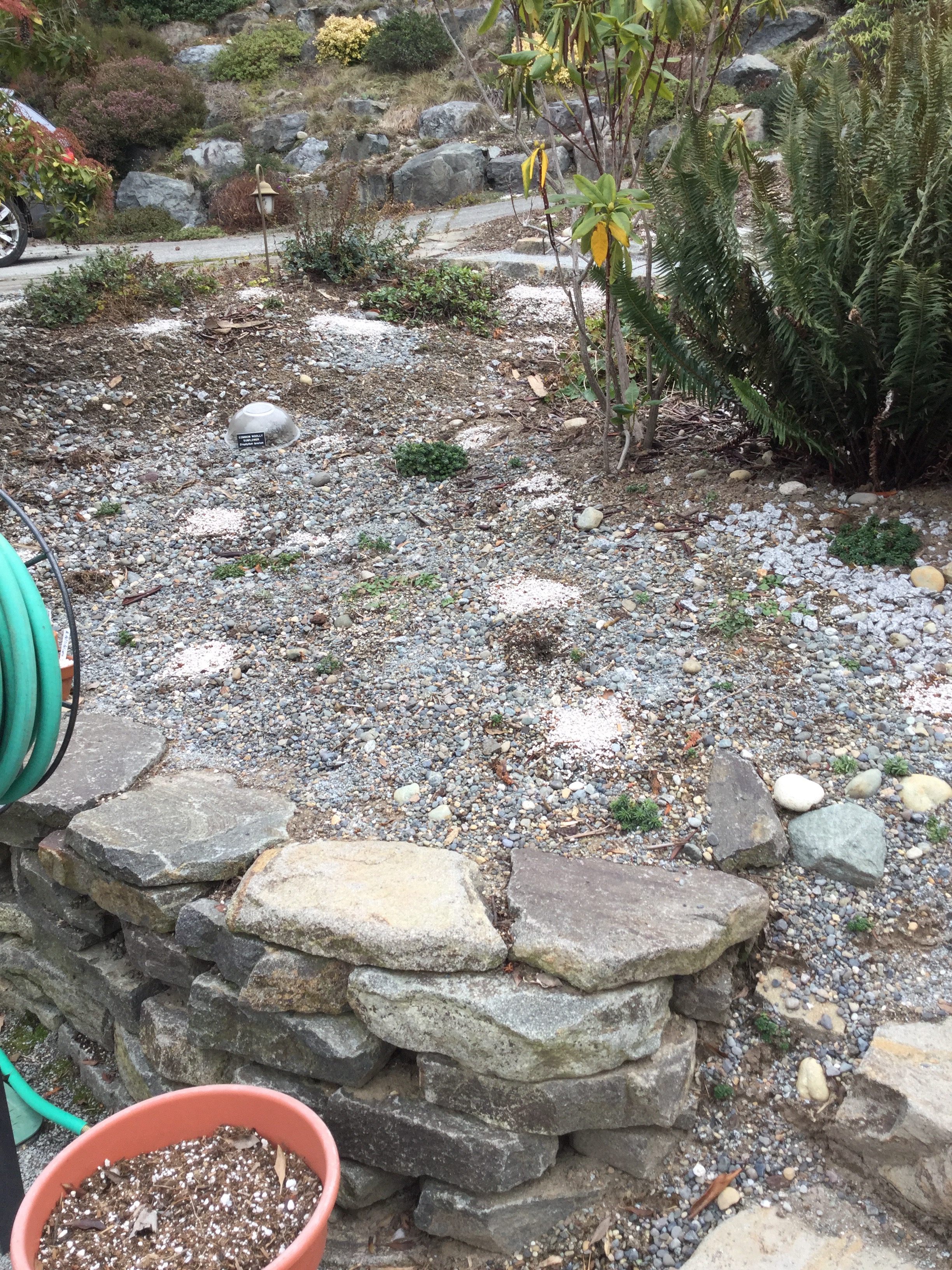
Plants poking up only include the usual, the light blue camas and the brodiaea. Few trilliums are also just visible, but they usually don’t do much for months. Lots and lots of patches of Pumice, which I placed on top of every small patch of seeds or bulbs that I put Everywhere
I also transplanted the old patch of Spotted Saxifrage, which has been moved several times. It is now one of the first plants put in the new front yard rock garden, trying to supply it with the right amount of sand/grit and soil, sun but not too much. It is a great plant but it got shaded out and overwhelmed by Twinflower Linnea, and there is only one other 2″ patch remaining in the back yard, and so this needs to work!
 ellensgarden.us