March madness – duck saga

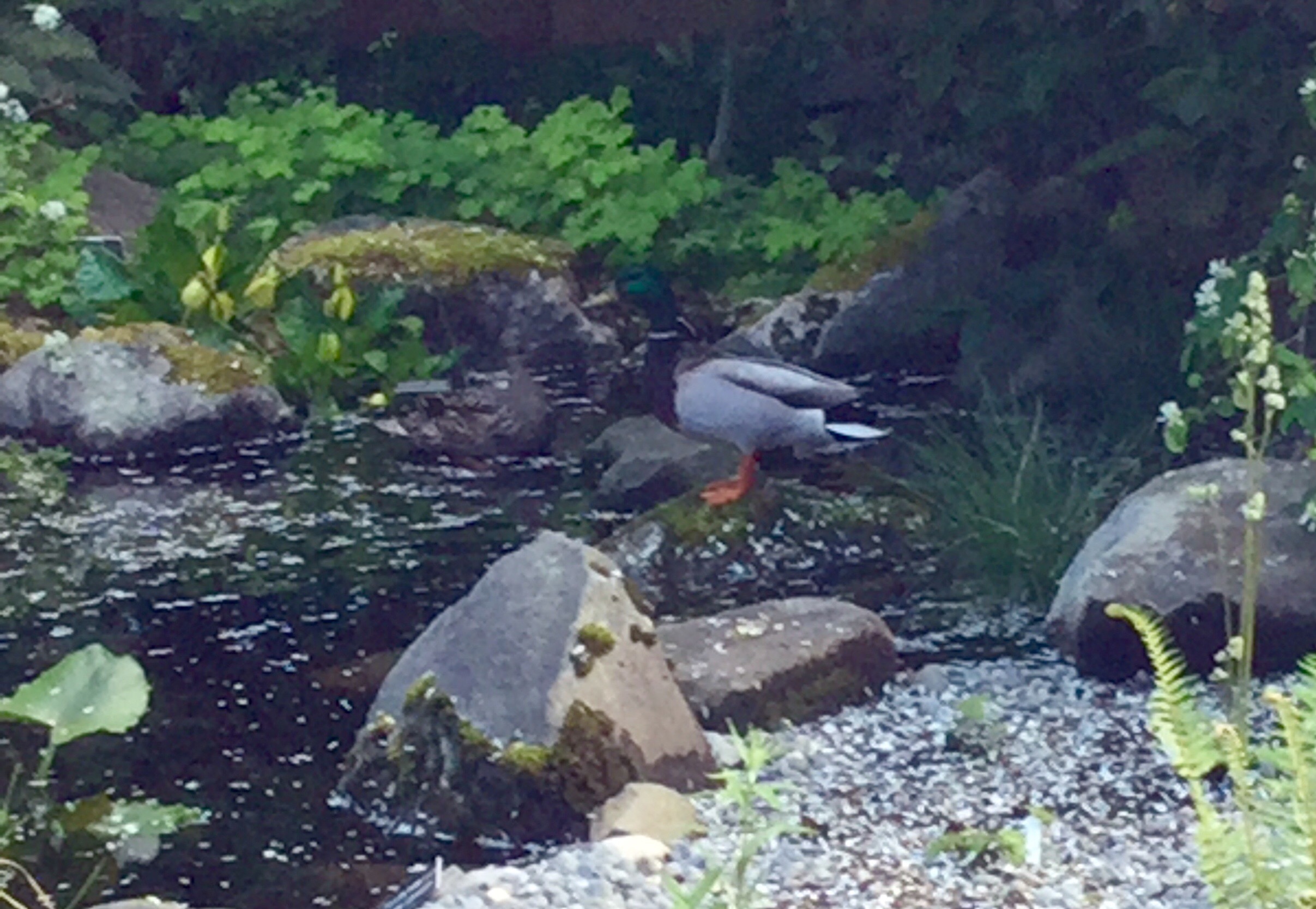
I happened upon a BUNCH of ducks in our pond yesterday ….a raft or team of ducks, apparently. They are only called a flock while in flight. I didn’t even see them and FOUR of them flew away. As I approached more, TWO MORE flew away. That makes SIX DUCKS in the pond at the same time, not fighting. Today I scared away four ducks, two at a time. And by scare away I mean simply walk down the steps….these are real ‘fraidy ducks. I think they have become that way because of the growth of the shrubs around the pond…their potential emergency exit isn’t what it used to be. I used to be careful not to get too close but so far this year I couldn’t even walk into the yard without scaring them away. Too bad for them!

Trillium seedlings starting to come up!  I think these are from sowings about 4-6 years ago  – the one patch showing up has seedlings from two different years. One of this patch had three leaves last year, and at least three of them now look like they are fairly mature looking as they poke up. They typically take 7 years to flower from seed, but can be as soon as 5 depending on the conditions. Exposing seeds to warm conditions early can cause this, maybe it happened naturally. Last year there only a few trillium flowers, maybe they didn’t  like those early warm springs we’ve had, so maybe not so good for the flowering as it is for forcing the seedling. And almost no seeds, only the Trillium Chloropetalum produced seeds last year, which will not appear until next year (if they do). Trilliums take two years to appear above ground.

Ducks in the hood – last day of February

Duck sightings/hearings last week (and while we’re at it, we heard the tree frogs, too). I first “saw” them by finding a handful of their light colored feathers in the pond, and no bird body!

Fawn lillies and Trillium chloropetalum finally poking up. Goatsbeard, Wyethia (humble ears)and Fairybells also showing their ‘spikes’ of leaves.

Also, yesterday we got rid of a bunch of small trees and the pile of pruning branches I’ve accumulated all year (had the work done). Not too much foot damage to the plants, much appreciated, and it was also I think early enough to avoid most plant damage.Our neighbor, the one who always whined about us taking out trees, now wants us to “window” out one of our pines. This may be an opportunity to deal – a couple of the their hemlocks need lowering to open up the view to the beach.

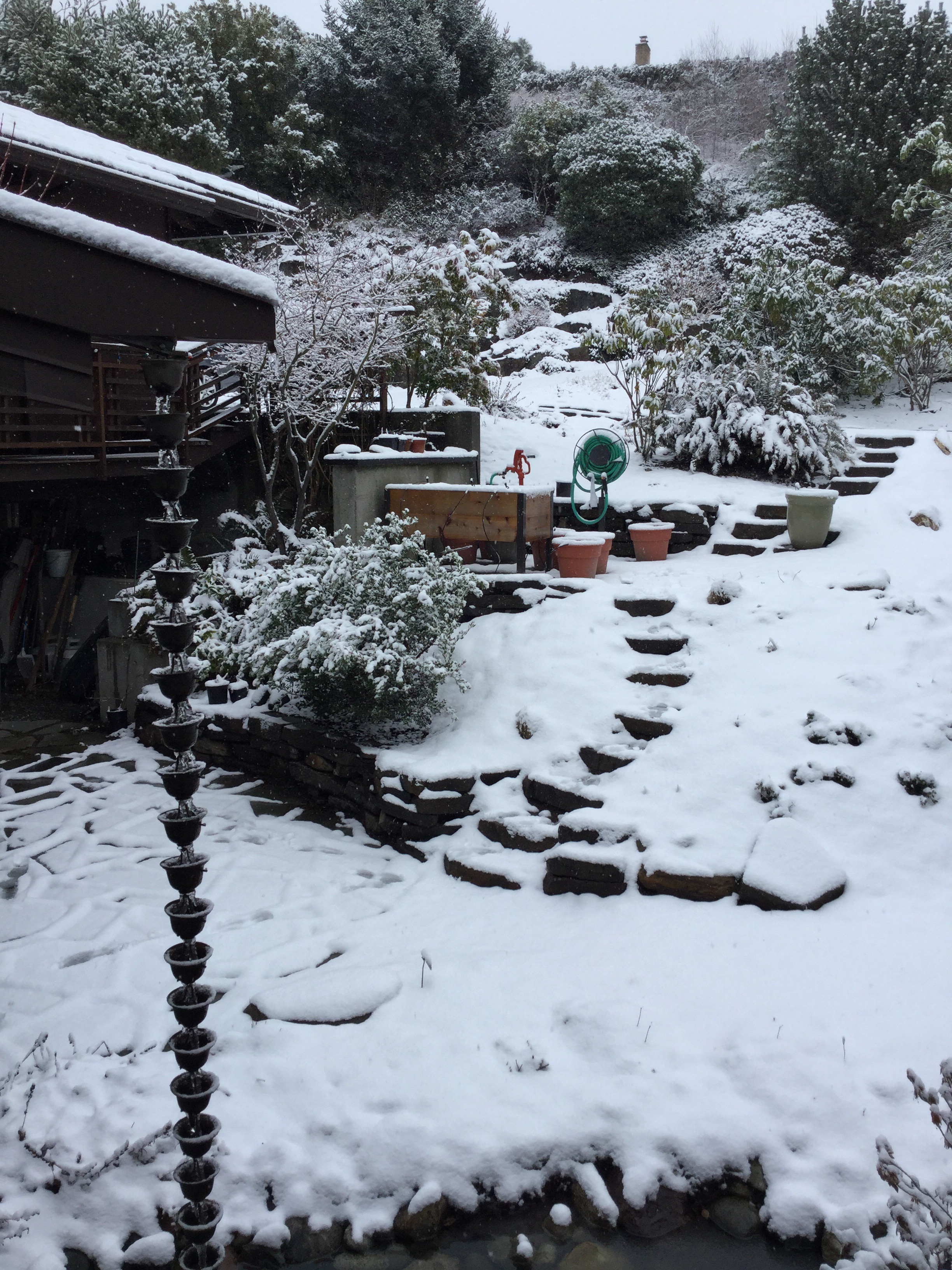
We had a late snow yesterday, after a couple of weeks of mild weather. But it looks like everything is still doing OK.

February progress

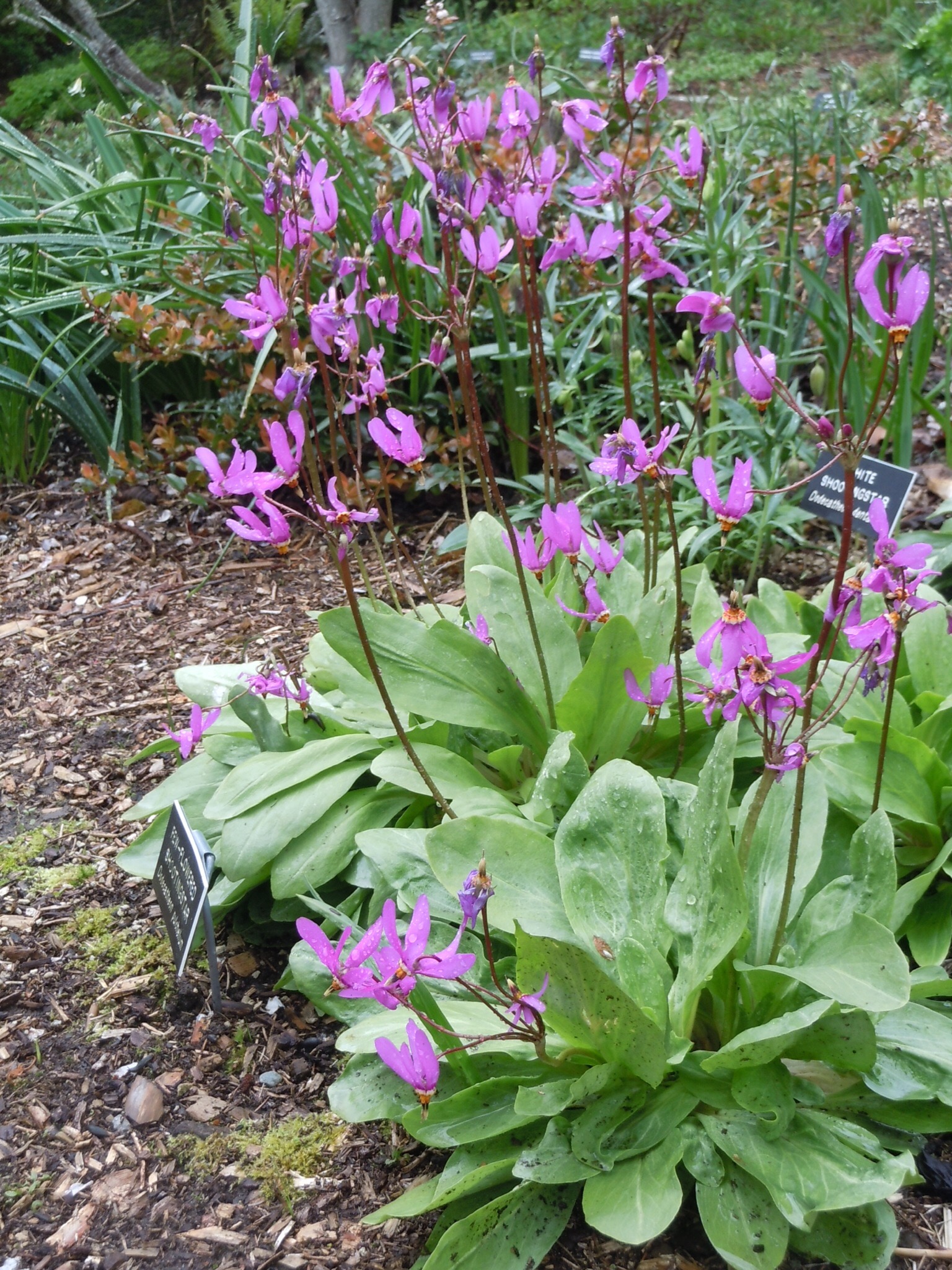
Shooting stars (pulchellum, or few flowered) are starting to come up this last week (feb ~10). They do NOT look like this yet, however!- at this point in time they have barely poked out of the ground. This is quite a late appearance compared to last year, when there were sightings of these in early January, about a month earlier. But then again, last year was way early. The appearance of some other plants is also relatively later, also, including the tritelliaea, Camas (light blue and white), Hookers onions. As far as seeds go, only the yellow Desert Parsley has germinated, but there is a big mound and some shoots showing, so there will undoubtedly be dozens or more of these! Others anticipated, especially Woodland Penstemon, Iris Chrysophylla, Indian Paintbrush and Pink Fawn lillies, all of which have so far been elusive. 

In review of the post from a year ago, I had found two barely live plants that had returned from the missing or dead, I’ll call them Lazarus the Rattlesnake plantain and Phoenix the Wild Ginger plant. Both are thriving now, despite their rough and slow starts. The Wild Ginger had been tortured by slugs, until I covered it with a cloche last year, the plantain I just kept uncovered by pine needles, and now nature has taken over. 

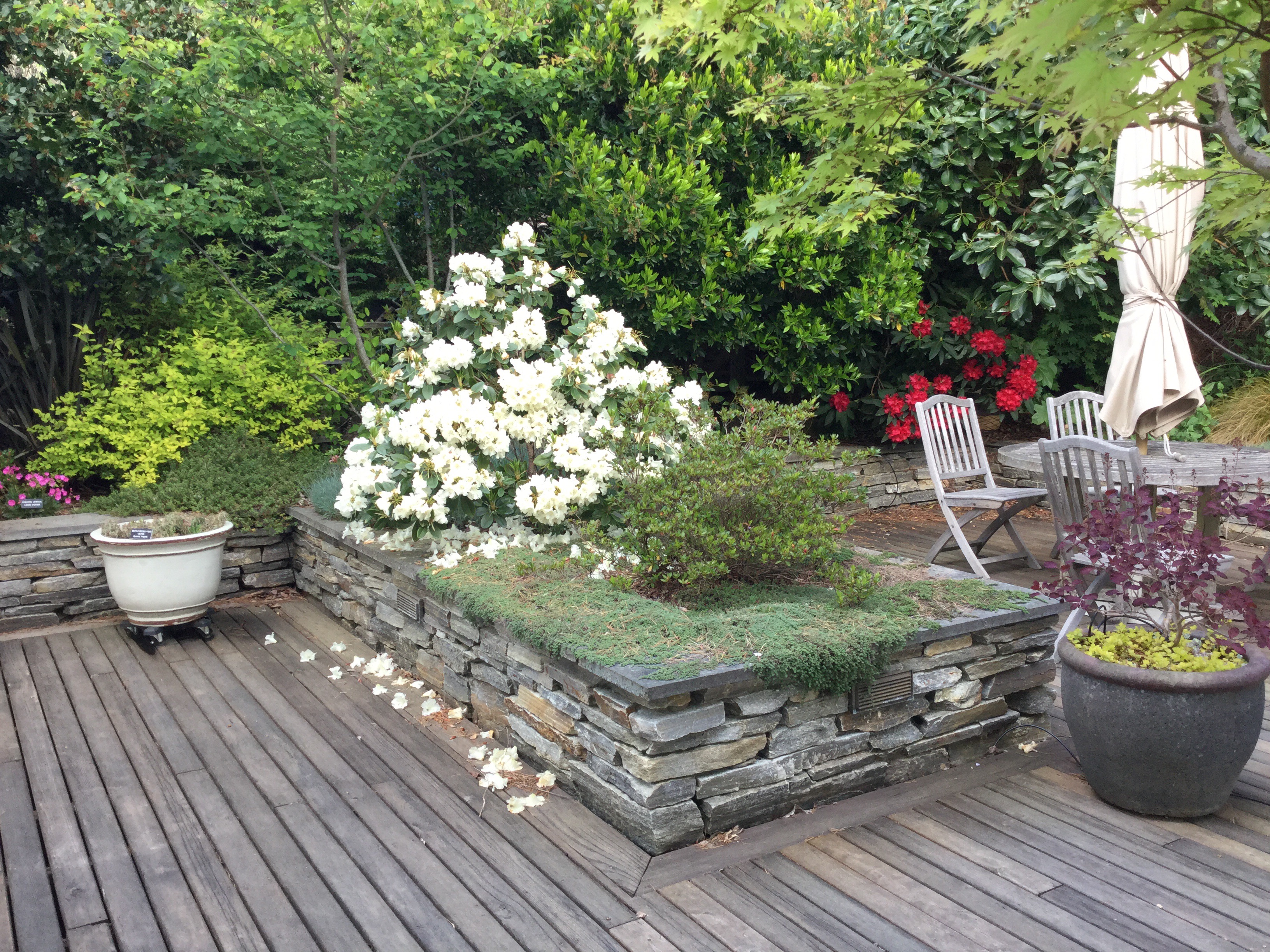
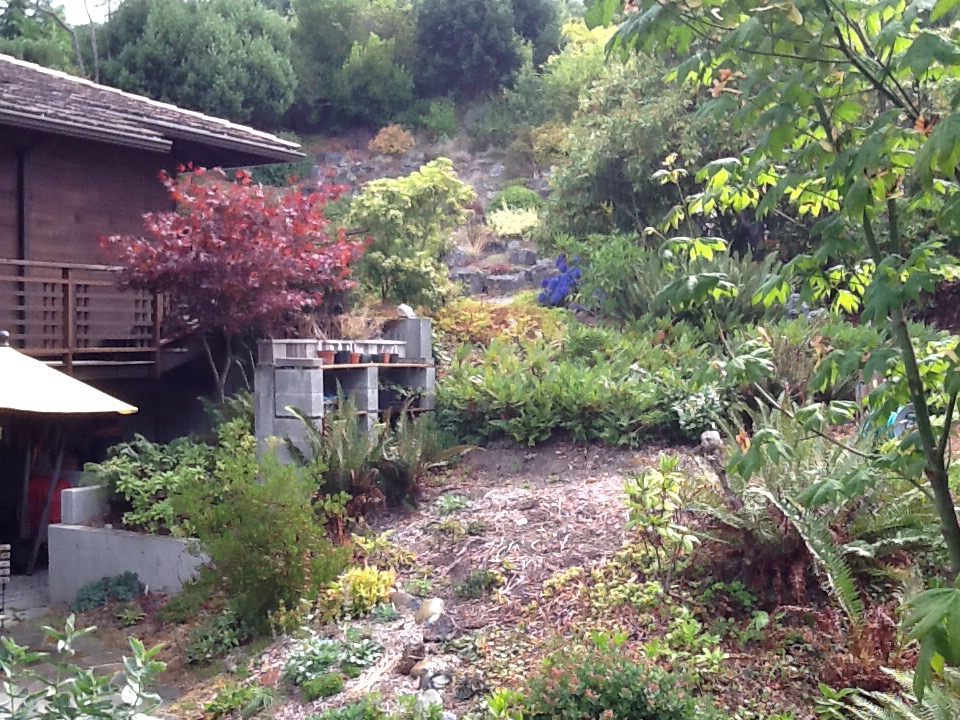
We are having a number of small trees taken out, which have outgrown their sites. Four of these are evergreen trees inside the raised planter bed, in the north backyard. These have gotten too large and compete wth each other for sun, each growing way out over the deck and making a mess as well as ending up distorted by each other. These were all deliberately planted years ago: a moderate size Madrona (litters large leaves onto the deck), a Strawberry tree (which leaves a nasty mess with mushy berries and flowers on the deck), and two tallish Bay leaf trees. I had already planted two Myrtle trees BEHIND the raised planted bed, which are each about 6-7 feet tall now but are not getting enough sun, leaning over and with wimpy branches. Taking these four trees out will give the Myrtles lots of sun and they should fill in the screen border (I may throw a viburnum in between for good measure). Unfortunately there will be a paucity of screen in the meantime, so we’ll have to use the umbrella a lot. Fortunately though, the row of Myrtles, Viburnums, and Strawberry trees along this same border nearer the house have matured and near completely screen out the neighbors. This is more of a continuation of the same screen row pushed out of the yard, to reclaim the raised bed space. I’ll have to do a. It of  LITTER cleaning once the trees are out, since the area under those trees is thick with leaves, small branches and pine needles. This is a pic from a several years ago looking at several of those trees (towards the right, around the red rhodie), they had already filled in the planter space:

Several other trees will be taken out here and there. This also includes several NON-NATIVE American Cranberrys, which turned out to be the European variety, and there were three that we need out (the fourth, which has grown almost as a trellis over the stream, will be kept). We found a true Native American Cranberry which will be planted. And some lowering of Vine Maples and pruning of some Pine branches. 

February news

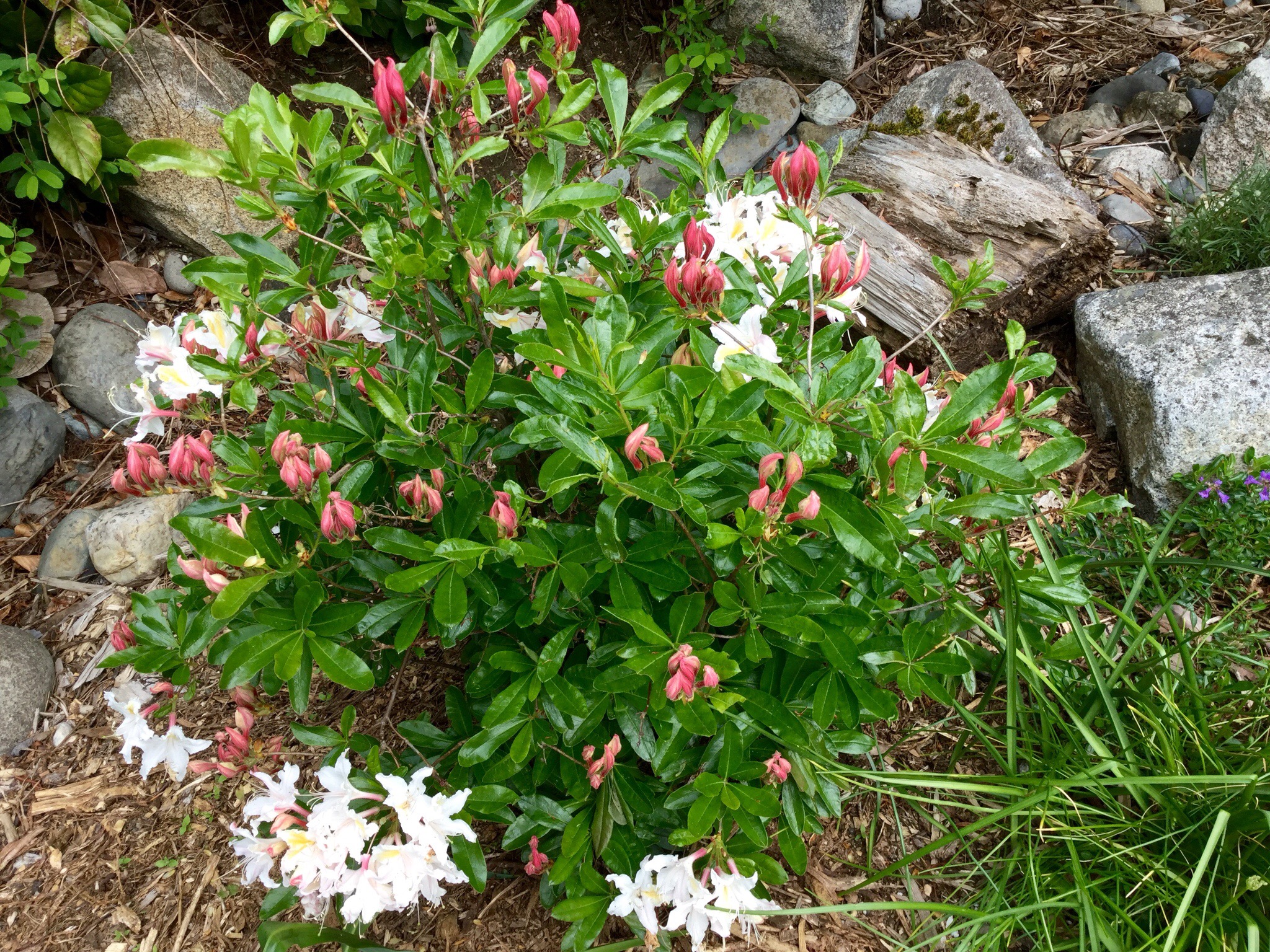
Last week of January the White Tritellia and  Delphinium came out (Harvest brodiaeas and camass previously). This past  week it was the beginnings of the Shooting star,  Ookow, and Brodiaea Congesta showing up.  Budding starting on the red flowering currents and of course the Indian Plums, which should actually bloom soon. It looks like the two layerings of Deciduous Rhodies in the front have made it through the winter and will produce small bushes on either side of the gravel path ( update 10/17, the dominant one is doing great with mult. New branches the one with tenuous roots did OK for a while and then died out in the heat. These are pretty peach colored flowers which are scented.

Winter shelter for the birds

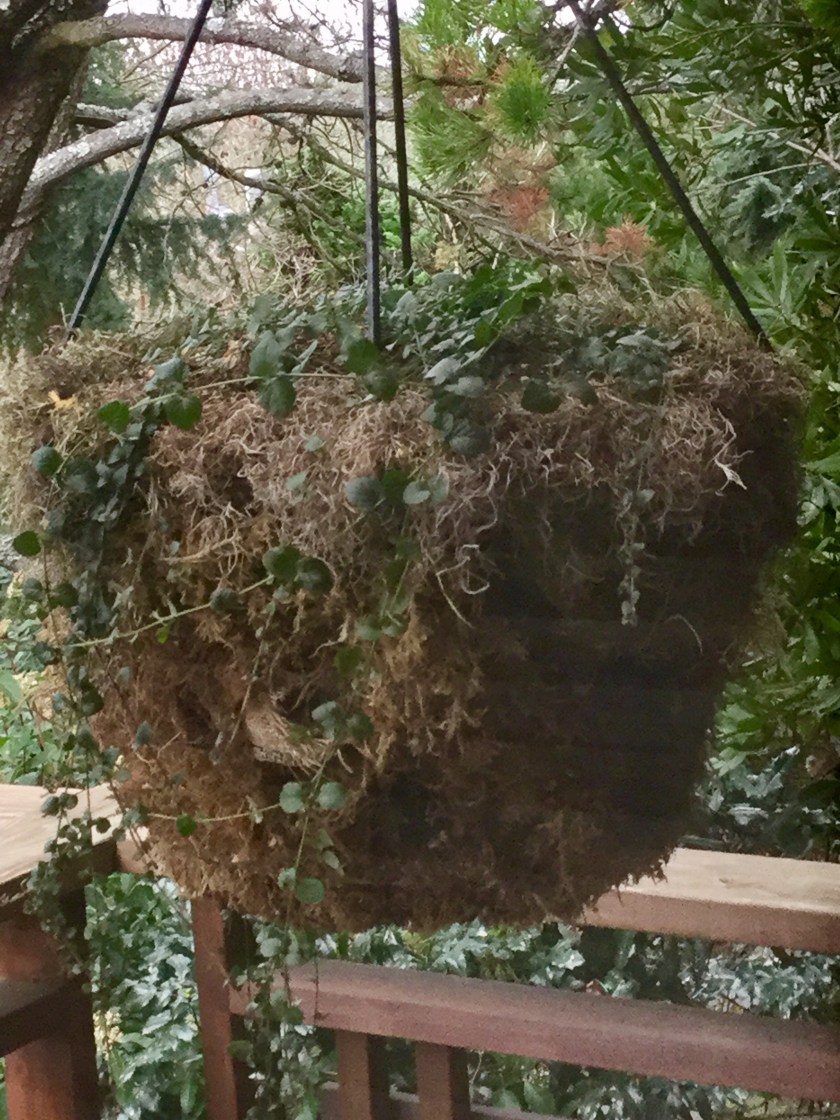
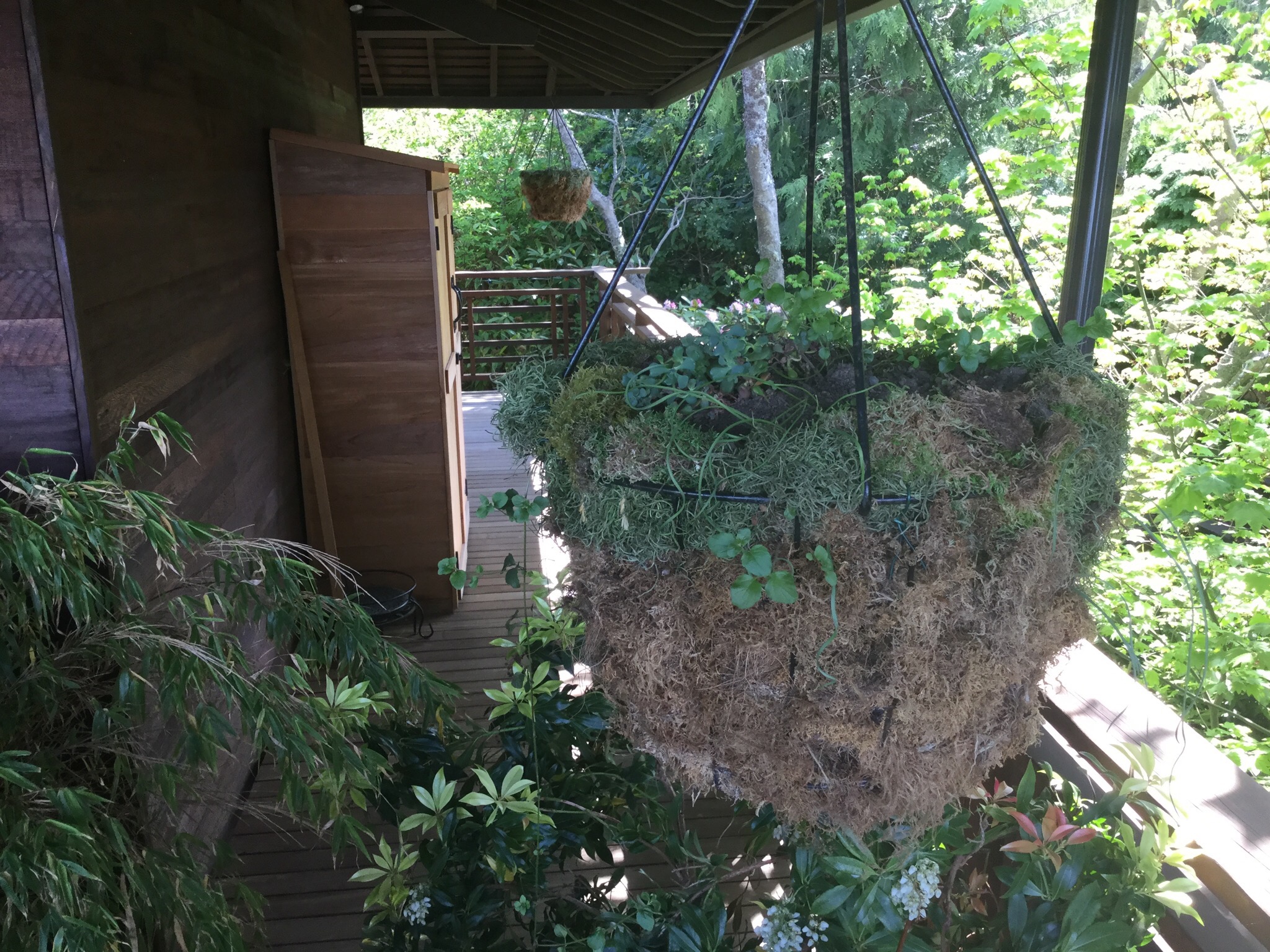
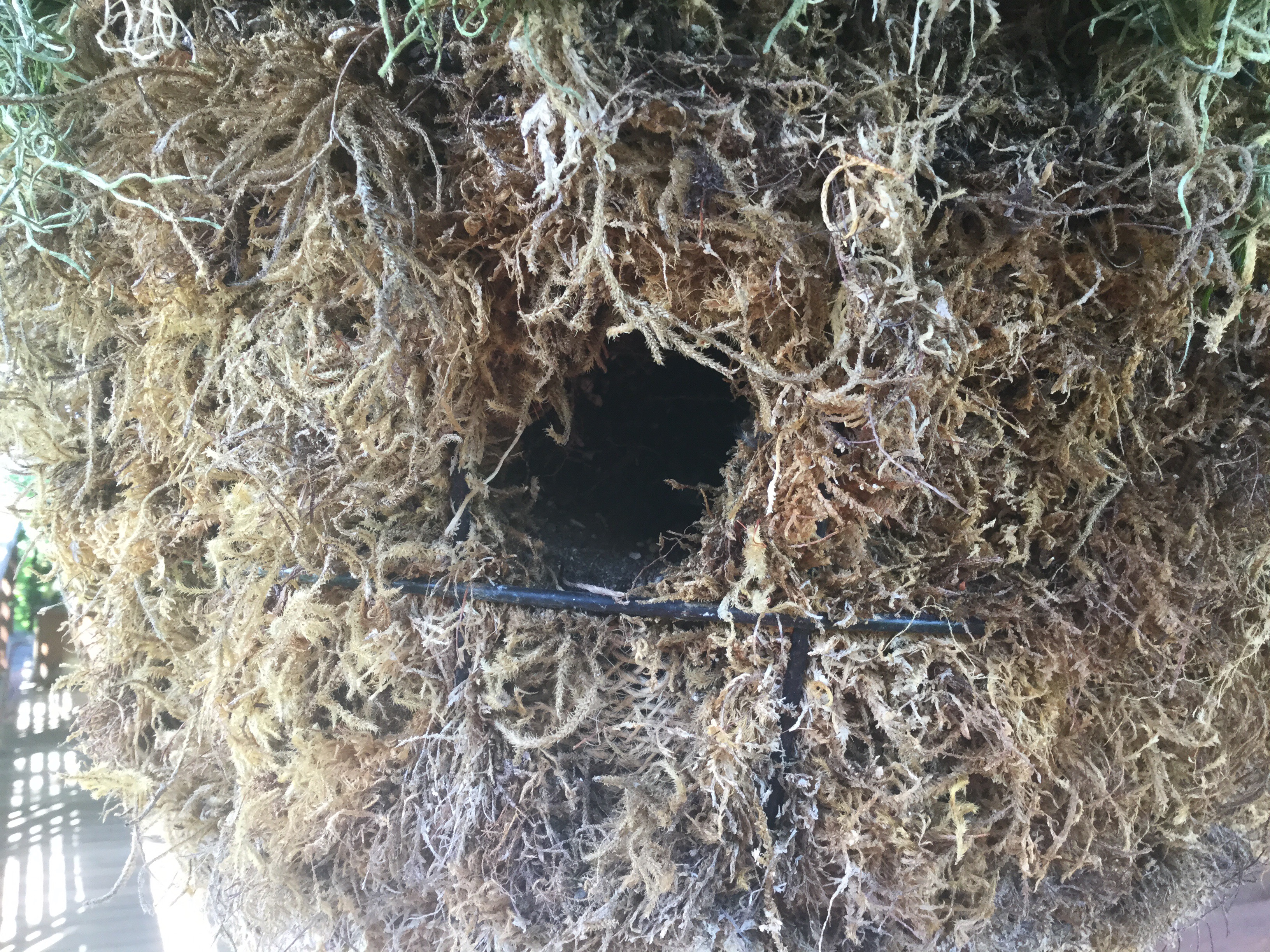
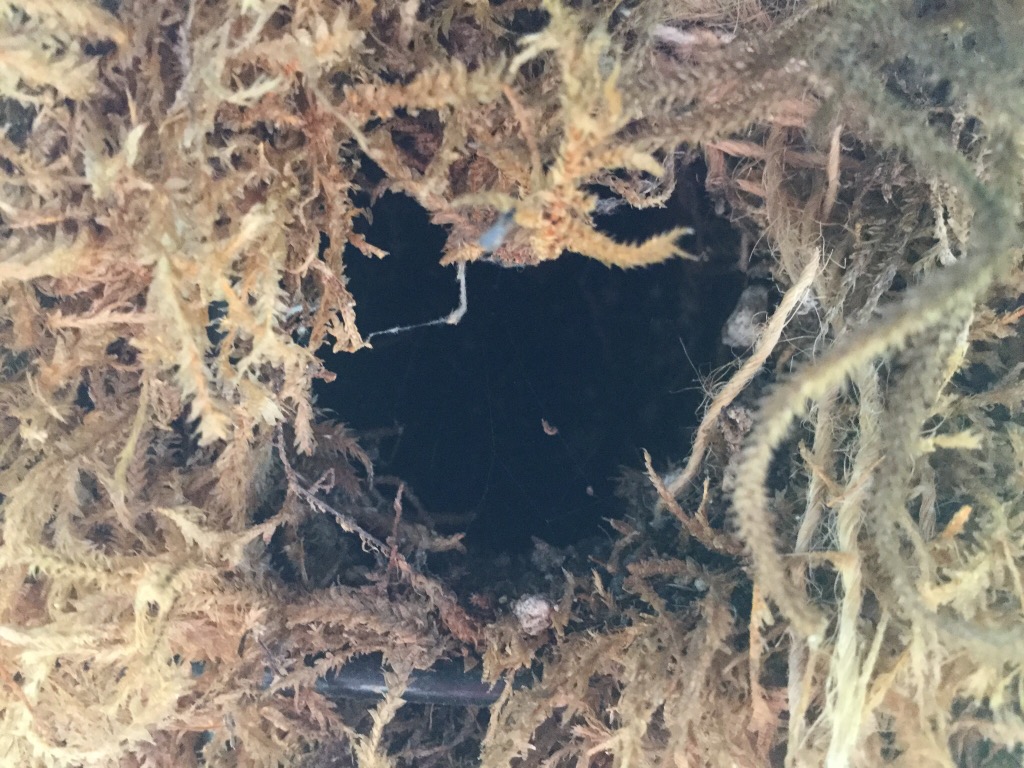
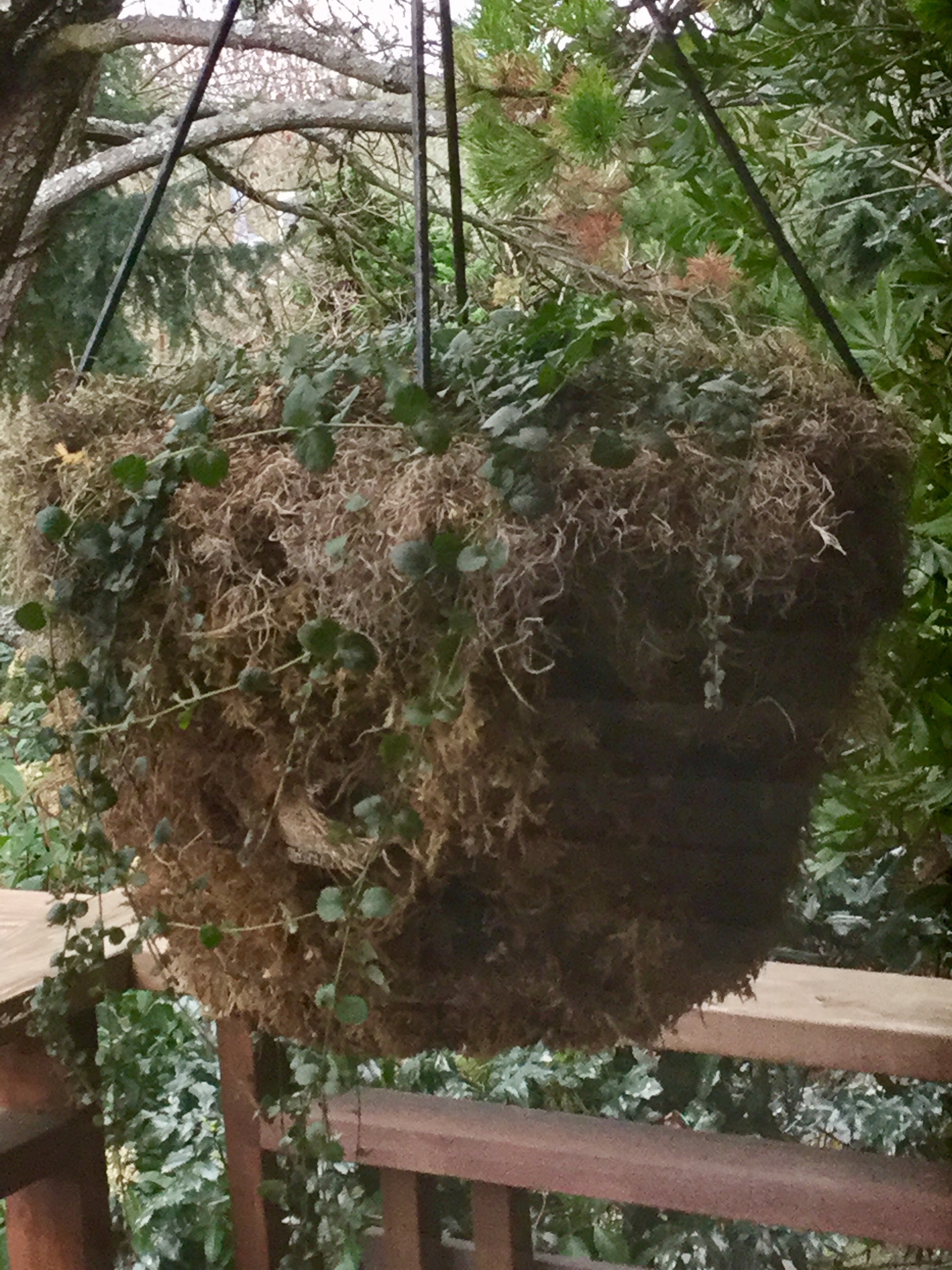
At least the wrens and maybe chickadees. The wrens have long commandeered our three hanging baskets for their hostels to sleep in overnight, except for when they are nesting. These are perfect shelter in that they hang just under the roof of the covered deck, and are heavy so they don’t swing in wind. Being within deck territory, they are predator-free. There are 3-6 holes in each which are about 1 1/2 ” wide  x  3-5″ deep, horizontally oriented into the planters, dug through the moss,  burlap and soil in the planter, to make individual little lofts. A couple are a little bigger, maybe they hold three or so. 

I recently rehabbed these planters specifically for the wrens, and shored them up with new moss and burlap but made sure to avoid damaging the wren holes. I added garlands of Spanish moss wired along the rim, topped them each with extra soil and sand, and planted Yerba Buena vines, which grow better than most things there. When I water the plants, the water seems diverted around the wren holes, so they might be sealing them.  Below are pix:

Now I’ve made a more formal abode for any leftover wrens that haven’t found a hole. I know there are a bunch of wrens out there but I don’t know where they all roost. It’s freezing weather off and on (now on) the last week or so, so I thought I’d provide some extra emergency shelter for them.  

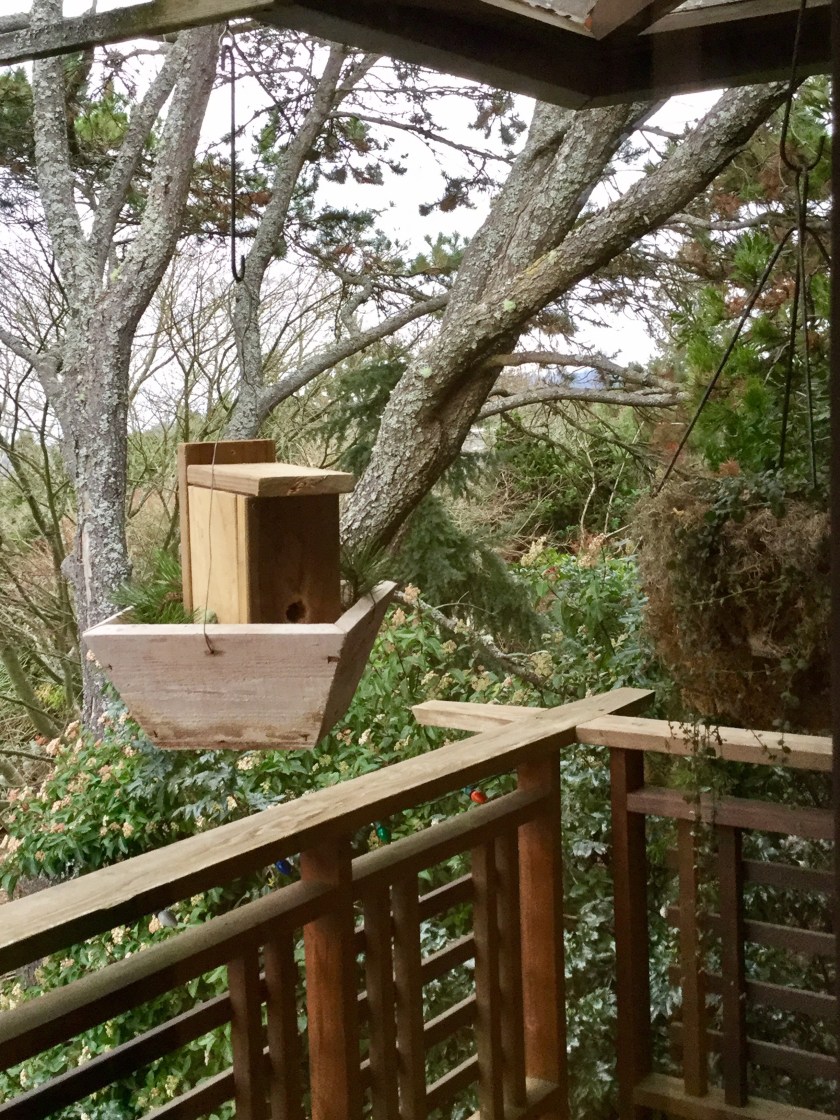
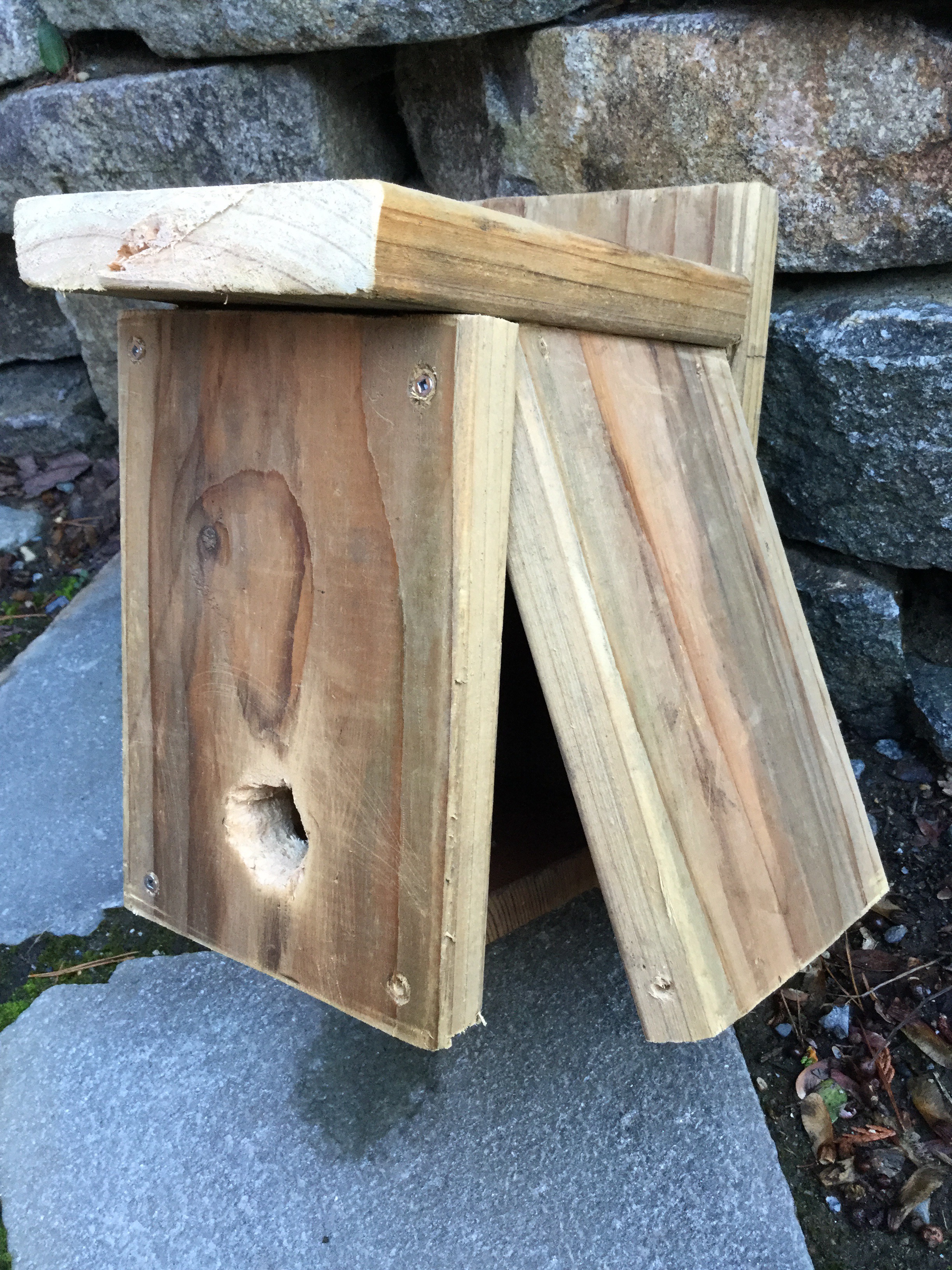
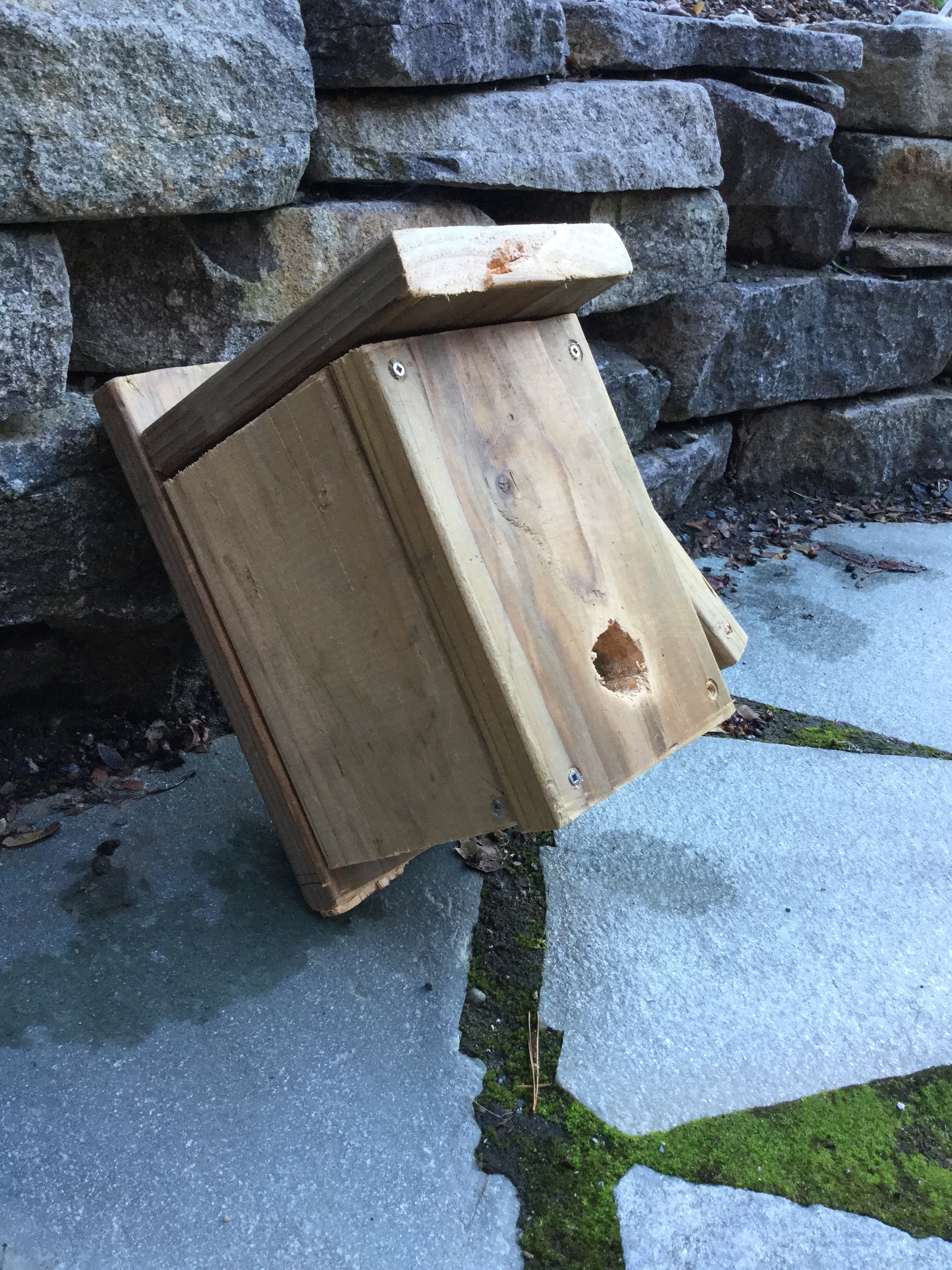
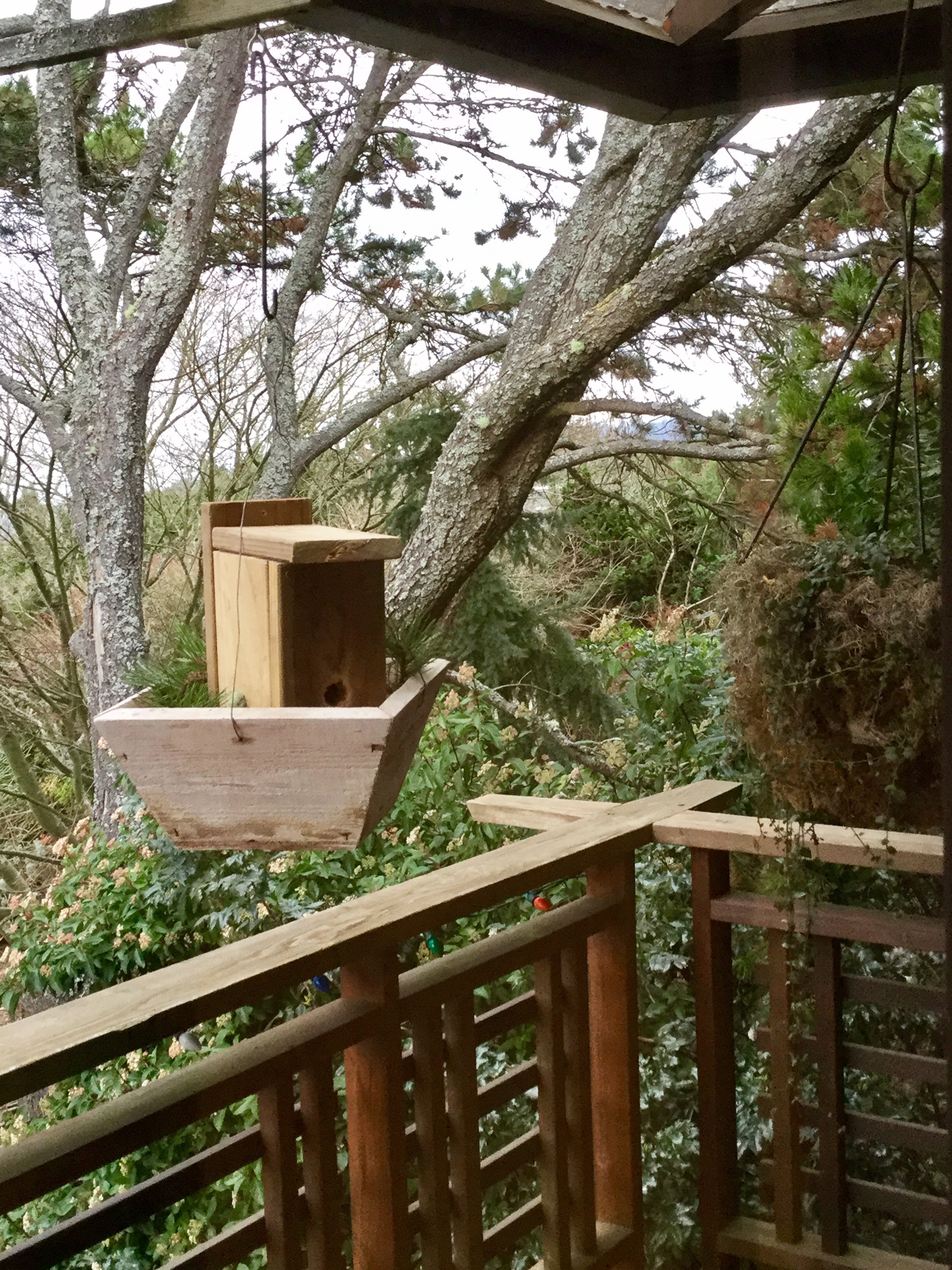
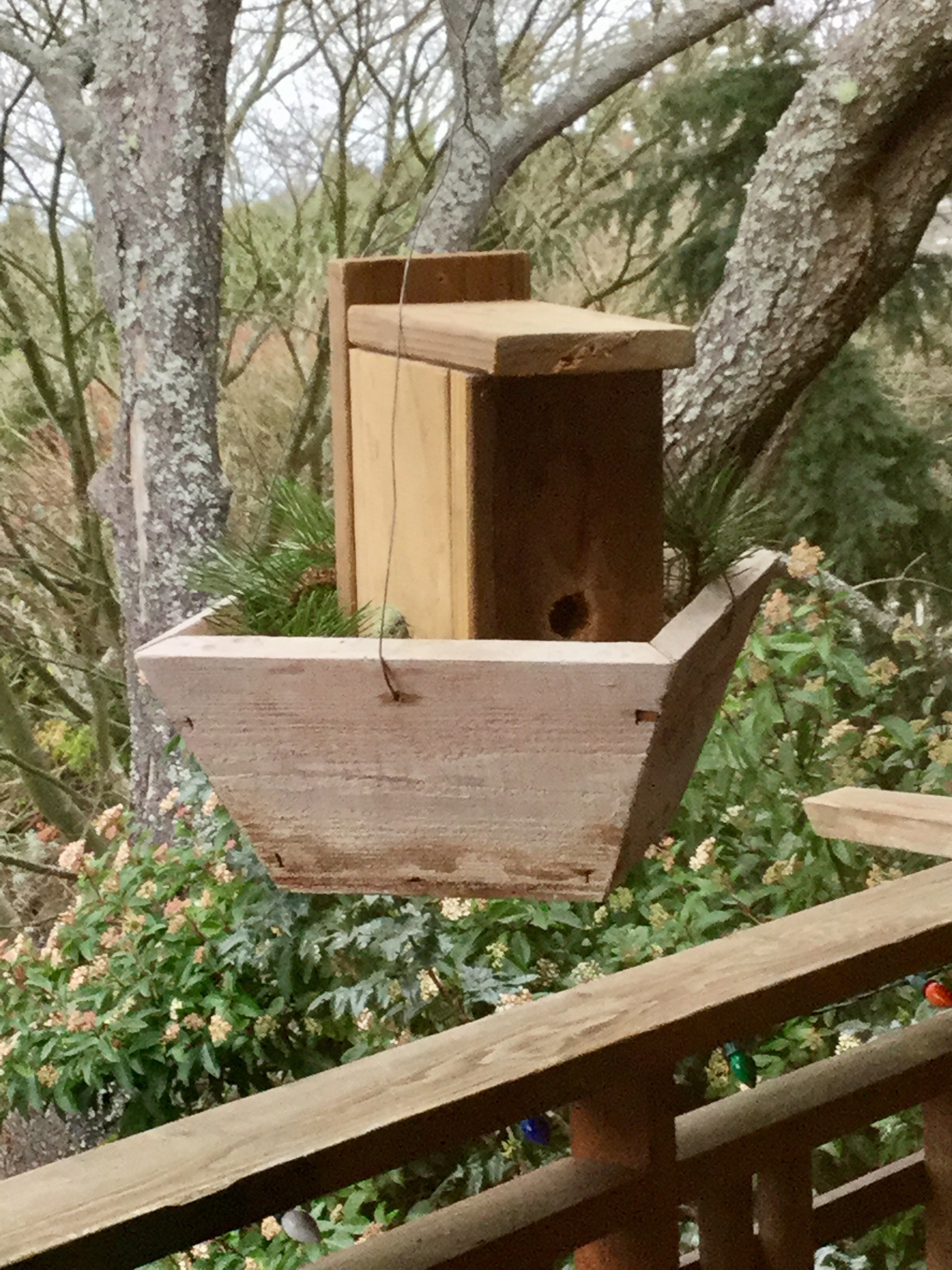
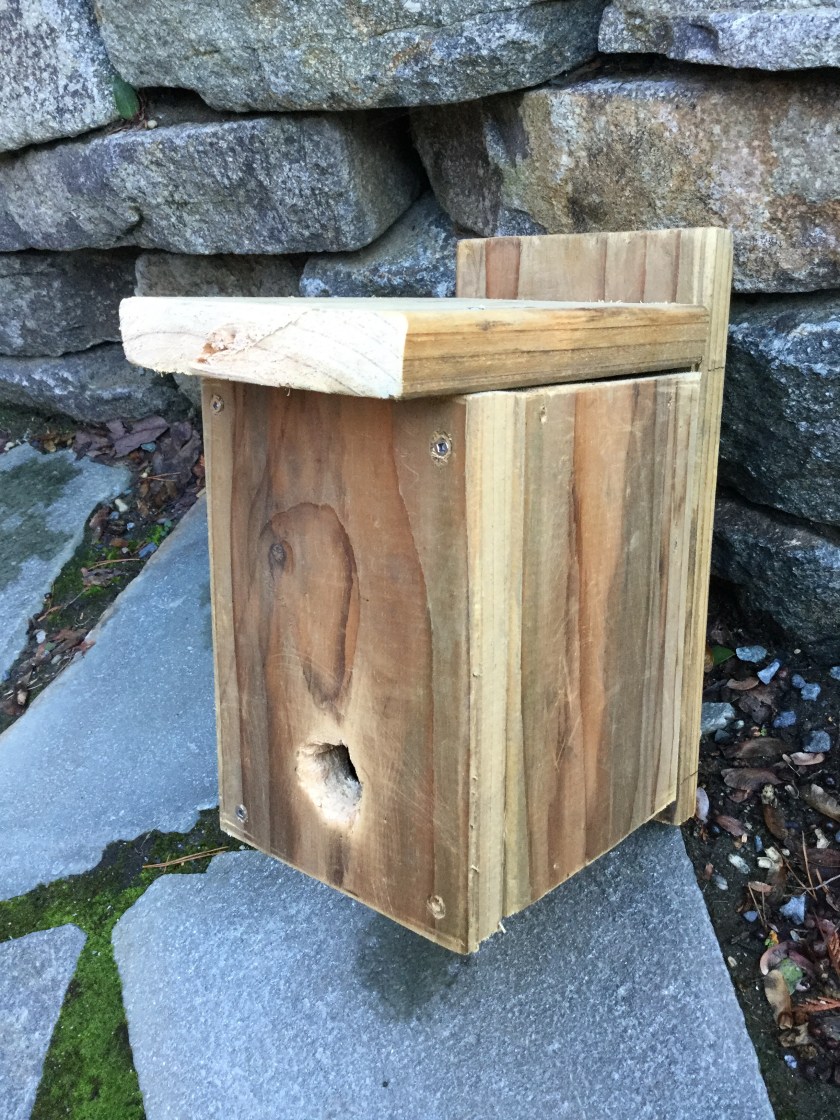
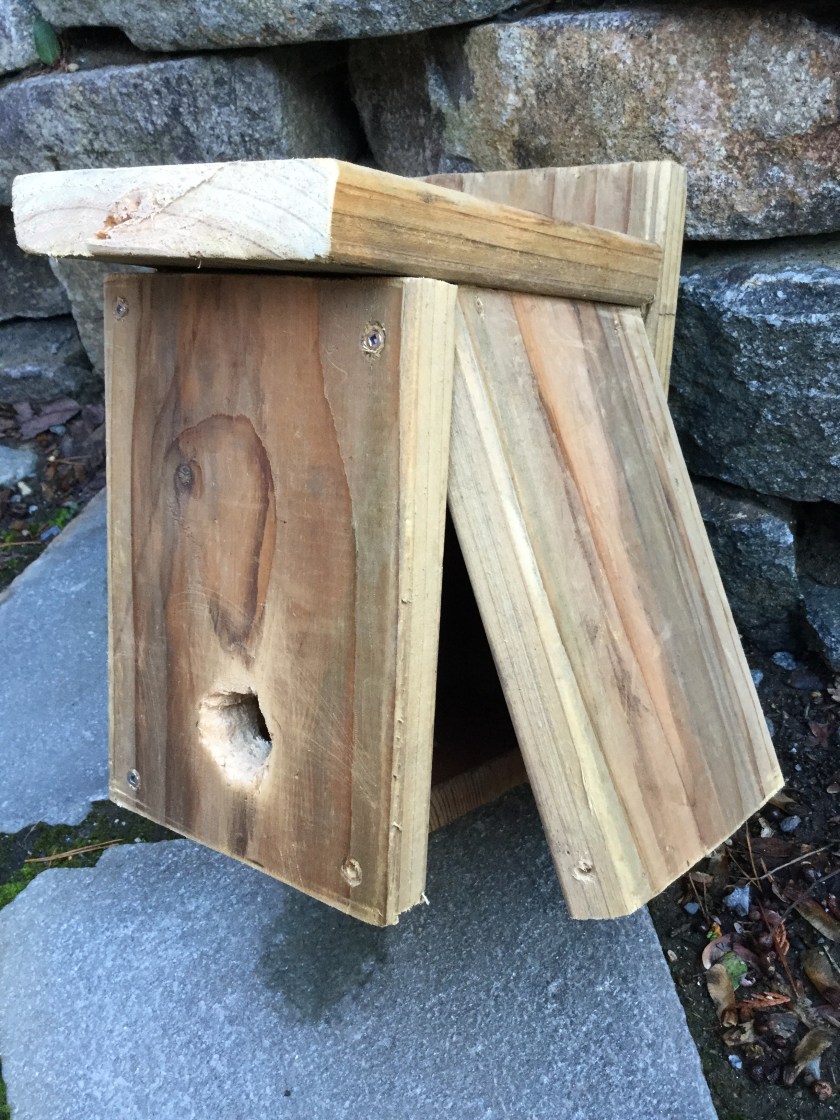
So I made a ROOSTING BOX for the wrens, wth provisions for possible chickadee use. The specs for these birds are 1 inch thick walls, 4 x 5 1/2 inches base by 8 inch height, with overhanging roof.  One of the side panels swings out a bit for cleaning, secured during use by birds. Right now, I left it unsecured so I can figure this out. Roosting and nesting needs are different, so there is a twice a year clean out and modification for nesting purposes.

For Roosting:

1.the hole for bird entry should be towards the bottom, so that the rising heat generated by the congregation of shivering birds doesn’t just go out a hole at the top. Some bird types can lose up to 10% of their weight overnight from keeping warm in very cold climates.

2. Some sites advise adding pegs/dowels for perching, but other sites say that wrens and chickdees don’t need perches and that they are detrimental by encouraging their competitors. The birds sleep on the floor, and on each other as they add up. Apparently the largest number of wrens observed coming out of a bird box was 31, presumably from a larger house than mine.

3. You can add wood shavings, grass, or other material, as long as it doesn’t risk obstructing the hole and trap birds.  Short yard pieces or animal hair and fur are recommended. There are some who convert bird feeders to nesting/roosting material dispensers, and in fact these are now available commercially.  I put short thin strips of old t shirt to just cover the botttom. 

4.The hole size of 1 inch will limit admission to wrens. A hole size of 1.125 inches will also allow chickadees, but not destructive house wrens, sparrows or other competitors. 

5.No perch on the outside either, to limit larger competitors. 

6. Wrens don’t mind a hanging house (hey, they made themselves at home at each of my three hanging baskets), but chickadees and other birds do.  I don’t know what it means if the house is hanging but very stationary. I ended up using a shallow old hanging basket which was empty except for some dirt to use as a hanging device, so the bird house is sitting in it.

For Nesting:  the hole should be towards the top, to allow the nest and eggs/young to be protected from predators, and it also allows better ventilation of heat during the warm months. This can be accomplished easily by removing the screws on the front panel and inverting the panel for the season during cleaning. Also add several floor drainaing holes and few top ventilation drill holes, all of which are covered over during the winter (done).

 I placed the box on top of the dirt and used the planter box as a device to hang up the Roosting Box in a stable protected environment. In fact, it is about 3 feet away from the northwest hanging basket, a site they chose on their own. The new box is hanging from a wooden attachment to the overhang, then two wire hanging parts that I hope will help keep the rats out. I won’t have any food there and they won’t nest there. So, wrens, it has been hanging there 36 hours, time to wake up! I know you are out there cuz I saw you….!.
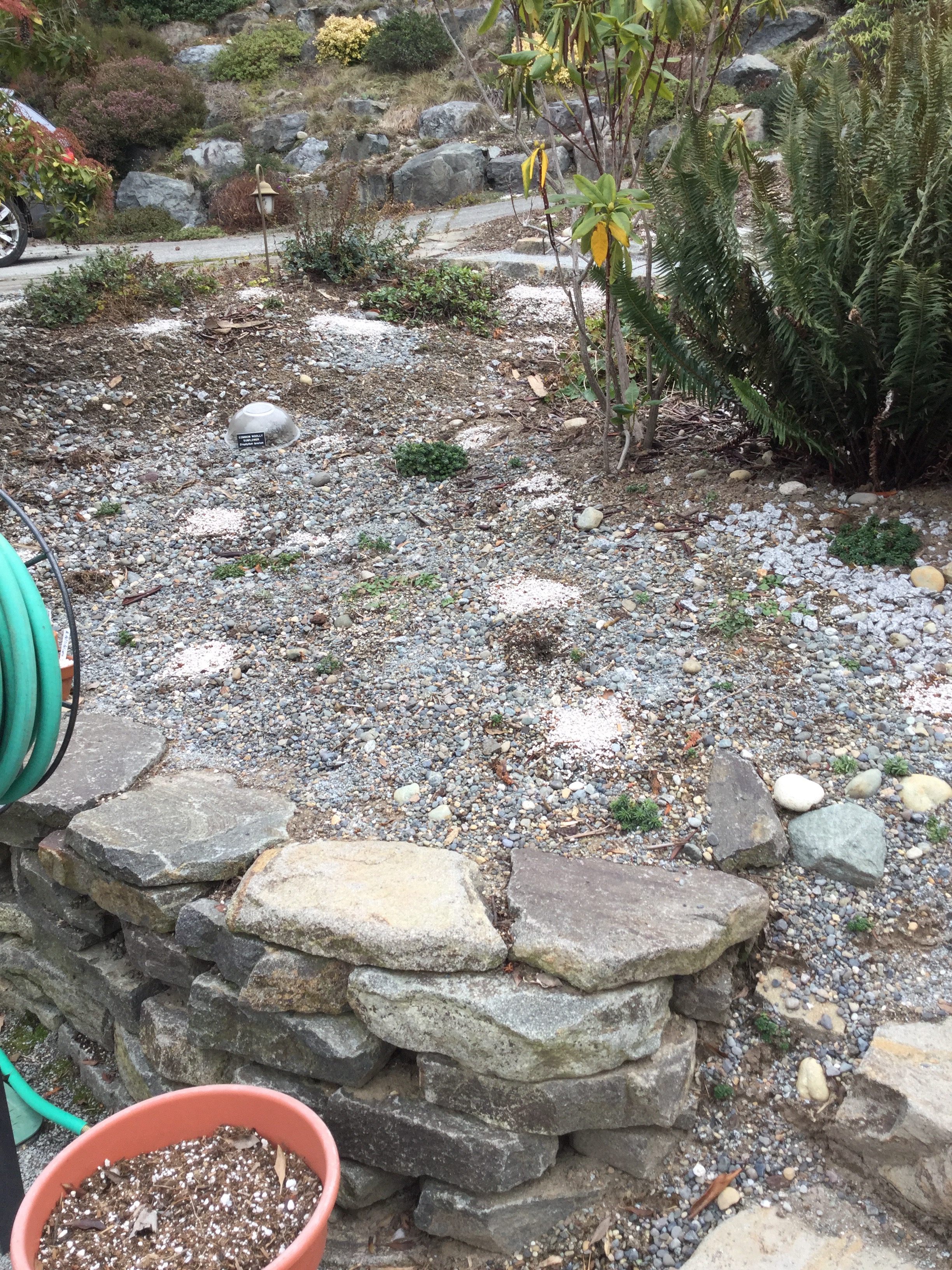
Plants poking up only include the usual, the light blue camas and the brodiaea. Few trilliums are also just visible, but they usually don’t do much for months. Lots and lots of patches of Pumice, which I placed on top of every small patch of seeds or bulbs that I put Everywhere:
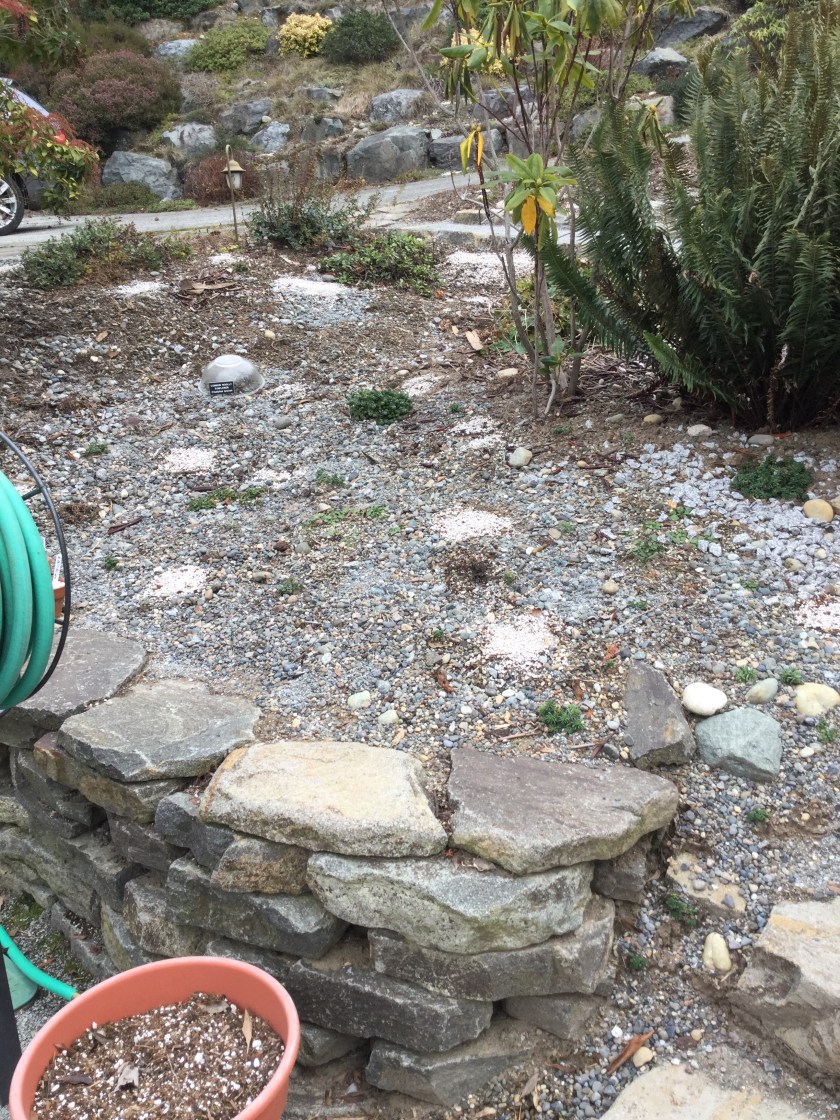
Plants poking up only include the usual, the light blue camas and the brodiaea. Few trilliums are also just visible, but they usually don’t do much for months. Lots and lots of patches of Pumice, which I placed on top of every small patch of seeds or bulbs that I put Everywhere

 I also transplanted the old patch of Spotted Saxifrage, which has been moved several times. It is now one of the first plants put in the new front yard rock garden, trying to supply it with the right amount of sand/grit and soil, sun but not too much. It is a great plant but it got shaded out and overwhelmed by Twinflower Linnea, and there is only one other 2″ patch remaining in the back yard, and so this needs to work!

Fall into winter, almost in time.

It’s December 6 and there are Lots of greens still around, due to the combination of evergreen stuff (ferns, salal), green mosses and persistent herbaceous stuff like Vancouvaria. Most deciduous trees lost their leaves but the Rhodies down below still have their reddish green leaves. A few plants like the Red Pussytoes even trying to bloom.

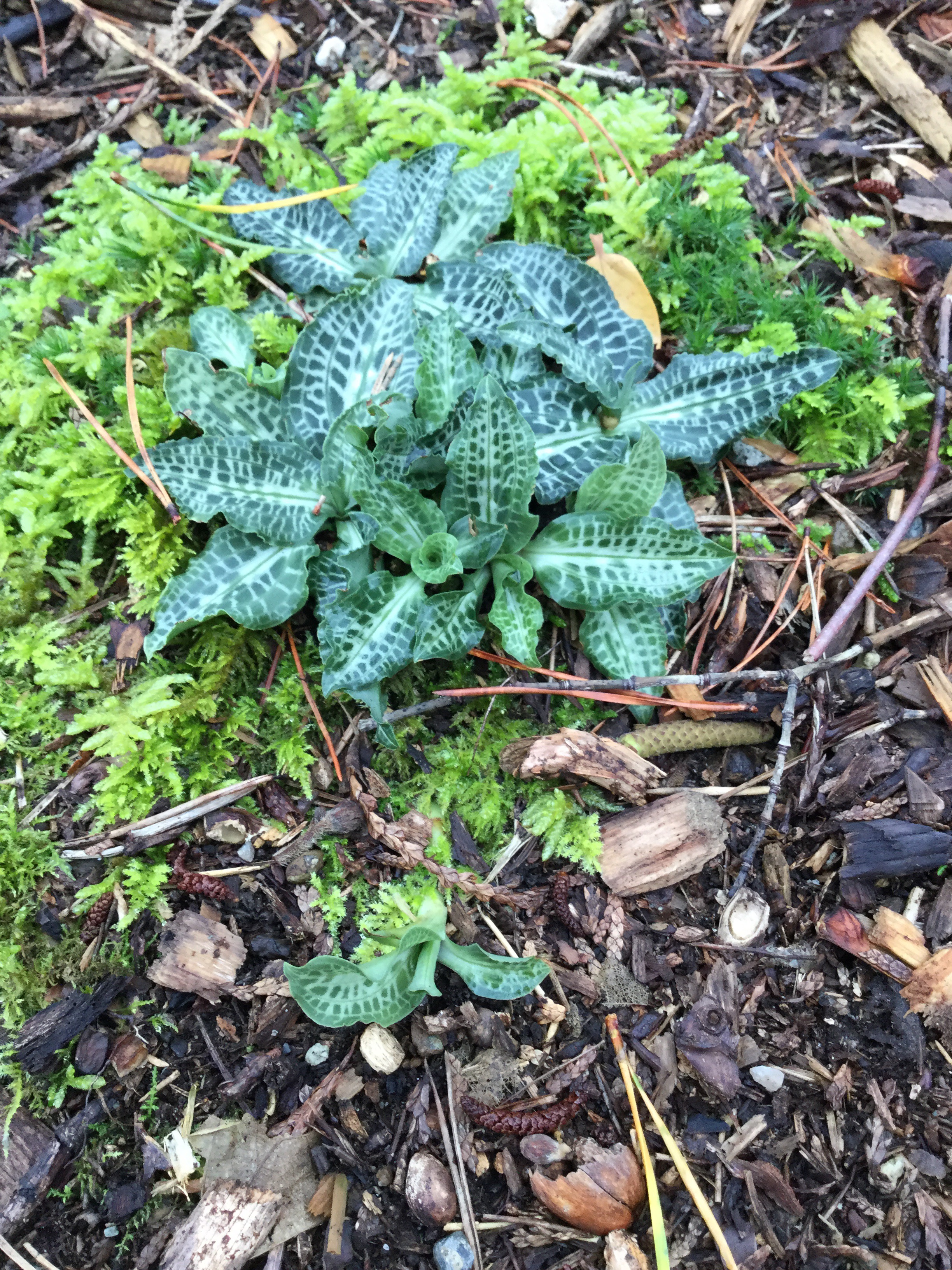
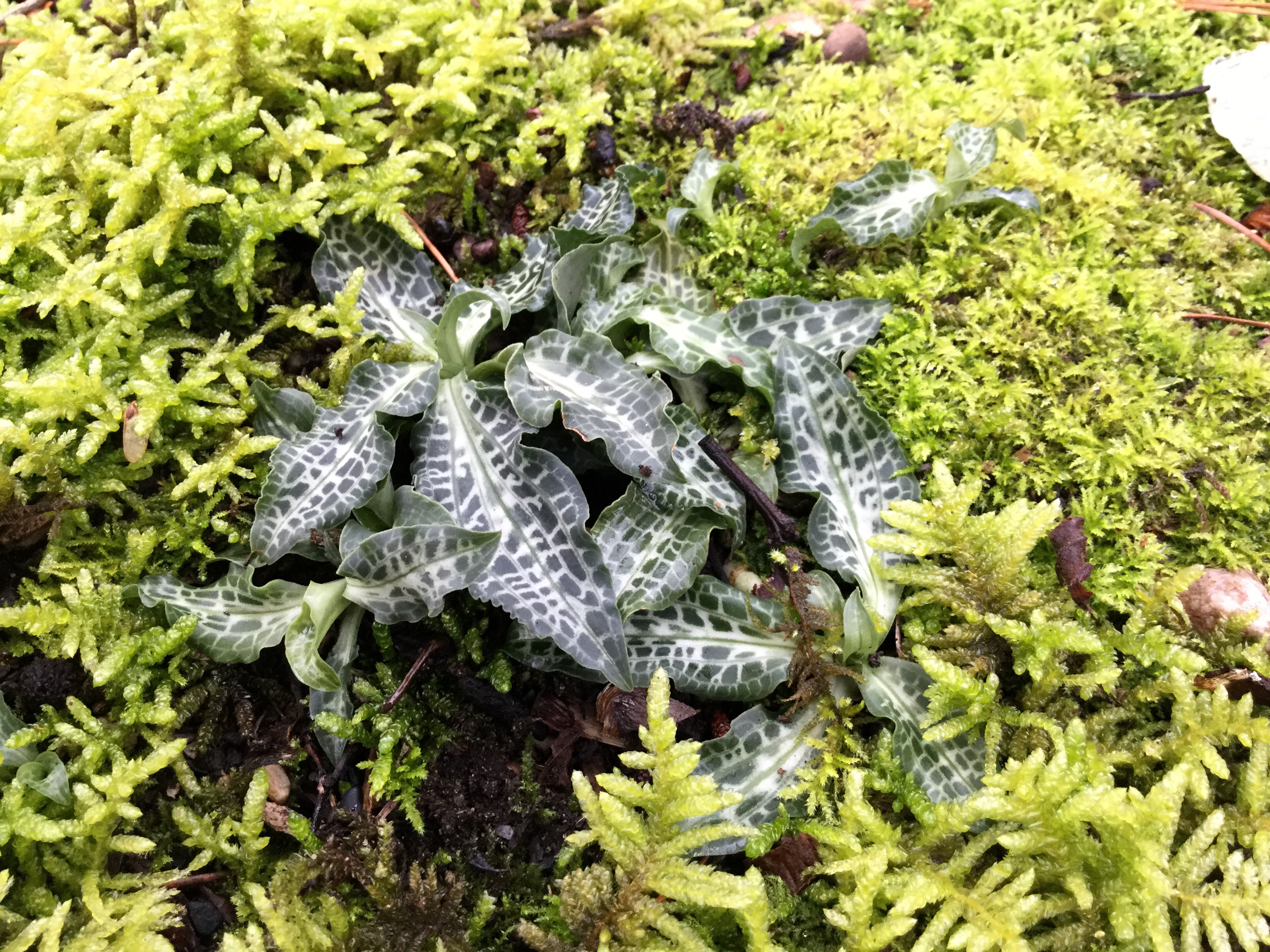
Below, two plots of Rattlesnake Plantain starts from Lopez which are thriving at two different spots ( A third non Lopez one has come up from the dead from a few years back….I’d transplanted it as well as others to get it out of the dry and sun, and they had disappeared until this last year). They have spread from about three leaves/plants to about ten or so each.  I took the two plant starts, a little soil and the in situ moss from Lopez, too, which is like ours but a little brighter and should have the fungus the R.P. needs.

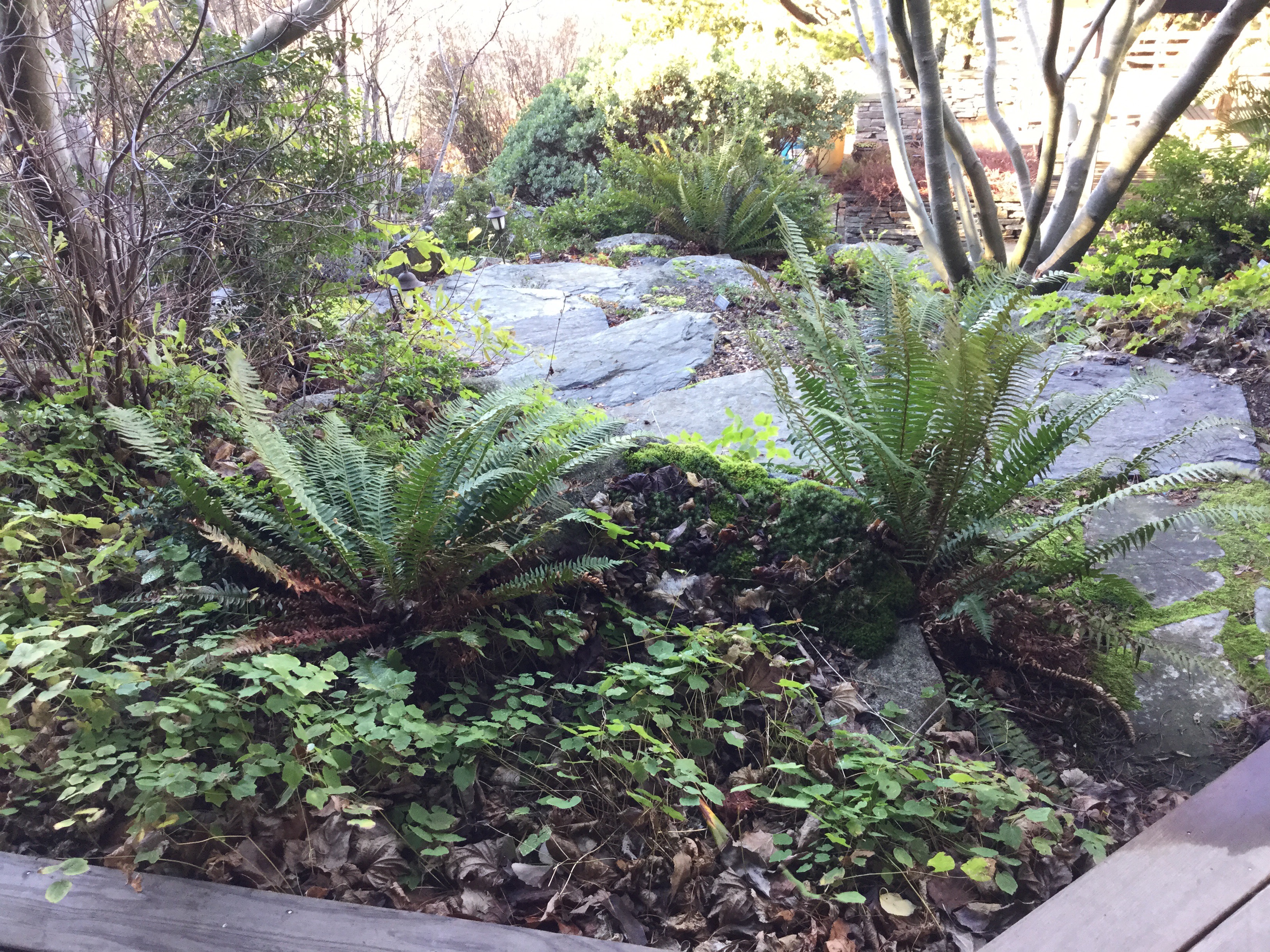
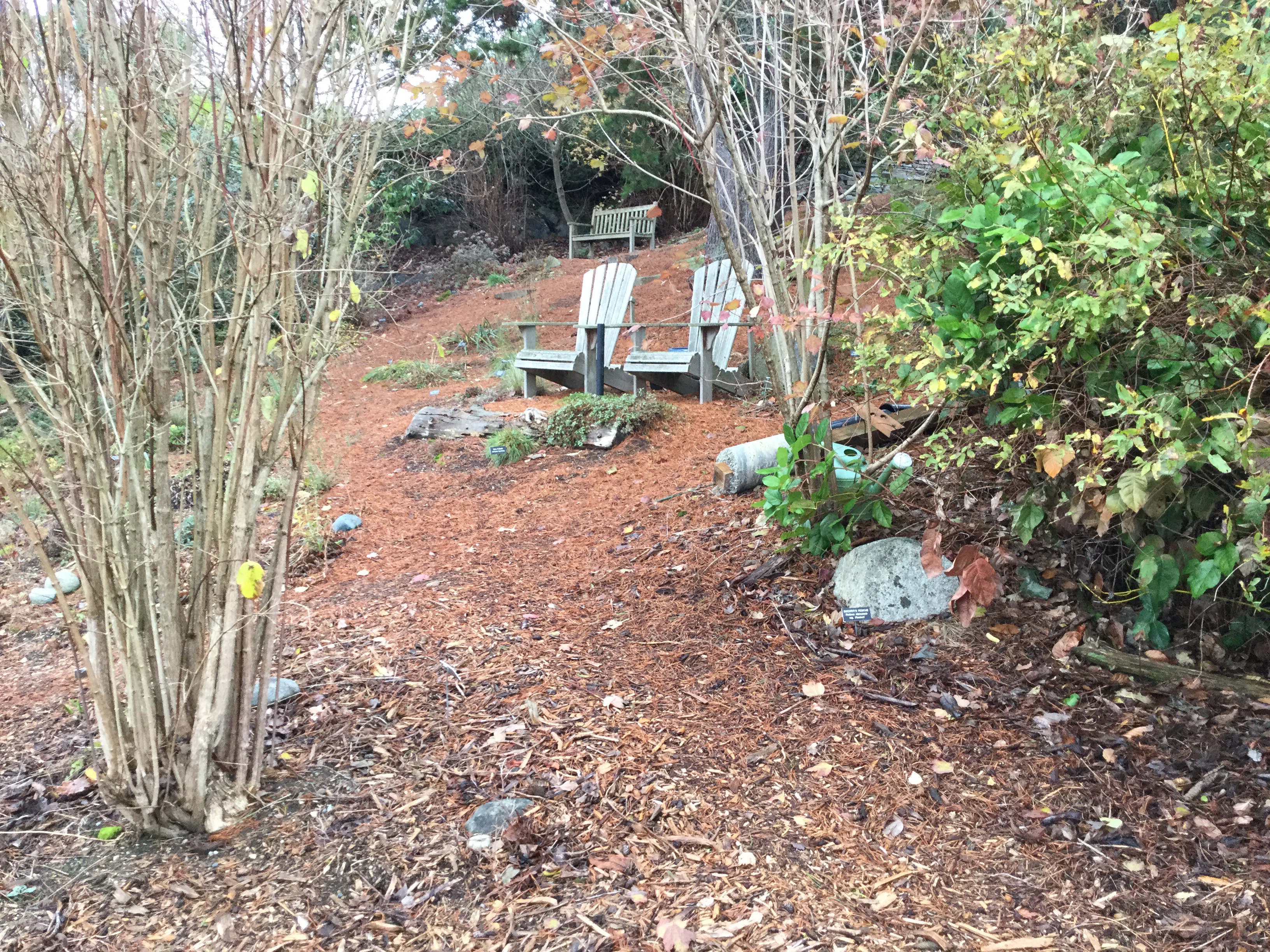
Lower back yard, pathways and places to sit. Though it is excellent screen in warmer months, some of the screen is deficient in the winter. I am still working on evergreen screen for the yard borders, but it’s getting petty good.


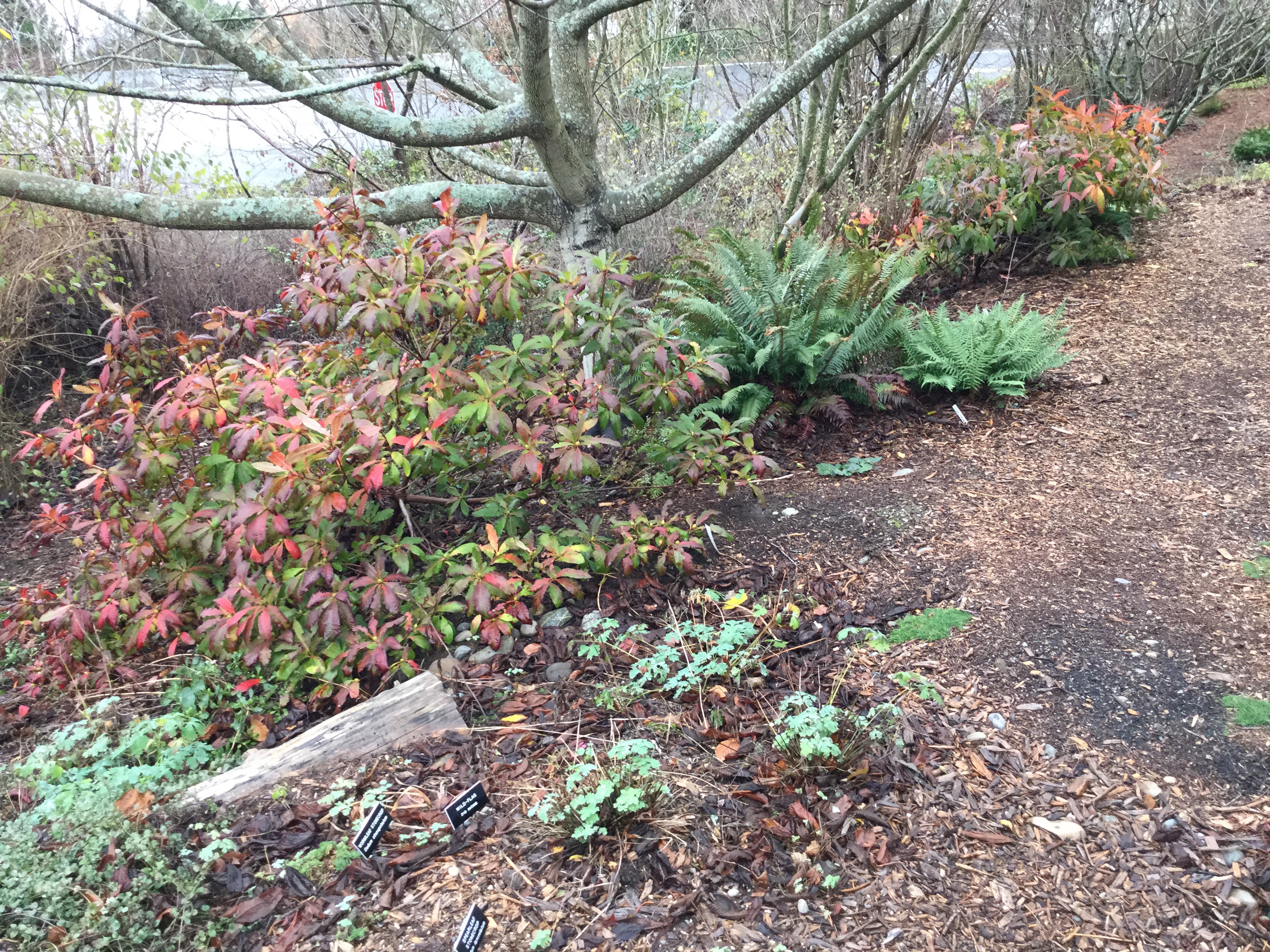
Deciduous Rhodies below, with their persistent leaves that turn reddish yellow in the winter.

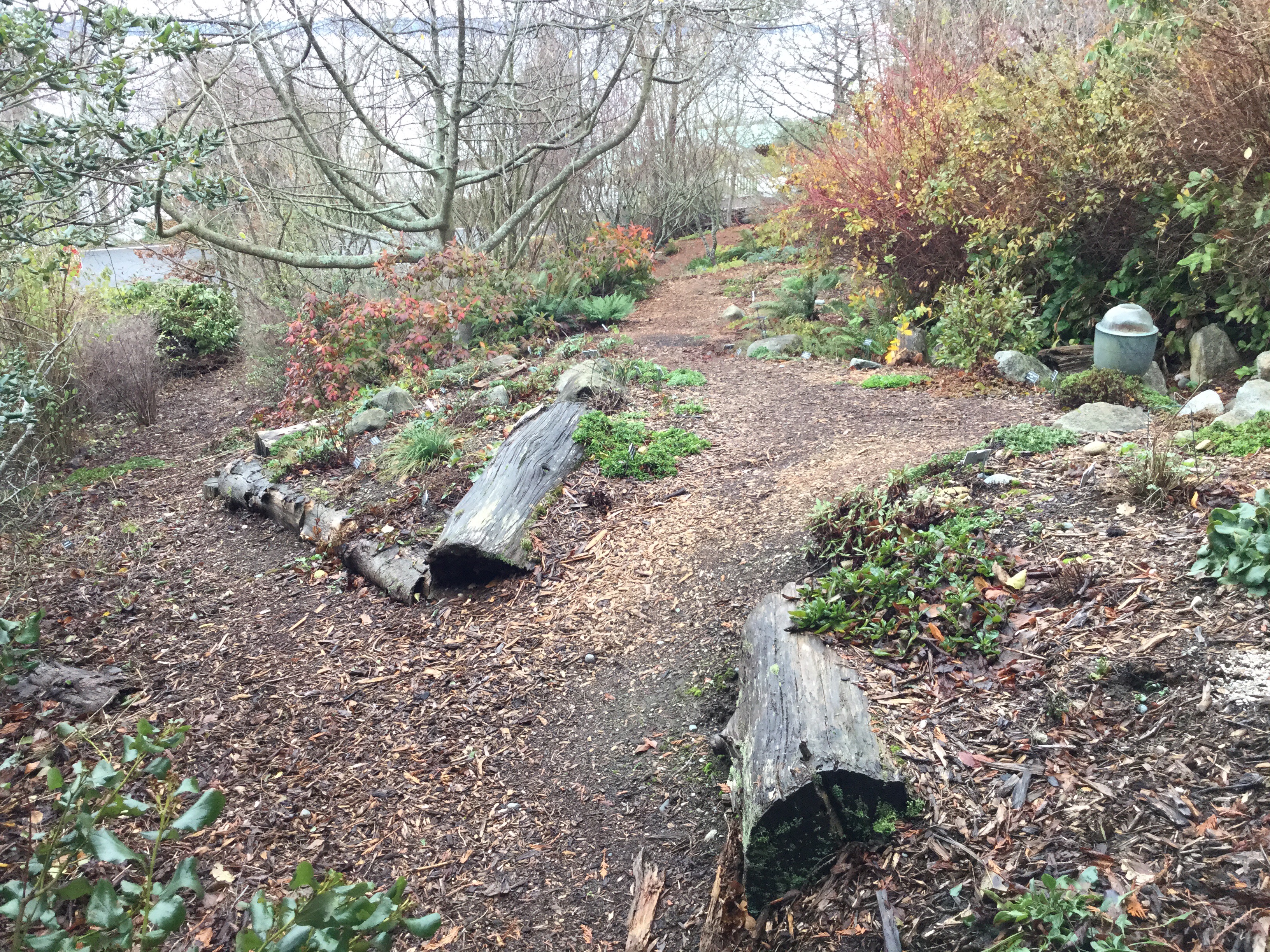
Below:The pathway up from the meadow to the pond, them looking back down to the lower yard from nearby. The cloche is on a few Desert Yellow Daisy starts from last summer.


The temps have stayed in the 50s-60s during the day and only to the 40s or higher at night. It just got down to 33 last night, with some frost on some of the ground and some ice in the pond, at least in front. I had covered three plants with glass ‘cloches’, but the rest and the seeds are on their own (of course I’ll protect anything that gminates in the winter).

My “special”seeds which rate being put in a pot: Eriogonum sphaerocephalum (Rock Buckwheat), Pink Fawn lily, Bear grass, Iris Chrysophylla, Indian Paintbrush (orange red), Desert Yellow Daisy, Woodland Pemstemon (notochelone nemerosa), Desert Parsley,Allium, Globemallow, Hookers onion, Silkflower, and Gaillardia.

Front yard landscaping project …..

WordPress acting up FOR MANY MONTHS by not saving posts, etc. Multiple false starts with pix and everything, and something would then happen to cause an error. Dave had to change the server back to WordPress, which gives up the plant directory links and stuff, but at least it will keep the posts.

Lots of stuff going on. Continue reading “Front yard landscaping project …..”

New Year’s news

It’s January and the relative warmth continues. It’s been in the 50s /40s for a long time with a brief spell of 30s. Coming up a little early also are the shooting stars, which appeared a few weeks ago. The Ookow/Brodiaea Congesta is sprouting up, as are the white Tritellias now scattered all over the back yard, white  Camas (2 light blue ones already coming up, we’ll see if they decide to bloom this year).  There may be one group of Hookers Onion coming up. A small plant spike near it has always come up but has never turned into anything. Maybe it will first not get eaten by slugs and then actually bloom this year, and I can then decide if it is worth protecting. I put some slug bait around those two and the nascent daisy.
The greenery of the yard is somewhat maintained through January, by virtue of the increasing size and extent of the evergreen, though there is a ways to go: ferns, evergreen Penstemons, Heucheras, Silal, irises, evergreen ground covers like cranberry, Yerba Buena, and Twinflower.

 
The Rattlesnake Plantain looks good, it is growing new leaves at the two sites we transplanted it in the lower back yard wooded area (from Lopez Island). One other old rattlesnake plantain plant appears to have come back from the dead. I’d transplanted it out of the sun at lest several years ago -in an unlikely place for it, to be honest. It surprised me by coming back up last fall. Maybe it was there but invisible…..it is less  dramatic in the rattlesnake pattern but it is one. There is a nearby plant that I’m not sure of, it superficially looks like it, though I would not likely have planted anything there as it is in the walkway. That one is under surveillance. A third one nearby is likely a weed, that one will likely get booted soon.

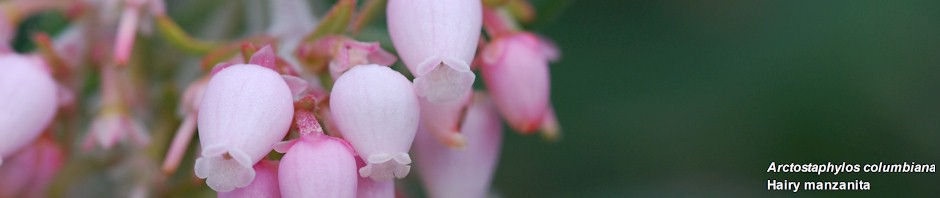
We took out the now monstrous Garrya tassel bush from the back yard near the deck, which was crowding out all the adjacent plants, and causing the Hairy Manzanita to be deformed. It was over 8 feet tall and spread widely. It also was stunting the adjacent Pink Honeysuckle, Penstemon and deciduous Rhodie- it had to go. It was too big to transplant. I hacked all the limbs off, and Dave dug it out. Much more sun for all those plants near the hot tub deck and steps. We planted a new Garrya Fremontii which is a smaller shrub and put it where it has room to grow for screen. Here’s a pic of the tassels. Pretty tree but it IS a monster!  


Late fall news

Some early shooting star coming up as well as the Brodiaeas, mostly the blue harvest Brodiaea. Some seeds germinating at the west yard that I think are Gillia, and I out a glass bowl cloche over them. They seem to like that . Also put one over some of the short purple asters and an old, non thriving stem of Wild ginger that I thought was dead a long time ago, it has one leaf and some shoots to protect from the slugs (fast forward two years to 2017, it’s a big healthy plant now, go figure).

Two new Rattlesnake Plantains I squirreled from Lopez island, along with their dirt and moss. They seem OK so far with some new growth. Also, a couple of plugs of Rattlesnake plantain popped up near a small Red Flowering Current, I must have planted them there long ago. So that’s three sites. Previous attempts have all failed, I think for versus reasons, sometimes it was the tentative health of the bought plants.
Seeds sewn this fall, in the middle of November, were about eight or so plants that I collected seeds from that I don’t have that many of, or at least want to increase:

In planter pots: Pink Fawn Lily, Oregon Fawn Lily (off white), Wild Blue Flax (two pots), Hookers Onion, Yellow Avalanche Lily (fawn lily), Common (small) Camas,

In the yard, around other plants:Camas: white, small purple, tall blue,  white and magenta Shooting stars,  trillium (very few this year), Brodiaeas, Lamium /Yellow Desert Parsley, Penstemons, Ookow.

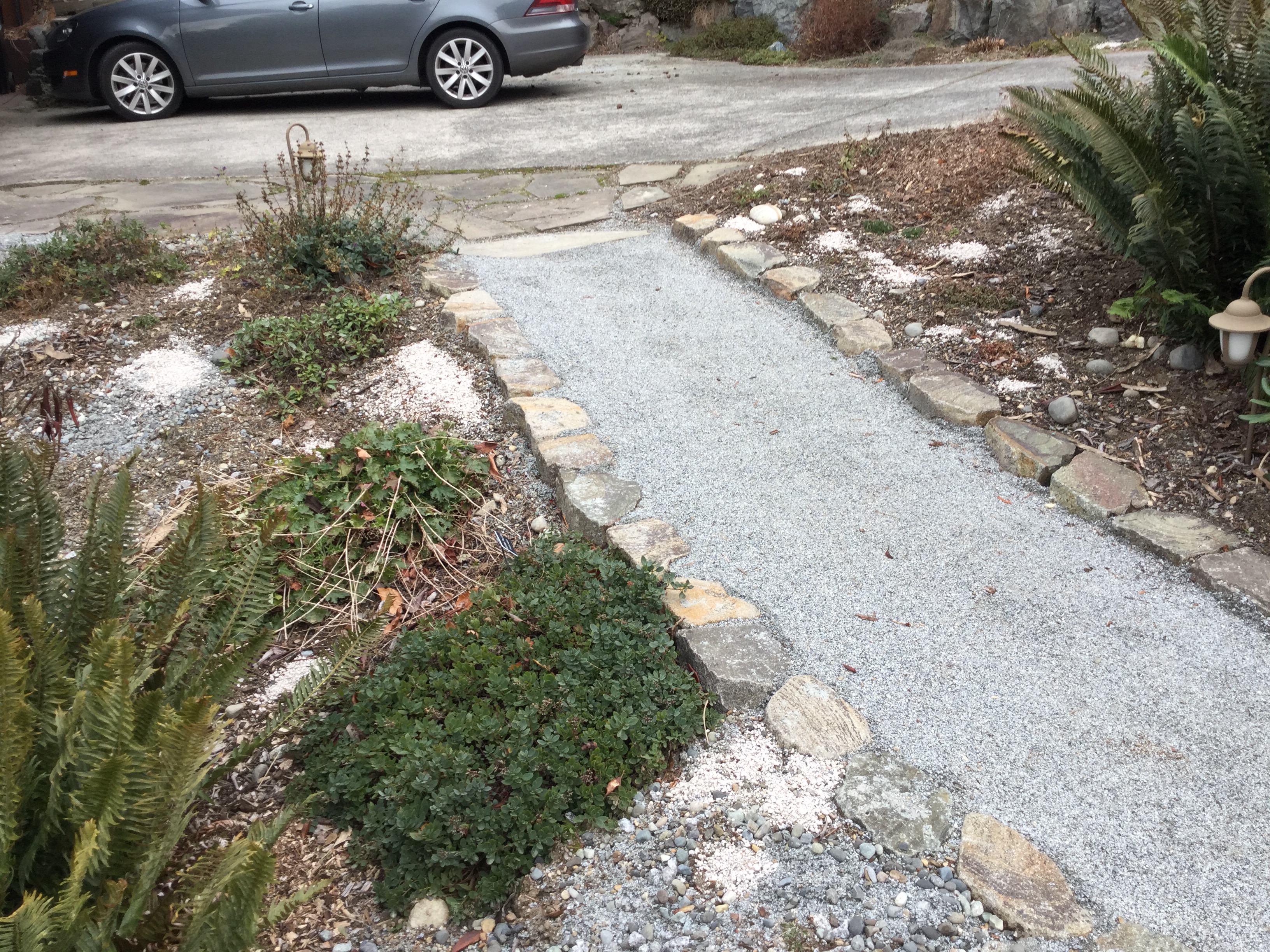
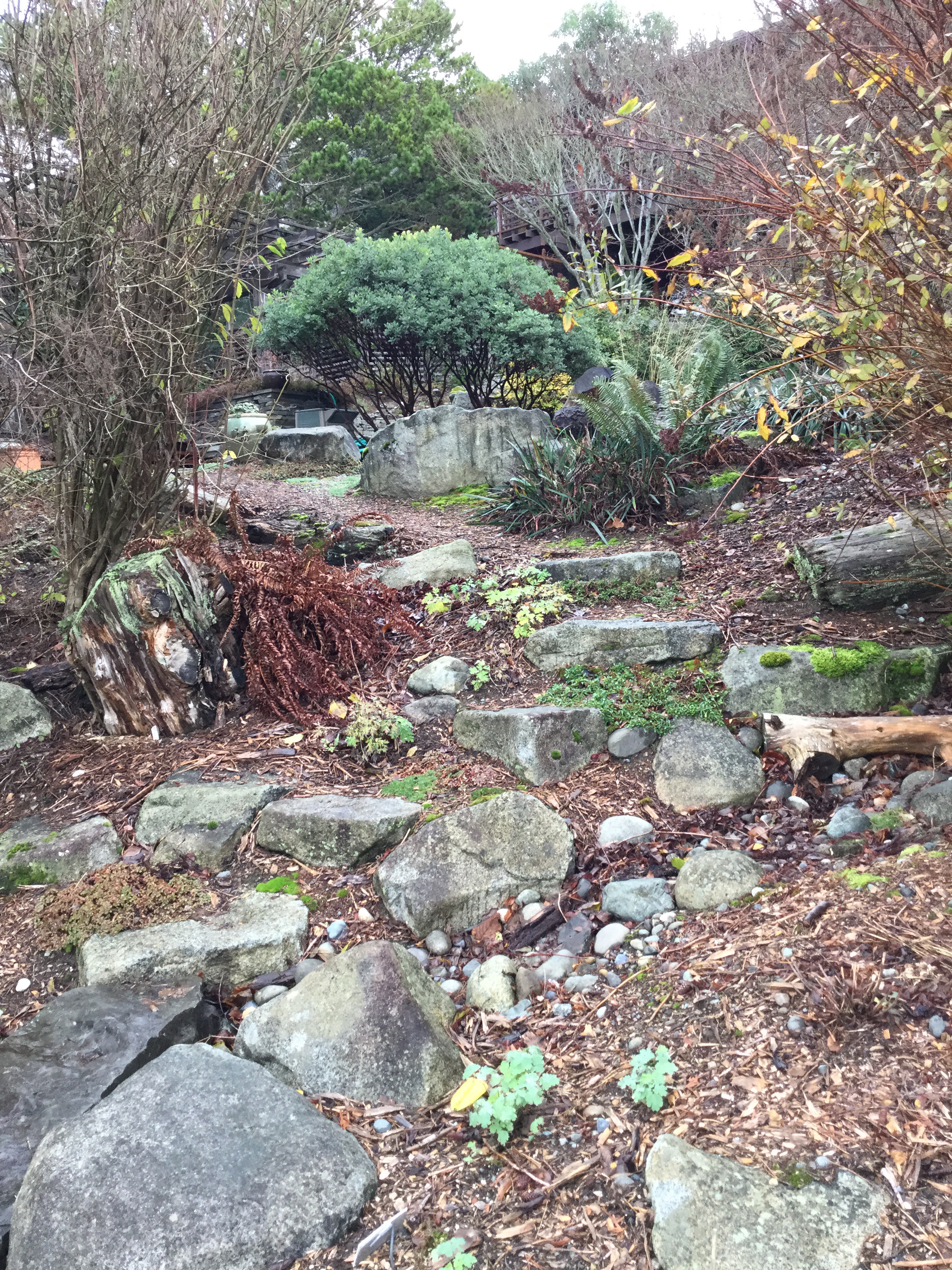
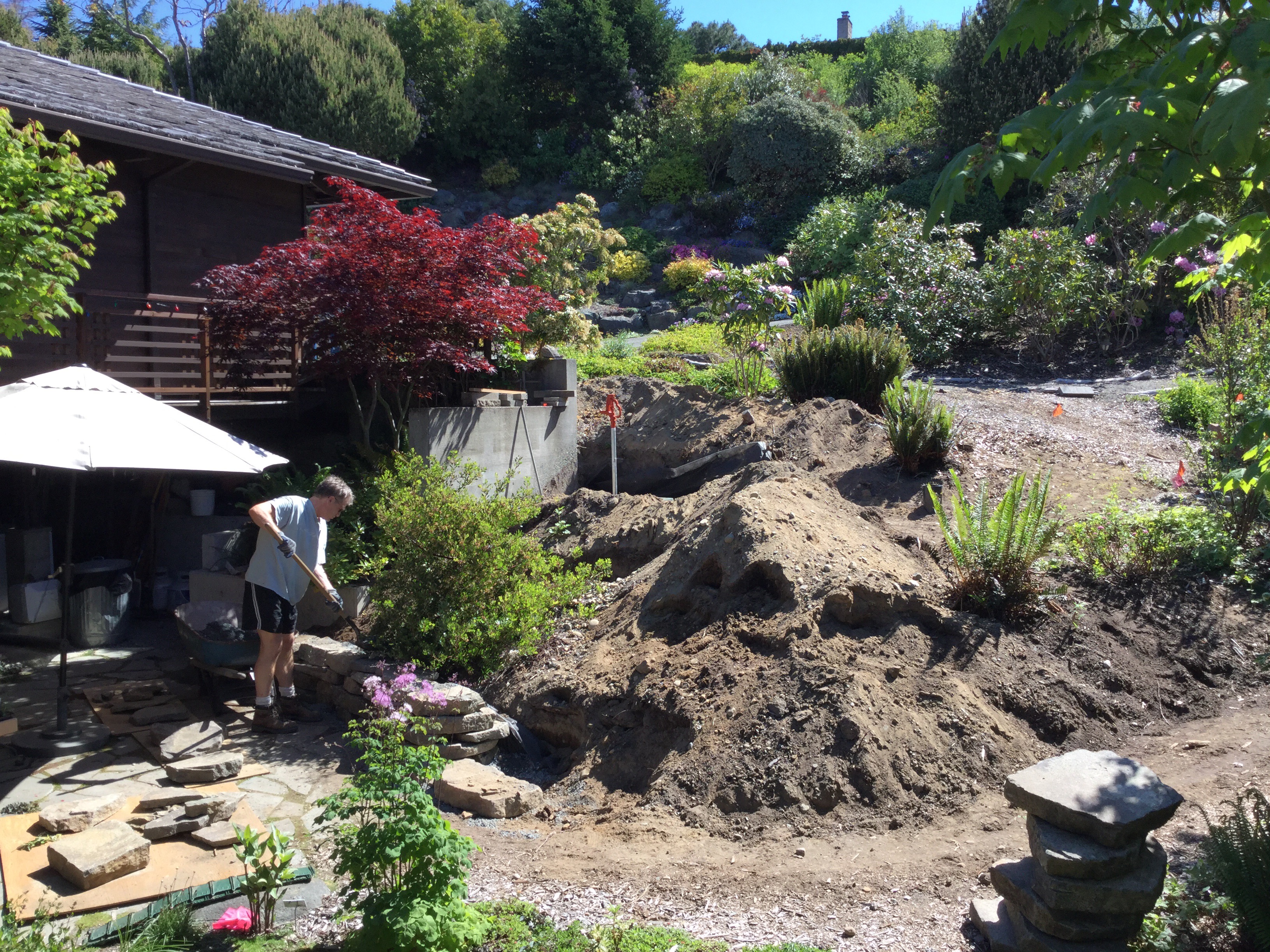
We are going to have a minor landscaping project done in the front yard, which has never been addressed and is now quite an eyesore. In waiting for a particular landscaper, I ended up doing some of the tear out work, which should save us some money, anyway! I tore out the mahonia patch that was taking over the front yard.  For this project, I am going to have large stone steps added from our patio up to the walkway, possibly in two spots. That is the route we usually take on foot anyway, and it will clean up the area for a true rock garden. Just hope the moles and voles aren’t able to mess with them too much.

Below, pix of the before and after (added pic of fall 2016):

Fall is now here

Because daylight savings was over mid November.,Interestingly, as difficult as the summer was on our plants what with the heat and dry, the September rains and the heat finally breaking caused a lot of greenery to develop, even some flowerings in October and now November! The plants that bounce back when it rains like Bleeding Heart, Bluebells, pussytoes, columbines, Penstemons,Heucheras  Lewesias,nodding onion, boykinias and trifoliate foamflowers all came back and are still quite prominent despite the date, due to the persistent mild weather in the 50s and 60s. Fortunately the Globemallow (orange flowers) is doing great this year, it must have liked the sun and heat.  It used to get rust on the leaves and fail when it was in planters. Also liking dry sun without fading first: Beargrass, Wild Blue Flax, Monardella Ordorissima, Gilia (although they don’t much like the pine needles where they are), all the Buckwheats, Yerba Buena, Sea Thrift, and Asters.

 There are other plants that are still flowering, even in November. They include pussytoes, though the pic above is not from now-they are still in the bud stage right now. But Deciduous Rhodies, Penstemon Tolmei, Lewisia Columbiana are actually in bloom. The hummingbirds go after the strawberry tree  buds and our feeder, of course. 

  Brodiaea is coming up at multiple places, as of the LAST WEEK OF OCTOBER! This pic is from last year’s Brodiaea experiment, but there are several sites up this year, too.