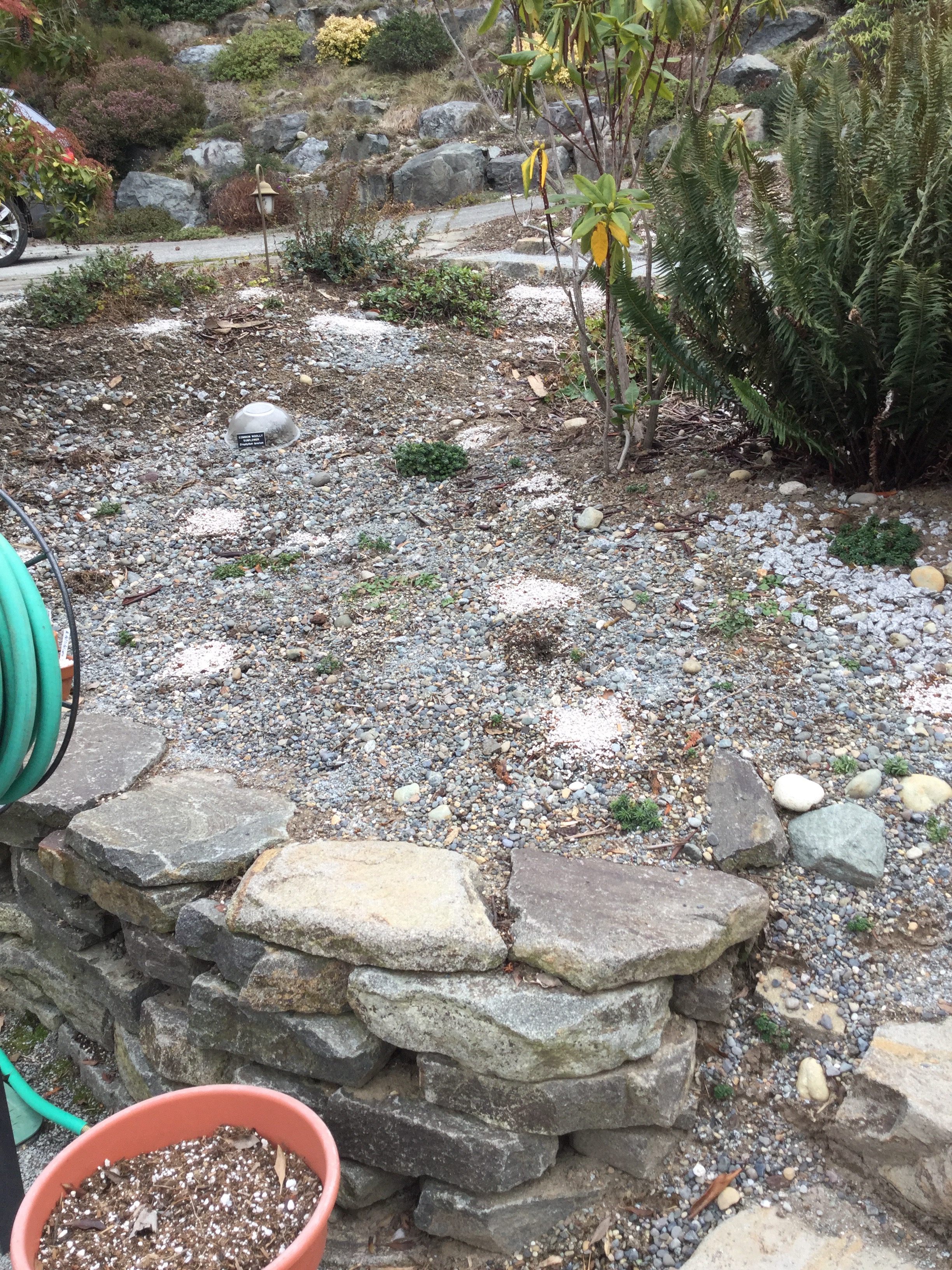
Still march, more updates

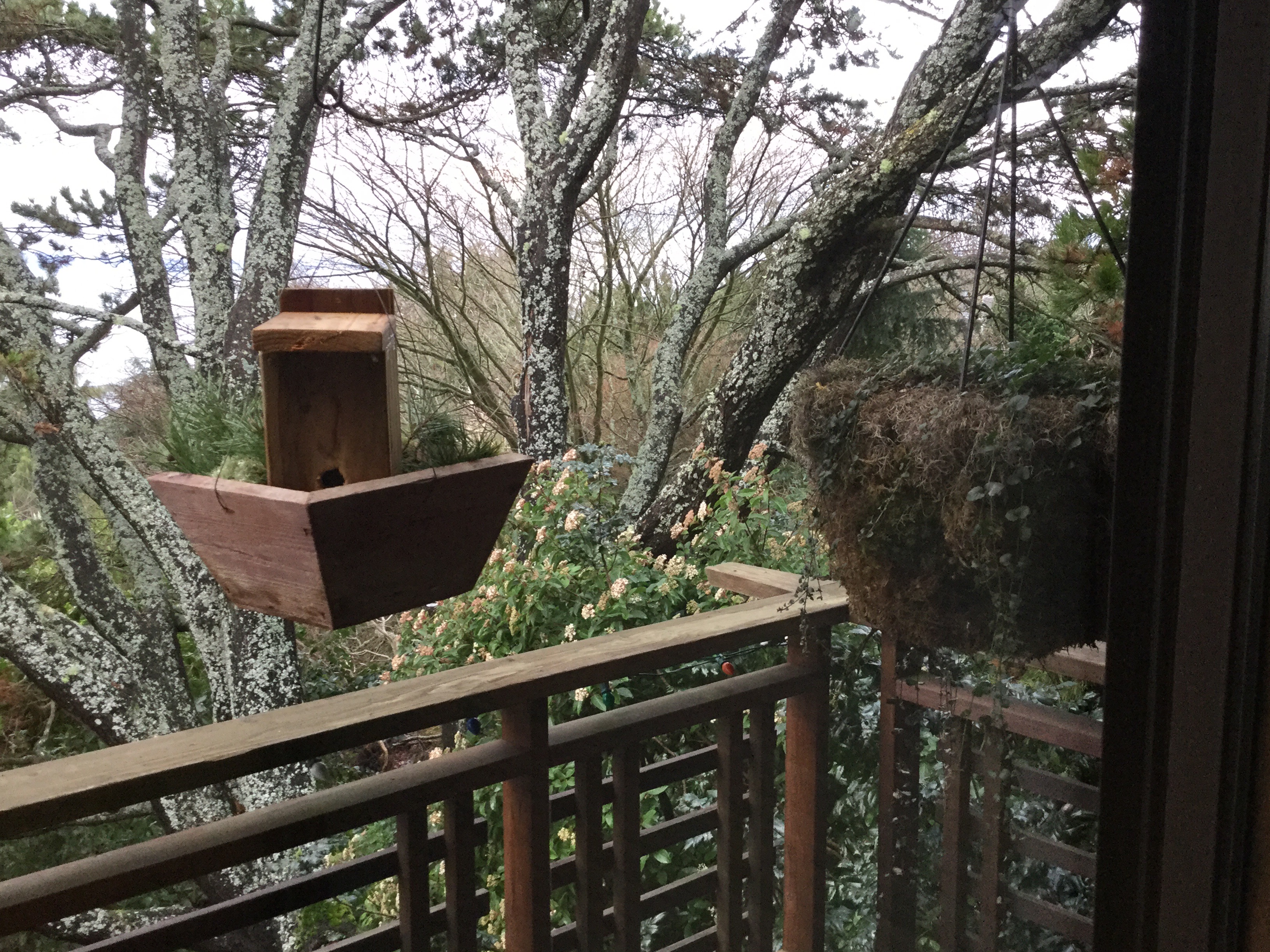
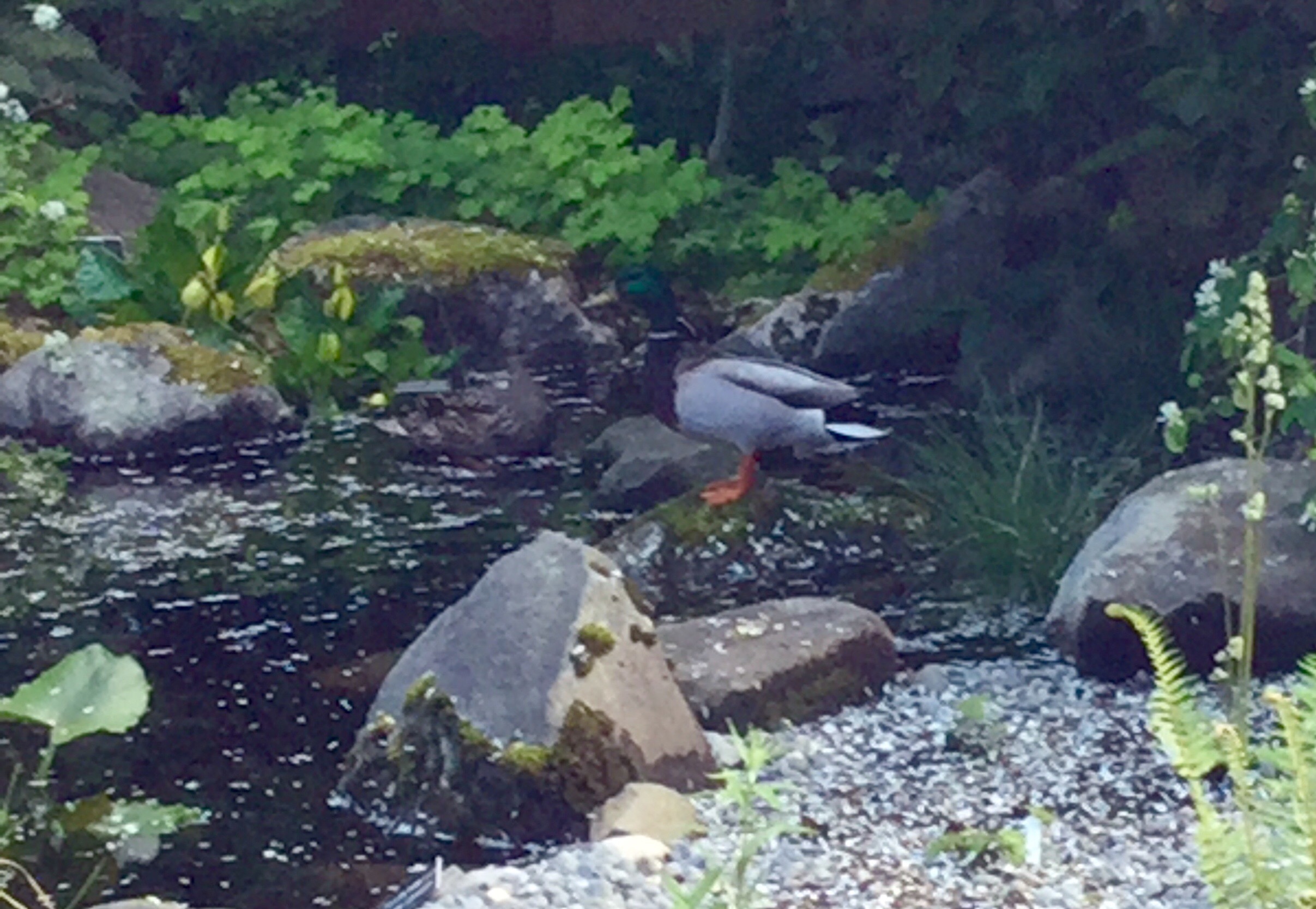
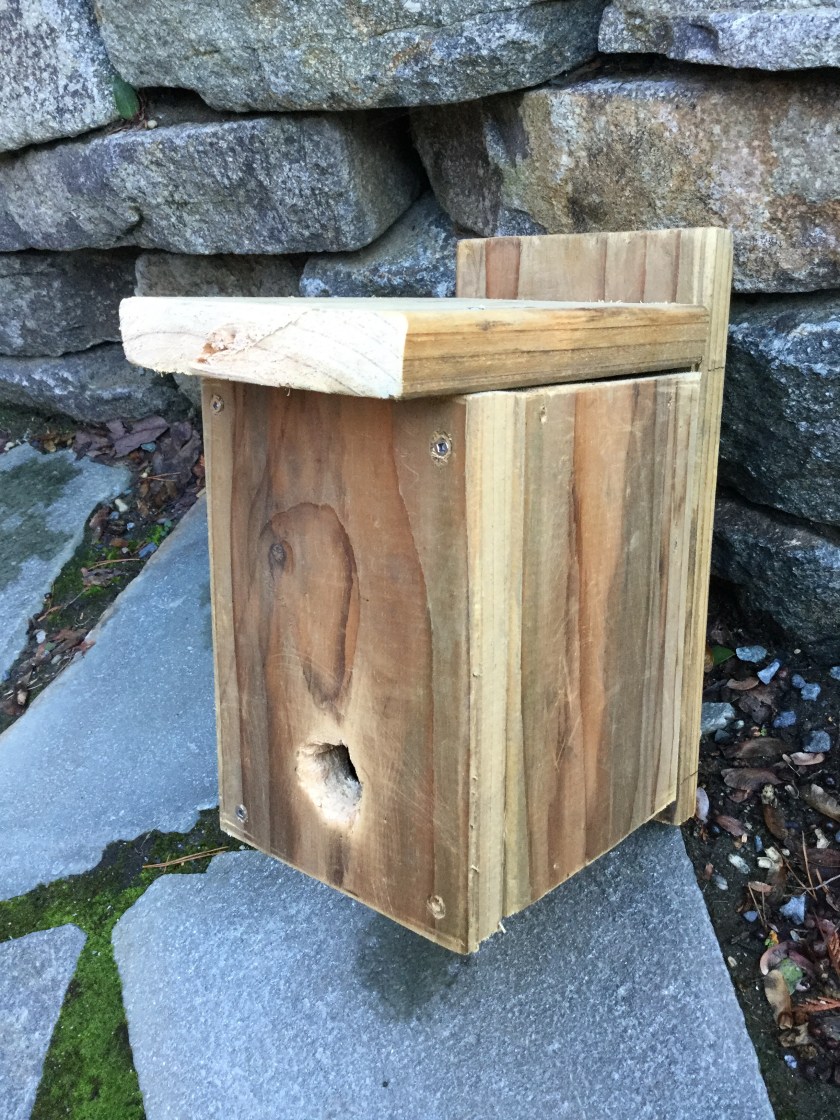
Rufus hummingbirds back, the yard is noisier than ever with those things now. Lots of ducks coming and going in the pond, often four but mostly two now. They don’t seem as skittish this last week, the female walked and rested around the yard, neither flew away when I just walked by. Still no wrens trying out my nesting box – I converted the ‘roosting box’ a couple of weeks ago by inverting the front, so the hole is towards the top. That way there is ventilation (hole in bottom during winter to keep heat in) and some protection for the babies. 

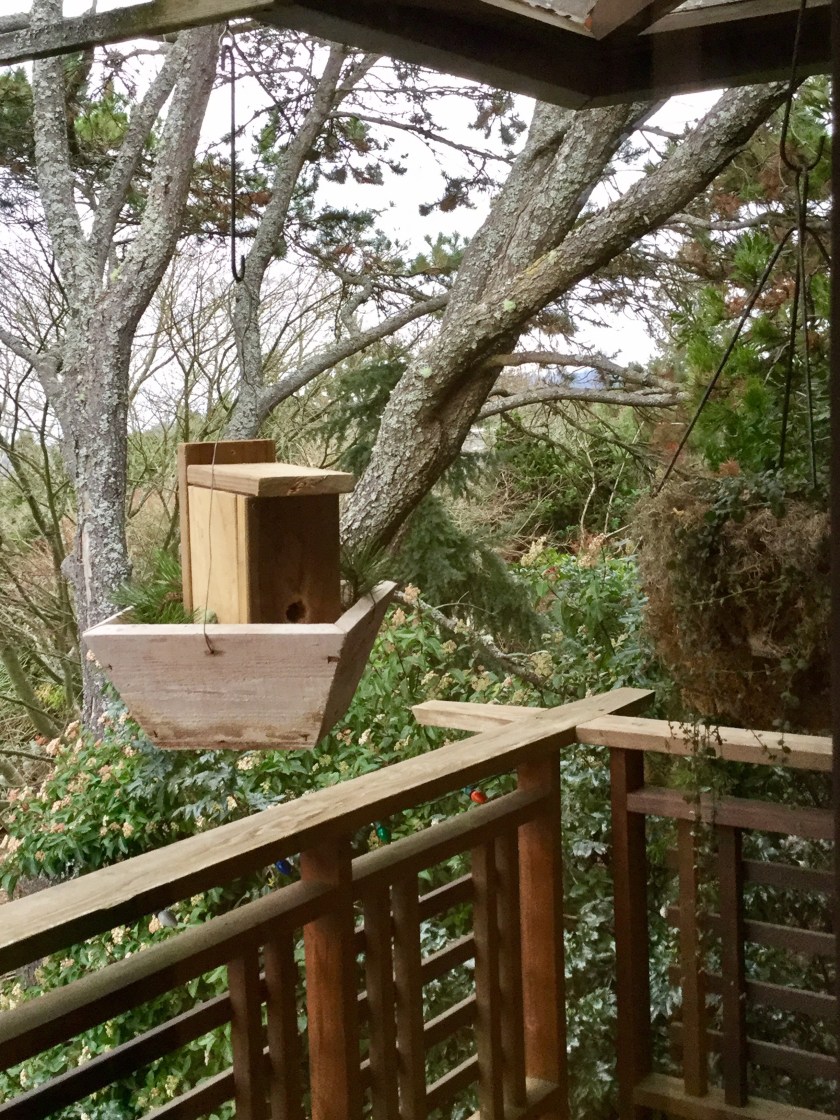
The nesting box is hanging by itself now (not sitting in planter), but is in the same spot. Hoping the wrens are comfortable enough to use it here. If not, will move it for the second brood.

Fawn lillies coming up, including the pink, white and off white! Some Leopard lillies and chocolate lillies just poking up. Oh, and my trilliums from seed…..in the back yard are the oldest ones, I can’t remember if they are arlund 4 or 5 years old now, but there are about 6 of them and they are all going to have the three leaves of a more mature seedling. Any flowers??? Can’t tell yet. But the oldest group also looks like they areTRILLIUM CHOLOROPETALUM (Giant Trillium).  I’ll have to look that up and see whether I recorded the seed sowing or not. Those trilliums are cool, they have blotchy purple spots on the leaves….the flowers are fragrant and straighter in appearance.

OK,  I just looked it all up…..According to my site entries, I apparently sowed some Trillium Chloropetalum seeds in the late summer 2010! That would mean these plants will be 7 years old and should flower this year, even if small.  But, is the first winter considered the “first year”, or does the counting start the next spring? I kind of thought they may be only 5 or 6 years old, judging from how many times I remember watching for them to come up…but how time flies!  In 2012, I even mentioned that I planted out the T.Chloroptelaum ‘bulbs’ along with the mention of the other propagated seedlings (trilliums take two years to ‘germinate’). Anyway, I also wrote that I planted Trillium Ovatum seeds outside and in pots in 2011, so those would be 6 years old now (and POSSIBLY flower), but the plants coming up don’t look that mature. How is it possible to lose track of plants that grow so slowly??! 

March madness – duck saga

I happened upon a BUNCH of ducks in our pond yesterday ….a raft or team of ducks, apparently. They are only called a flock while in flight. I didn’t even see them and FOUR of them flew away. As I approached more, TWO MORE flew away. That makes SIX DUCKS in the pond at the same time, not fighting. Today I scared away four ducks, two at a time. And by scare away I mean simply walk down the steps….these are real ‘fraidy ducks. I think they have become that way because of the growth of the shrubs around the pond…their potential emergency exit isn’t what it used to be. I used to be careful not to get too close but so far this year I couldn’t even walk into the yard without scaring them away. Too bad for them!

Trillium seedlings starting to come up!  I think these are from sowings about 4-6 years ago  – the one patch showing up has seedlings from two different years. One of this patch had three leaves last year, and at least three of them now look like they are fairly mature looking as they poke up. They typically take 7 years to flower from seed, but can be as soon as 5 depending on the conditions. Exposing seeds to warm conditions early can cause this, maybe it happened naturally. Last year there only a few trillium flowers, maybe they didn’t  like those early warm springs we’ve had, so maybe not so good for the flowering as it is for forcing the seedling. And almost no seeds, only the Trillium Chloropetalum produced seeds last year, which will not appear until next year (if they do). Trilliums take two years to appear above ground.

Ducks in the hood – last day of February

Duck sightings/hearings last week (and while we’re at it, we heard the tree frogs, too). I first “saw” them by finding a handful of their light colored feathers in the pond, and no bird body!

Fawn lillies and Trillium chloropetalum finally poking up. Goatsbeard, Wyethia (humble ears)and Fairybells also showing their ‘spikes’ of leaves.

Also, yesterday we got rid of a bunch of small trees and the pile of pruning branches I’ve accumulated all year (had the work done). Not too much foot damage to the plants, much appreciated, and it was also I think early enough to avoid most plant damage.Our neighbor, the one who always whined about us taking out trees, now wants us to “window” out one of our pines. This may be an opportunity to deal – a couple of the their hemlocks need lowering to open up the view to the beach.

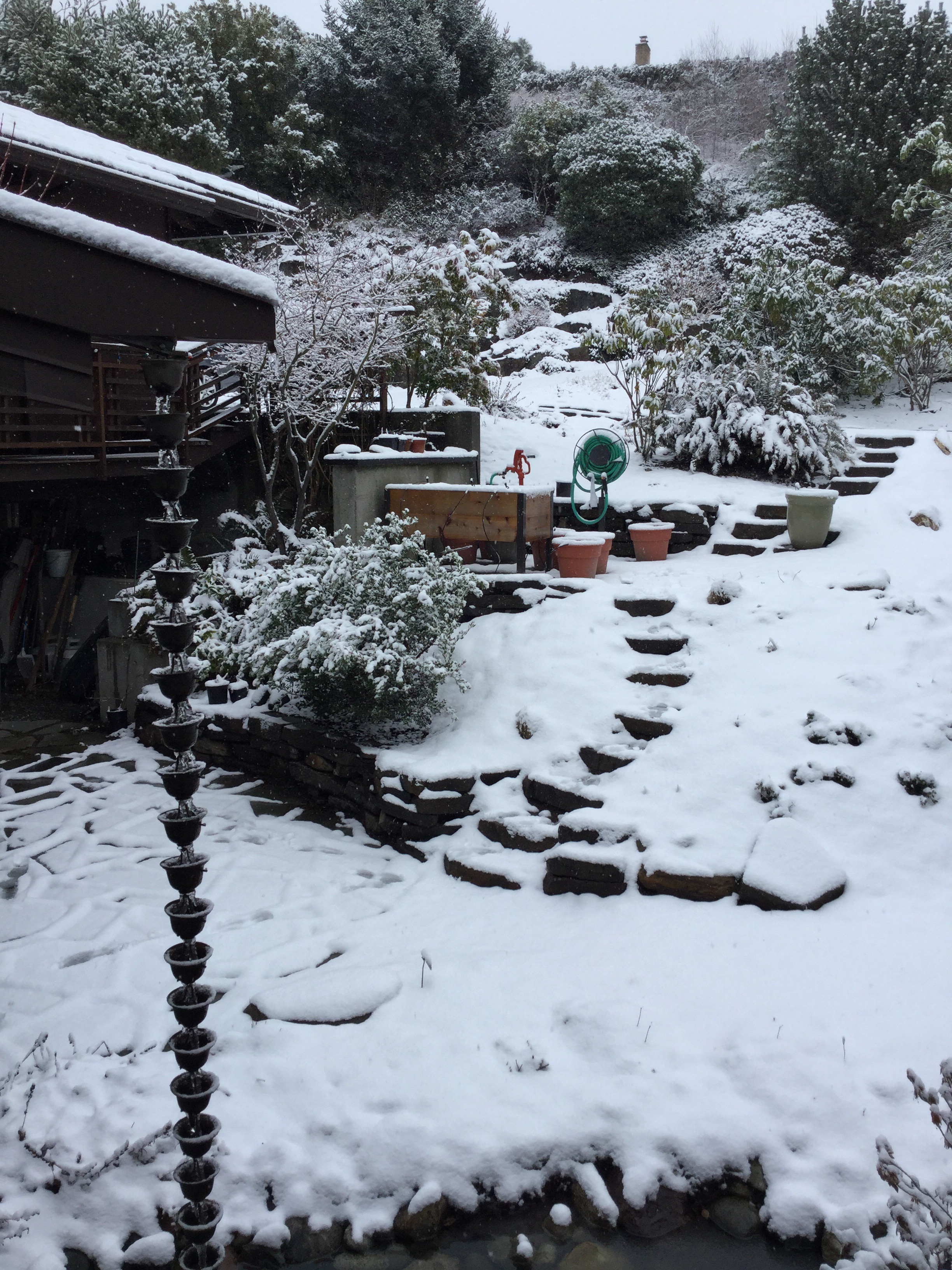
We had a late snow yesterday, after a couple of weeks of mild weather. But it looks like everything is still doing OK.

Winter shelter for the birds

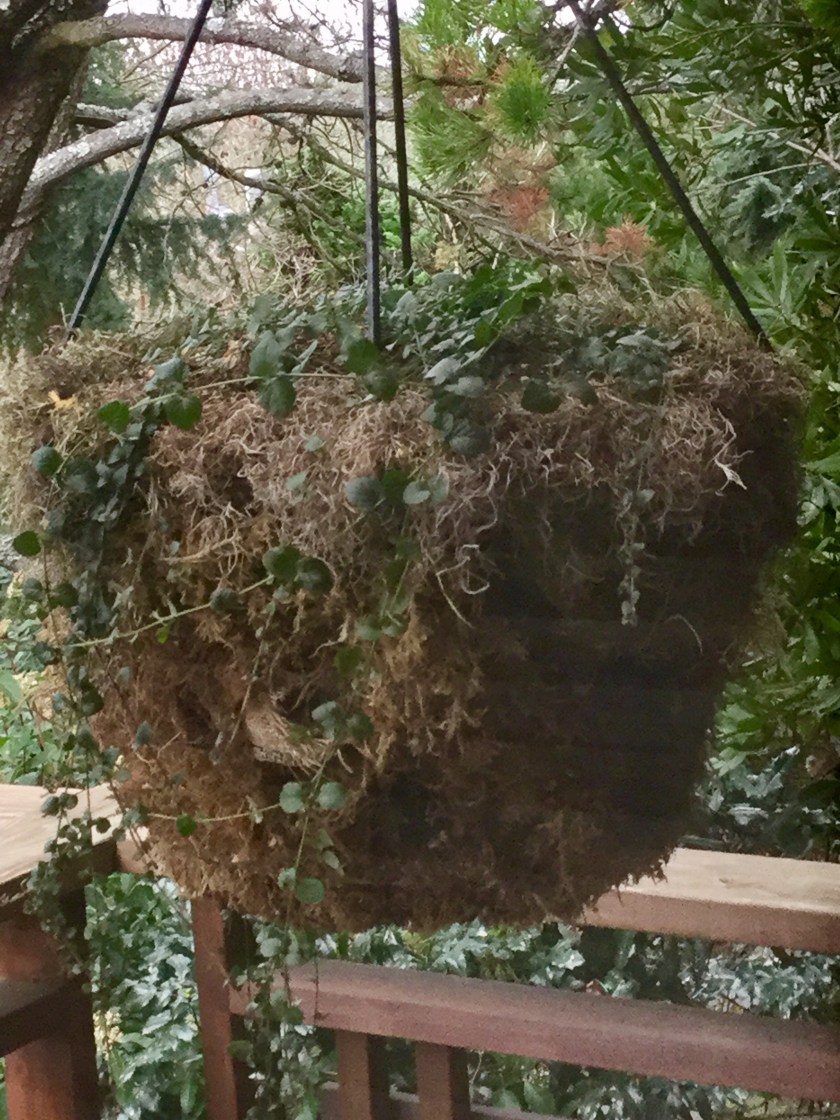
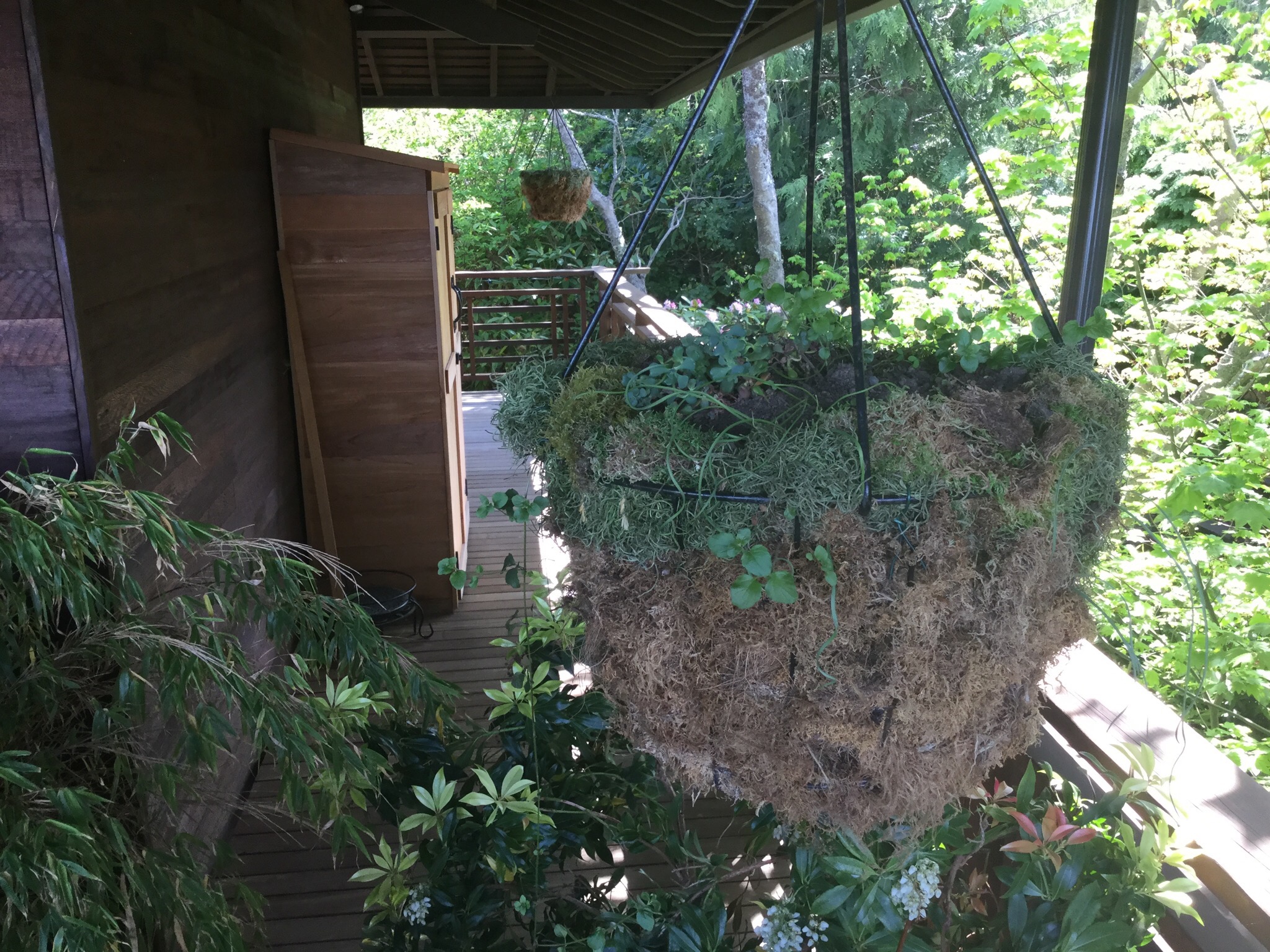
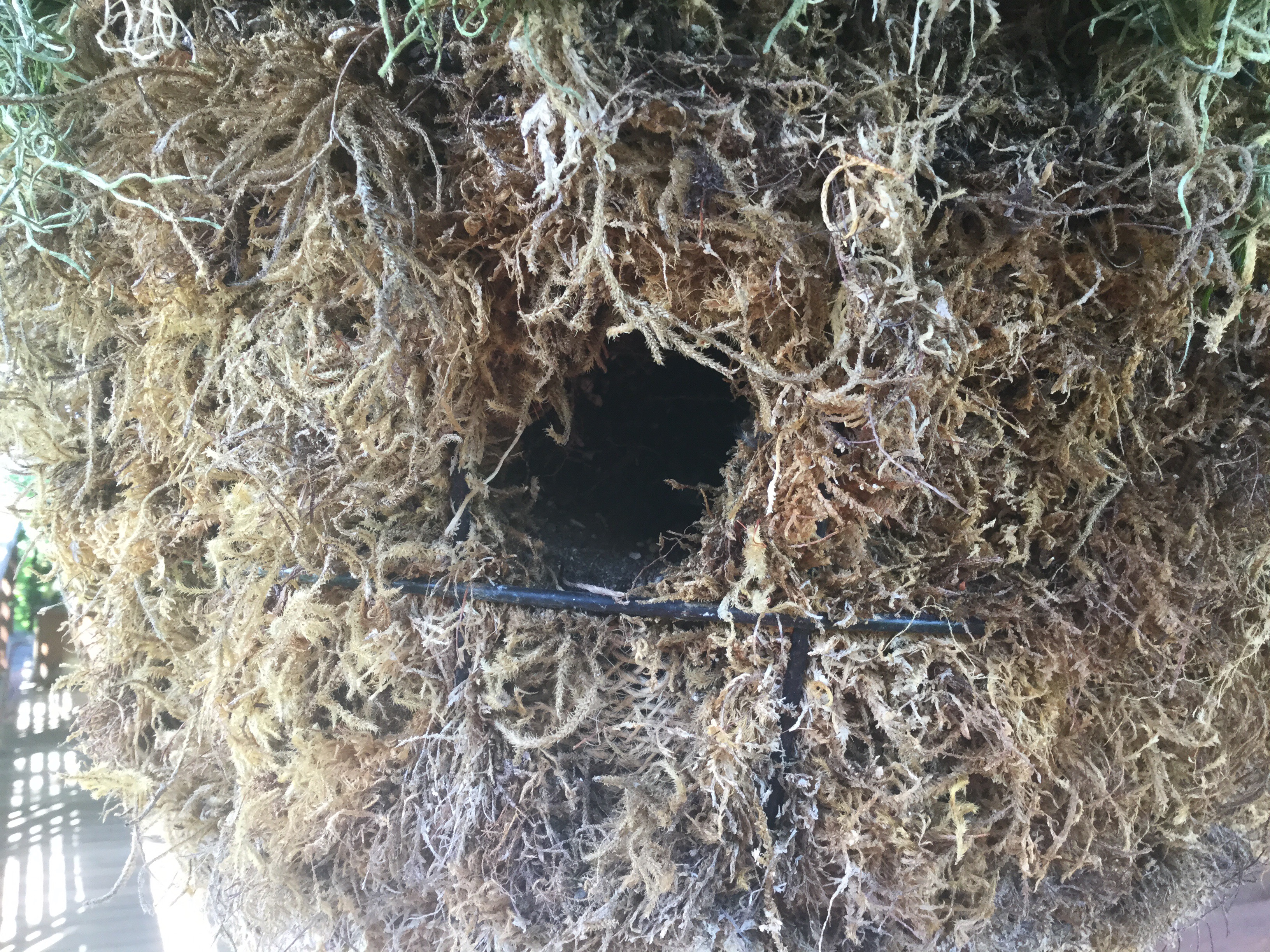
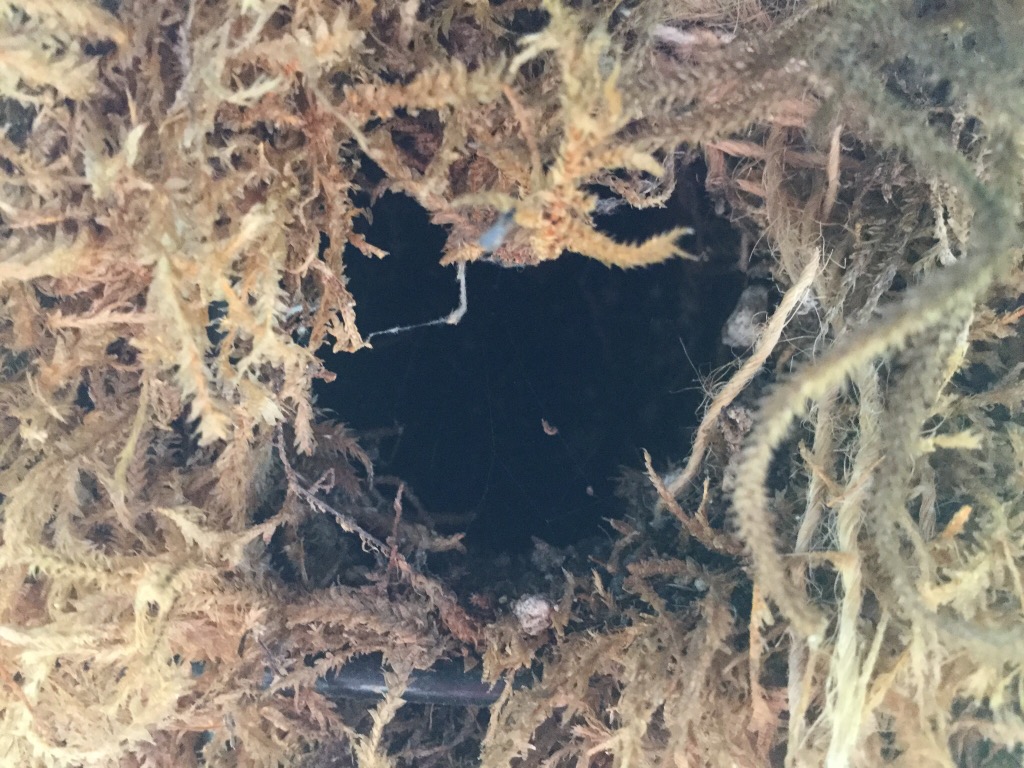
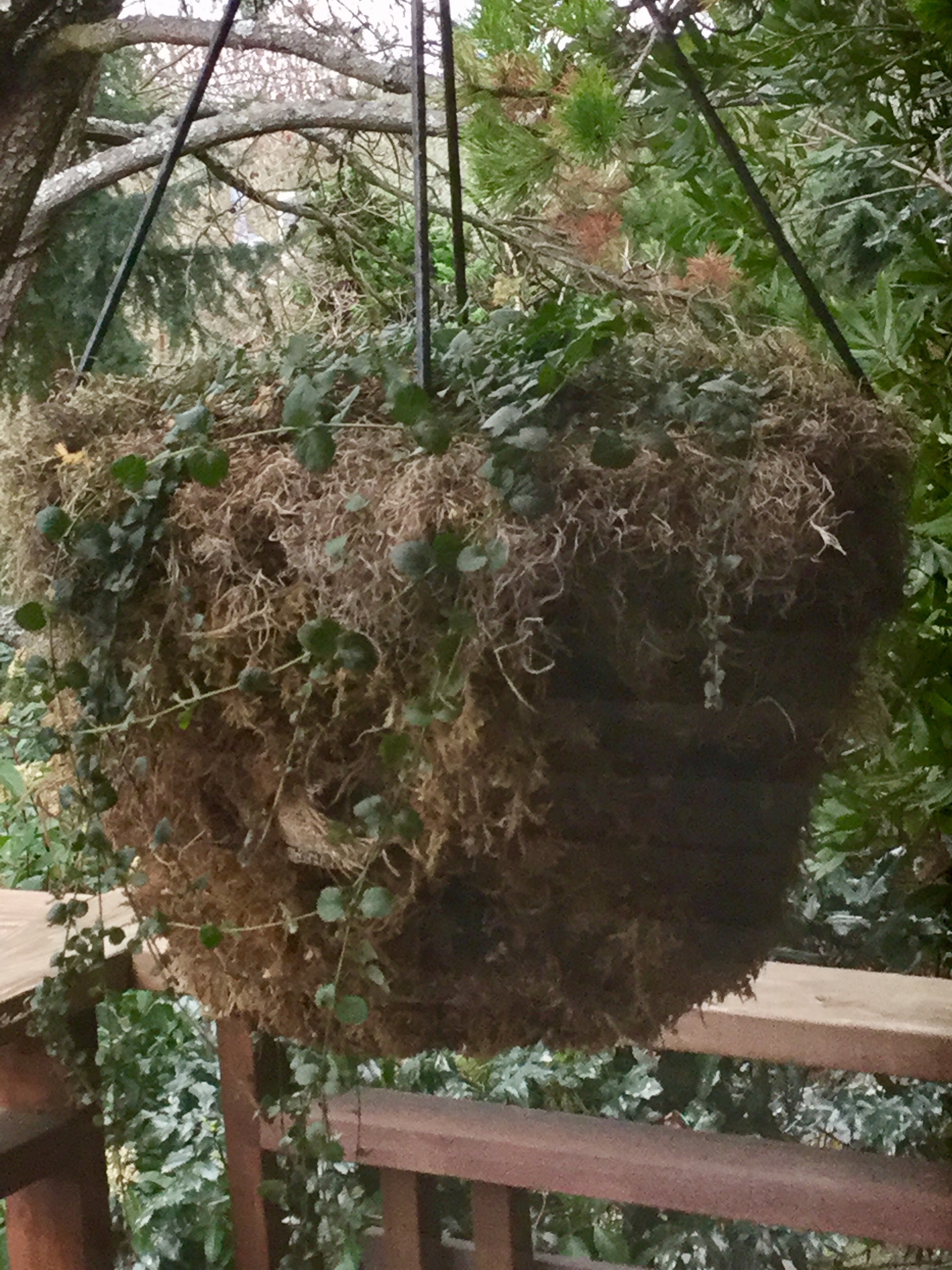
At least the wrens and maybe chickadees. The wrens have long commandeered our three hanging baskets for their hostels to sleep in overnight, except for when they are nesting. These are perfect shelter in that they hang just under the roof of the covered deck, and are heavy so they don’t swing in wind. Being within deck territory, they are predator-free. There are 3-6 holes in each which are about 1 1/2 ” wide  x  3-5″ deep, horizontally oriented into the planters, dug through the moss,  burlap and soil in the planter, to make individual little lofts. A couple are a little bigger, maybe they hold three or so. 

I recently rehabbed these planters specifically for the wrens, and shored them up with new moss and burlap but made sure to avoid damaging the wren holes. I added garlands of Spanish moss wired along the rim, topped them each with extra soil and sand, and planted Yerba Buena vines, which grow better than most things there. When I water the plants, the water seems diverted around the wren holes, so they might be sealing them.  Below are pix:

Now I’ve made a more formal abode for any leftover wrens that haven’t found a hole. I know there are a bunch of wrens out there but I don’t know where they all roost. It’s freezing weather off and on (now on) the last week or so, so I thought I’d provide some extra emergency shelter for them.  

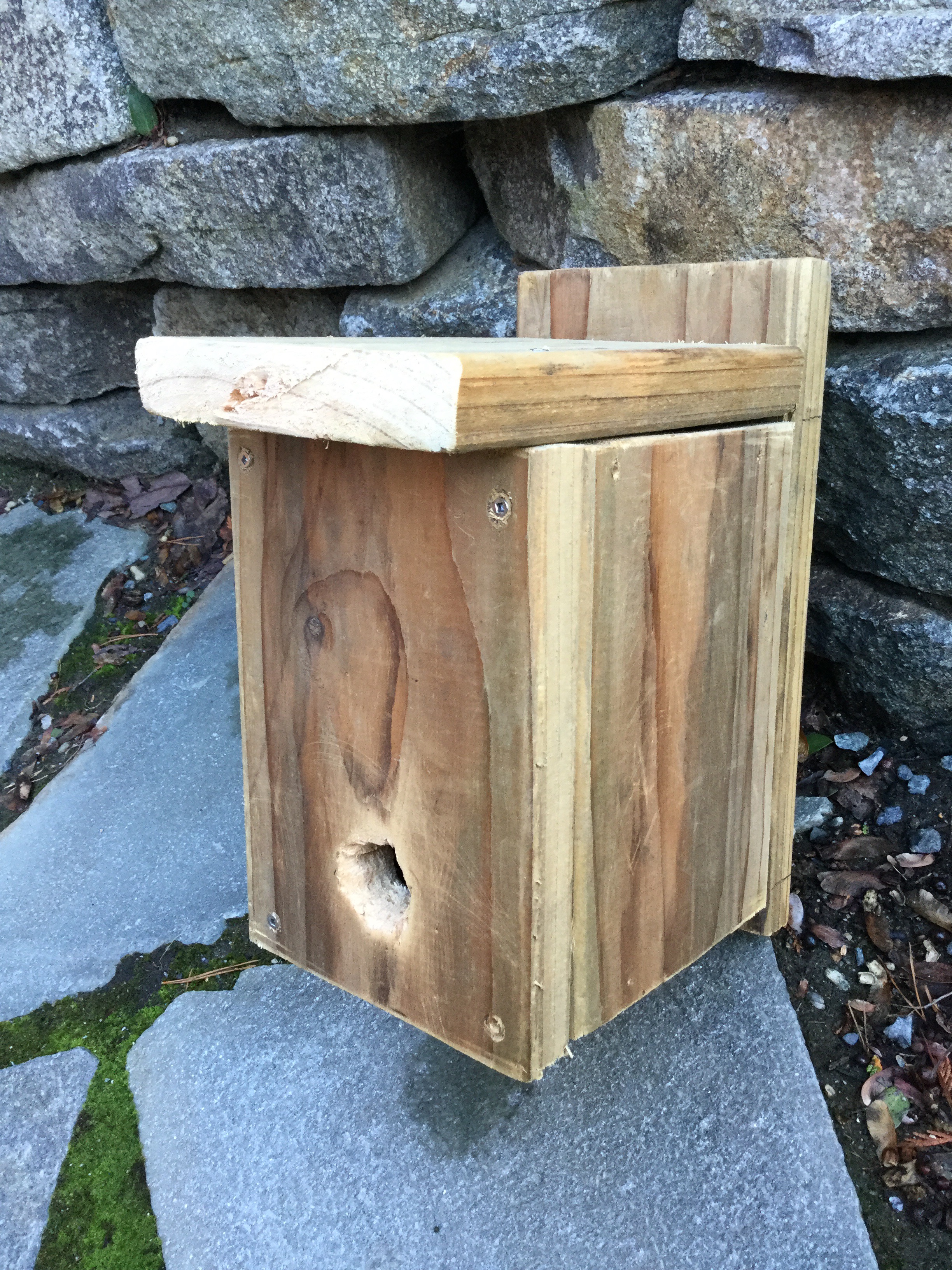
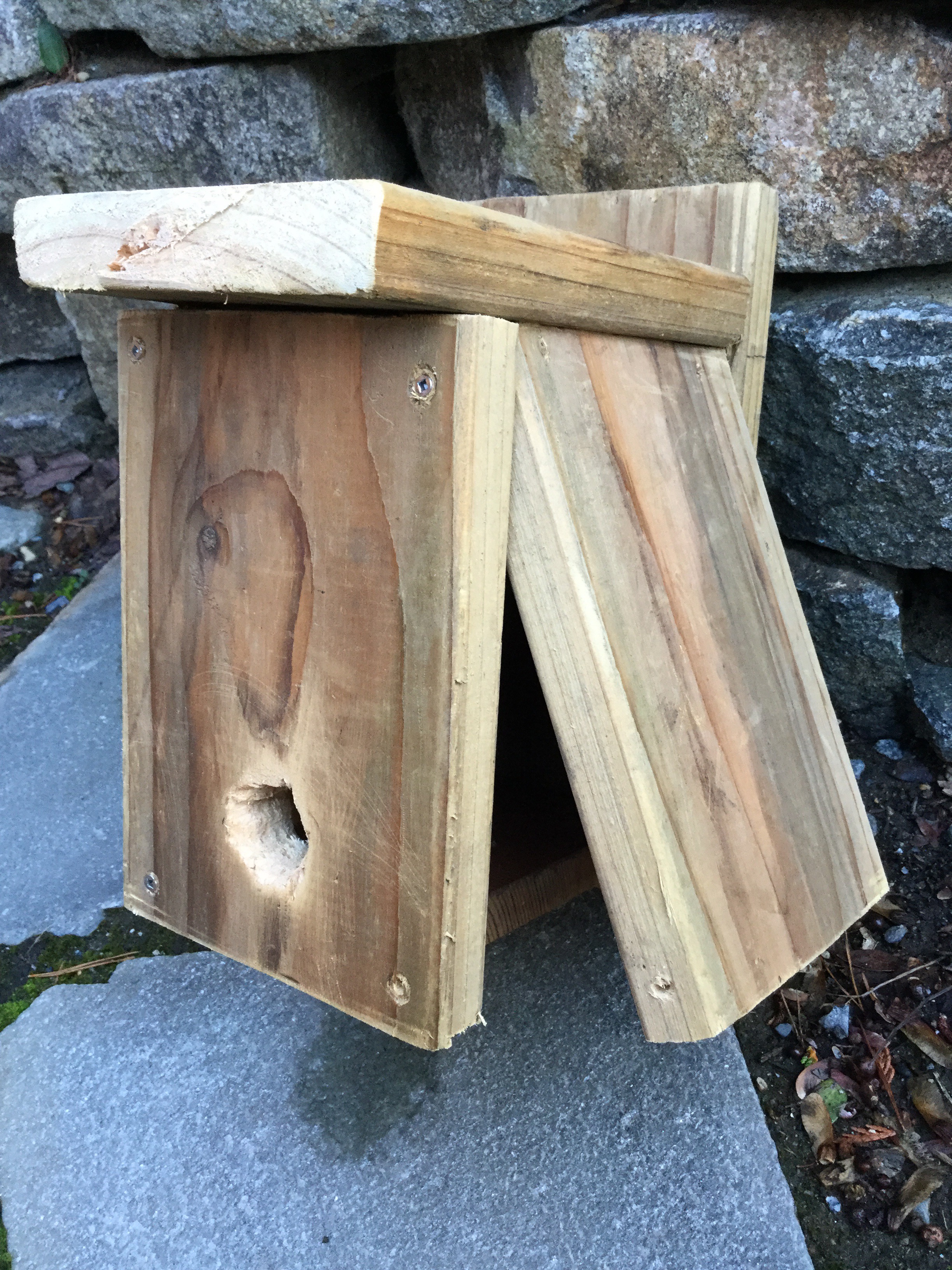
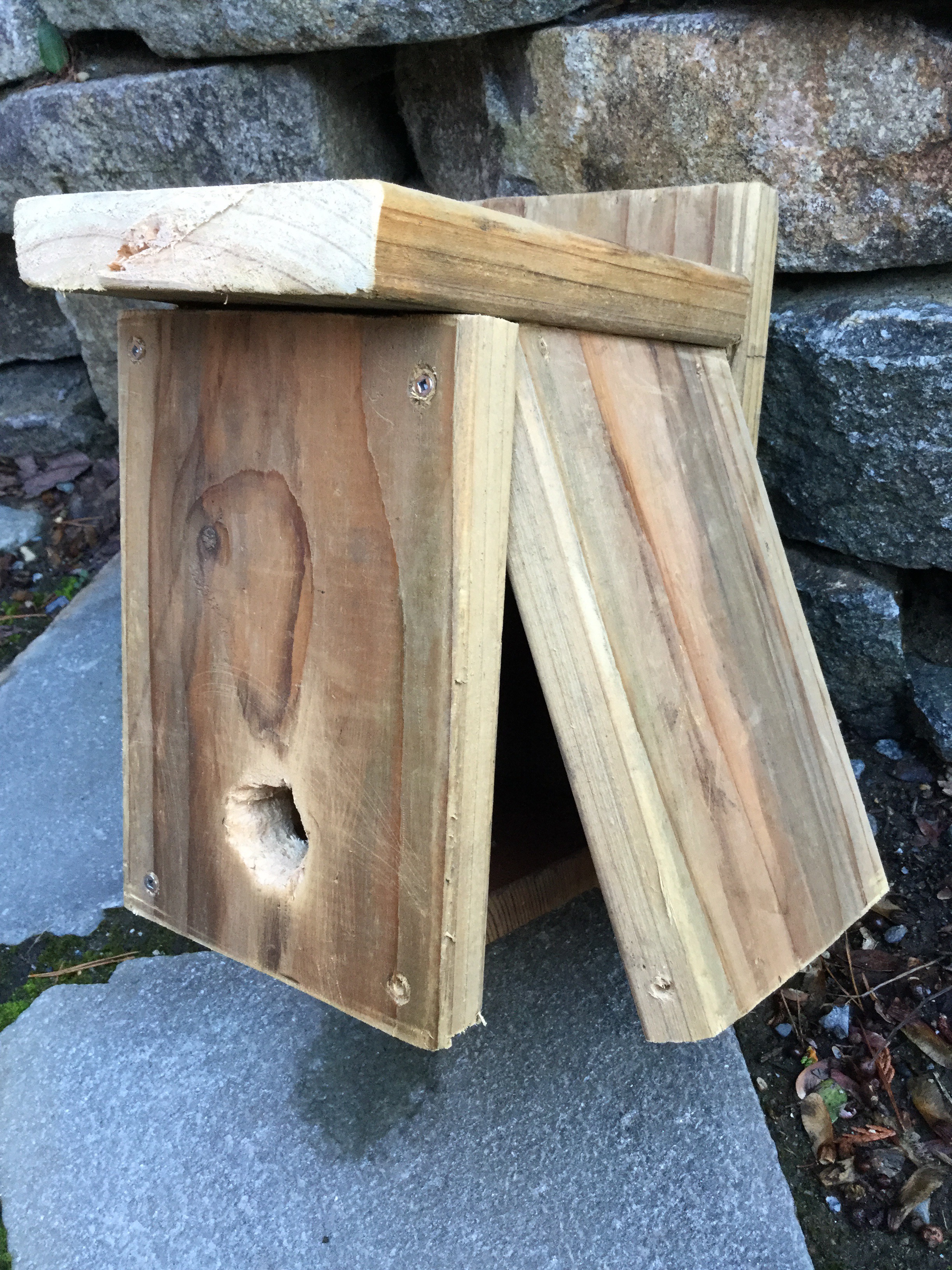
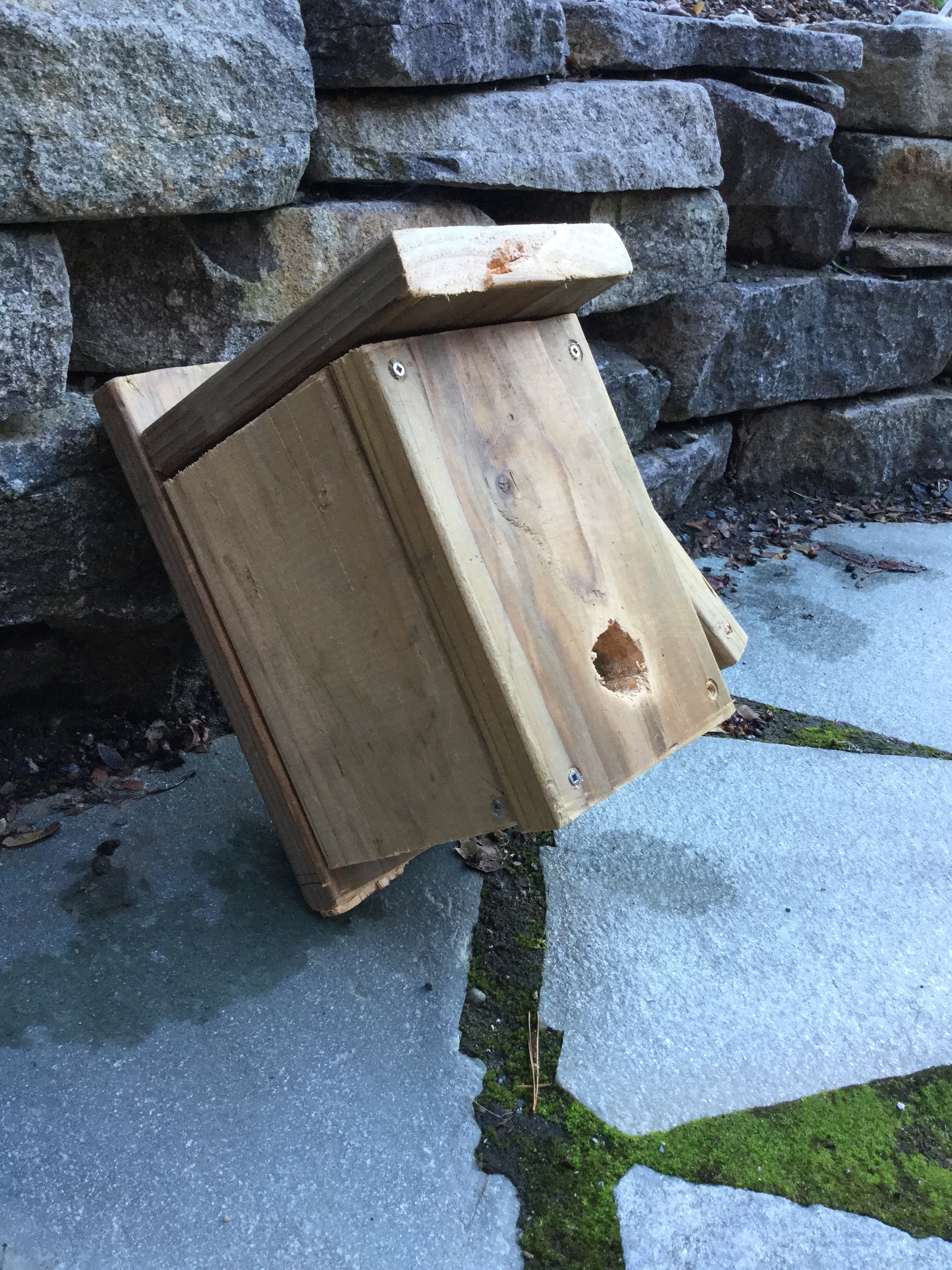
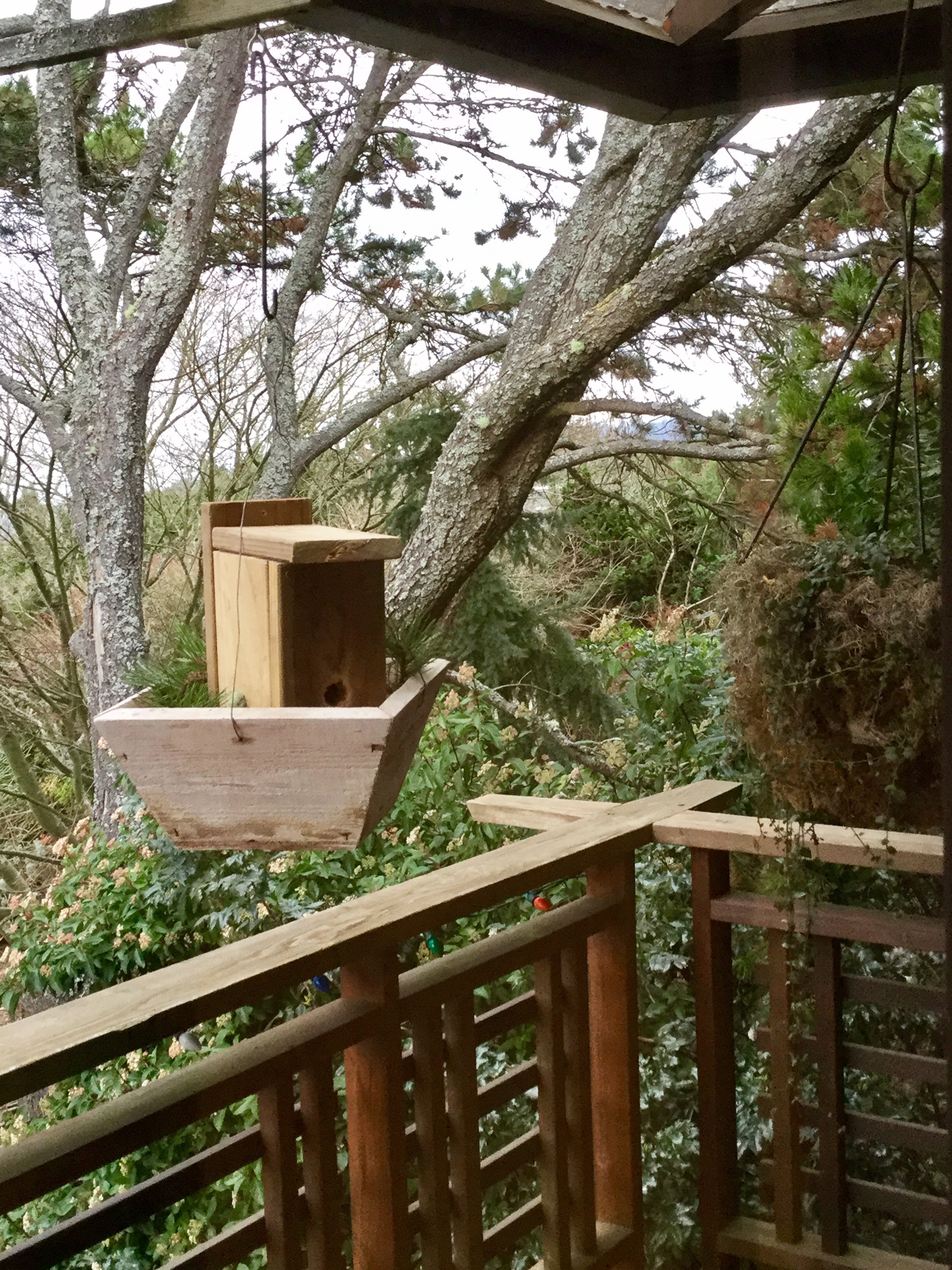
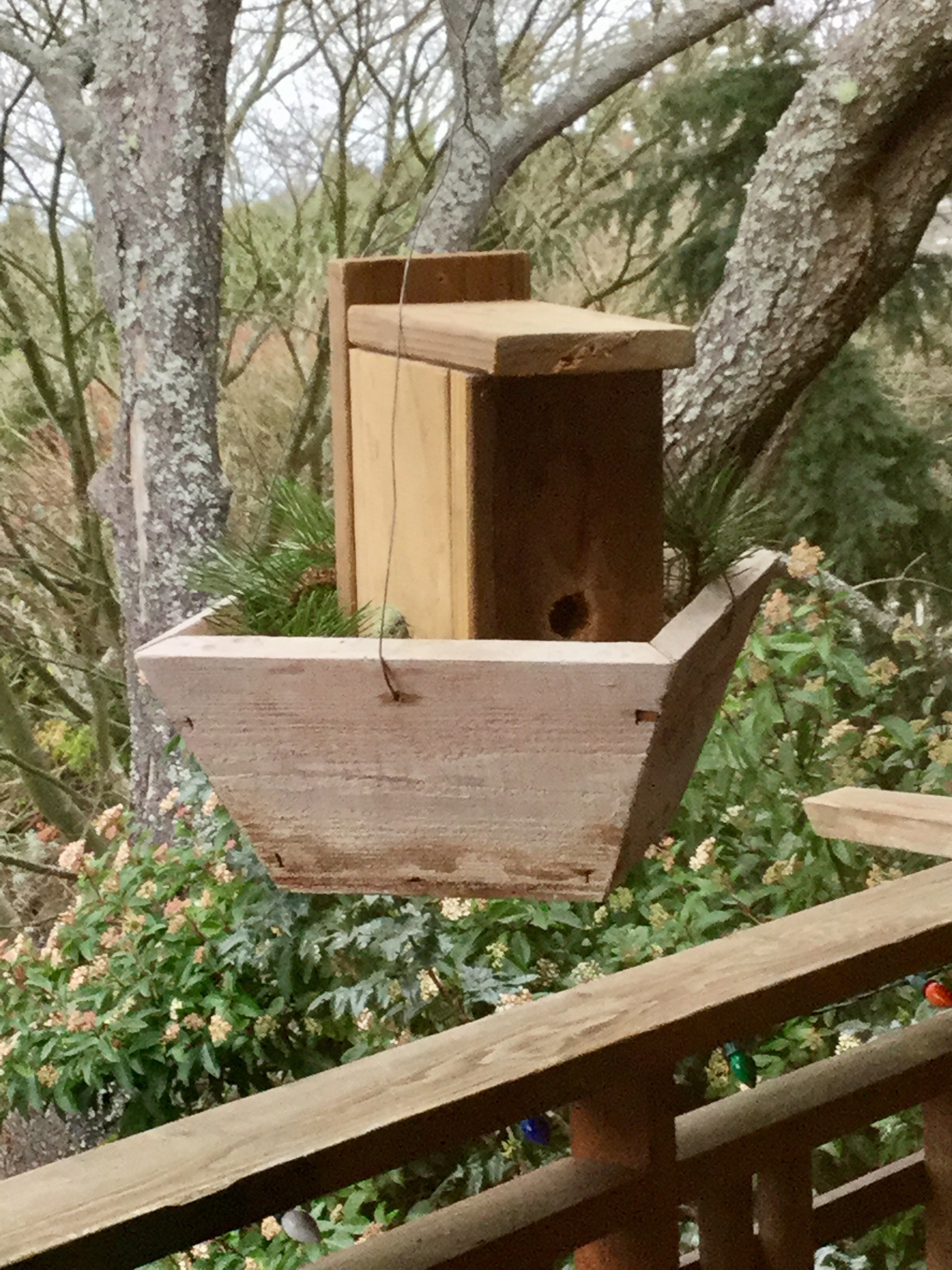
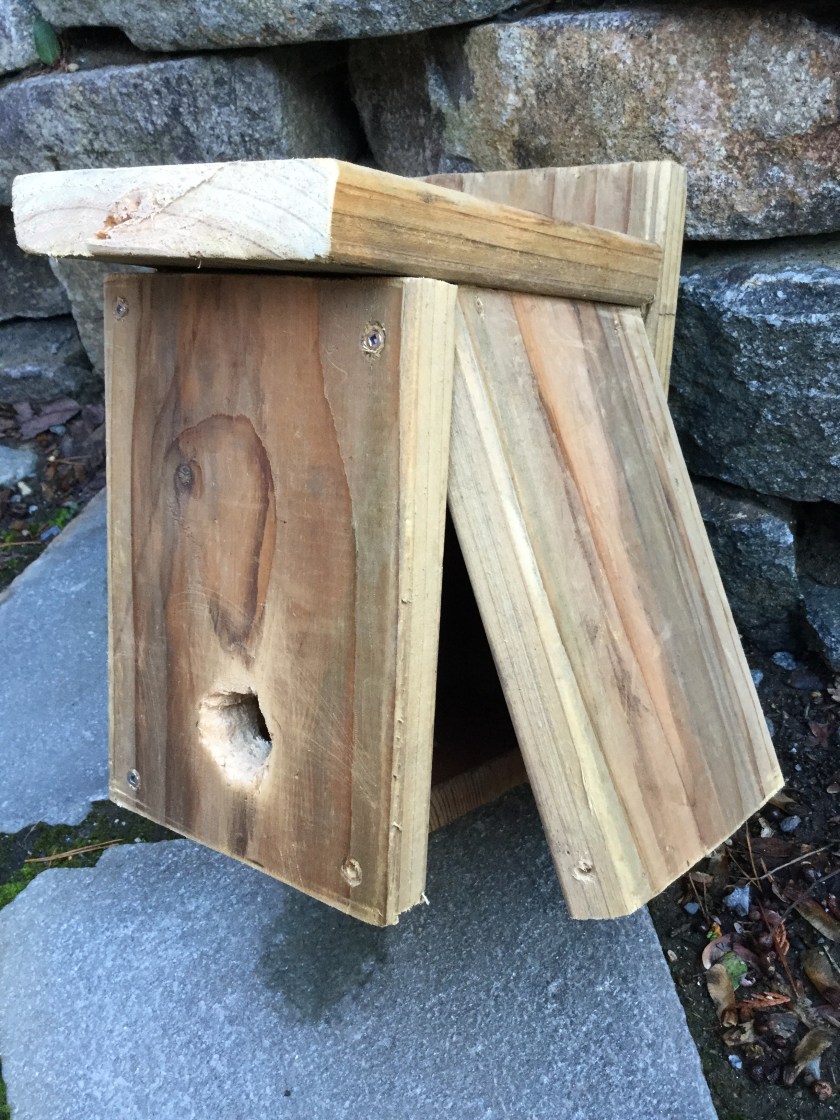
So I made a ROOSTING BOX for the wrens, wth provisions for possible chickadee use. The specs for these birds are 1 inch thick walls, 4 x 5 1/2 inches base by 8 inch height, with overhanging roof.  One of the side panels swings out a bit for cleaning, secured during use by birds. Right now, I left it unsecured so I can figure this out. Roosting and nesting needs are different, so there is a twice a year clean out and modification for nesting purposes.

For Roosting:

1.the hole for bird entry should be towards the bottom, so that the rising heat generated by the congregation of shivering birds doesn’t just go out a hole at the top. Some bird types can lose up to 10% of their weight overnight from keeping warm in very cold climates.

2. Some sites advise adding pegs/dowels for perching, but other sites say that wrens and chickdees don’t need perches and that they are detrimental by encouraging their competitors. The birds sleep on the floor, and on each other as they add up. Apparently the largest number of wrens observed coming out of a bird box was 31, presumably from a larger house than mine.

3. You can add wood shavings, grass, or other material, as long as it doesn’t risk obstructing the hole and trap birds.  Short yard pieces or animal hair and fur are recommended. There are some who convert bird feeders to nesting/roosting material dispensers, and in fact these are now available commercially.  I put short thin strips of old t shirt to just cover the botttom. 

4.The hole size of 1 inch will limit admission to wrens. A hole size of 1.125 inches will also allow chickadees, but not destructive house wrens, sparrows or other competitors. 

5.No perch on the outside either, to limit larger competitors. 

6. Wrens don’t mind a hanging house (hey, they made themselves at home at each of my three hanging baskets), but chickadees and other birds do.  I don’t know what it means if the house is hanging but very stationary. I ended up using a shallow old hanging basket which was empty except for some dirt to use as a hanging device, so the bird house is sitting in it.

For Nesting:  the hole should be towards the top, to allow the nest and eggs/young to be protected from predators, and it also allows better ventilation of heat during the warm months. This can be accomplished easily by removing the screws on the front panel and inverting the panel for the season during cleaning. Also add several floor drainaing holes and few top ventilation drill holes, all of which are covered over during the winter (done).

 I placed the box on top of the dirt and used the planter box as a device to hang up the Roosting Box in a stable protected environment. In fact, it is about 3 feet away from the northwest hanging basket, a site they chose on their own. The new box is hanging from a wooden attachment to the overhang, then two wire hanging parts that I hope will help keep the rats out. I won’t have any food there and they won’t nest there. So, wrens, it has been hanging there 36 hours, time to wake up! I know you are out there cuz I saw you….!.
Plants poking up only include the usual, the light blue camas and the brodiaea. Few trilliums are also just visible, but they usually don’t do much for months. Lots and lots of patches of Pumice, which I placed on top of every small patch of seeds or bulbs that I put Everywhere:
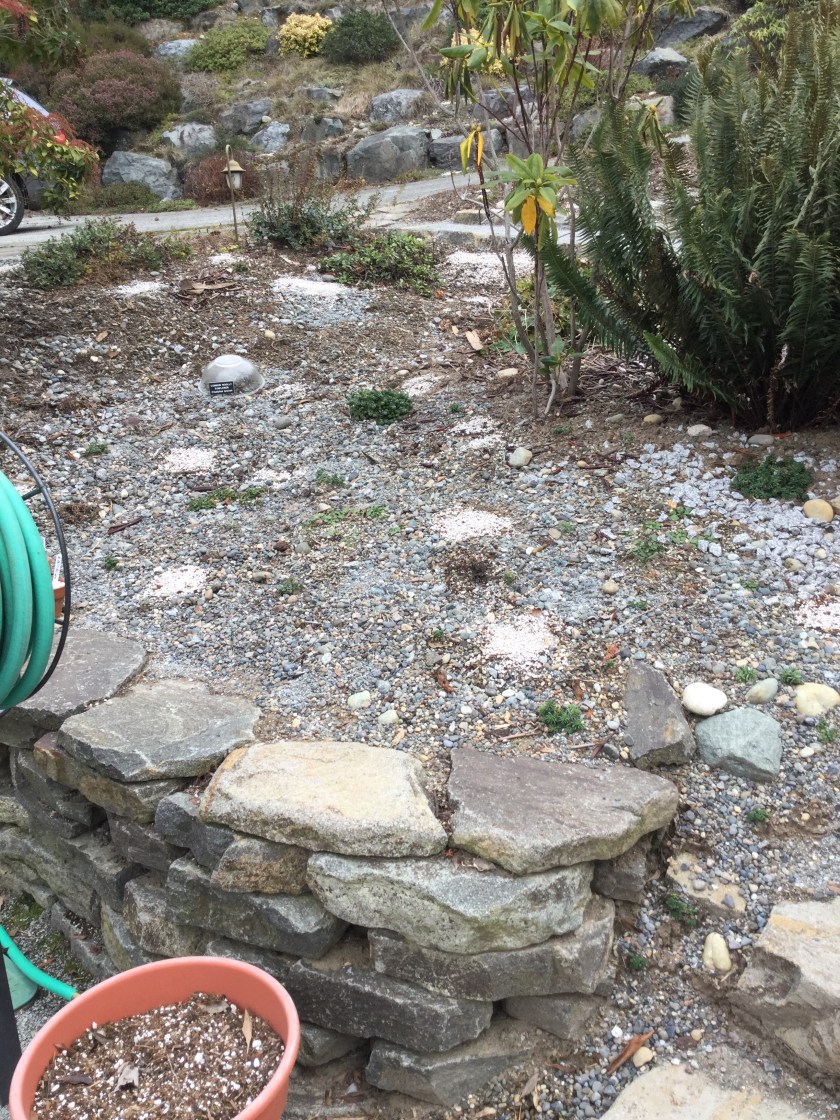
Plants poking up only include the usual, the light blue camas and the brodiaea. Few trilliums are also just visible, but they usually don’t do much for months. Lots and lots of patches of Pumice, which I placed on top of every small patch of seeds or bulbs that I put Everywhere

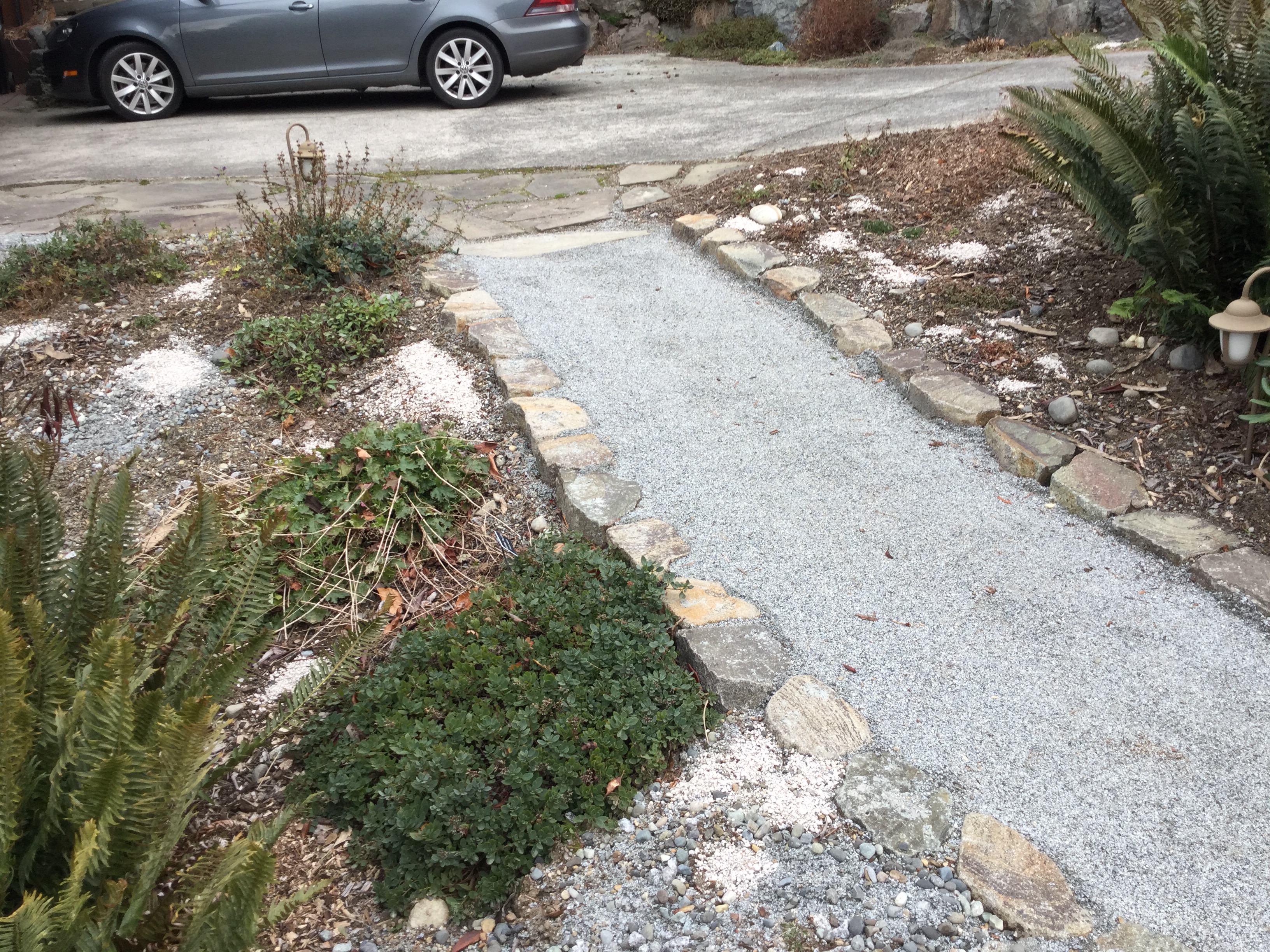
 I also transplanted the old patch of Spotted Saxifrage, which has been moved several times. It is now one of the first plants put in the new front yard rock garden, trying to supply it with the right amount of sand/grit and soil, sun but not too much. It is a great plant but it got shaded out and overwhelmed by Twinflower Linnea, and there is only one other 2″ patch remaining in the back yard, and so this needs to work!

Lupine survival, frog revival

20140308-191001.jpg

Largeleaf Lupine coming up where I transplanted it last year…in a sunnier, drier part of the back yard. There are fewer slugs, there, too, which bodes well for the lupine. Now we’ll have to see about aphids.

The pacific tree frogs are back, they just started croaking the last day. They apparently love the incessant rain we’ve been having since this morning.

20140308-191515.jpg

First out

20131117-163339.jpg

Very first is western trillium, which shows up early fall. Now there are several other plants starting to break ground, like shooting stars: dodacatheon pulchellum and dodacatheon dentatum, Trillium chloropetulatum (fragrant), and a couple of rattlesnake plantains (though these are returning there are very few, small plants).

Collected Munro’s Globemallow seeds, looks like ~100 seeds or so. One of the two plants I had is not looking good after transplanting out of a container, so I’m back down to one. Last time I used the seeds, I got exactly one living plant from all of them. They need dry conditions and the containers aren’t ideal.

Almost all the leaves have fallen, so I did my yearly chores of cleaning out the stream and raking the steps. The chickadees seems to appreciate it, they were taking baths in the stream this afternoon.

20131117-164128.jpg

We finally did the annual cranberry harvest, from two of the three plantings (the newest didn’t produce any). Record haul, slightly over three gallons! We should be in honey-dried cranberries all year!….or at least until we finish them all.

20131123-121613.jpg

Late summer 2013

20130904-123229.jpg

Above is actually a slightly bigger garden – Hampton Court, outside of London!

Had quite a summer, a real one actually, with 70’s and 80’s and sun since Memorial Day. Several periods of rain saved me some time watering. The garden looked the best in late June through much of July, while the foliage was still lush.

Im trying to establish some young plants in newly cleared areas, as usual. New plants include seedlings of Balsamroot (sunflower yellow flowers) and Iris Setosa (dark purple) that I sowed last winter 2012, as well as some young ferns and other plants we bought at the native plant sale.

I have a bunch of seedling /bulb lets to plant out this fall including the smaller more delicate Common Camas, hookers onion, brodiaea, shooting stars, leopard and tiger lillies and other camasses. Those will be planted out around the yard with pumice to mark the spots. I need more of them in the front yard, but these have a harder time in general there, between the slugs and the moles, so I am usually reluctant to commit too many of these that I’ve spent time on.

20130904-122430.jpg

Few Douglas squirrel sightings, and also of lizards. Three raccoon sightings in four days, all during the day! Here’s hoping for another one of those raccoon blights.

Froghaven

The official name for our ‘estate’ is Froghaven, back when we wanted frogs to visit. We now have at least five adult males IN our front yard pond, all puffing themselves up and fighting each other, while swimming (frog stroke of course) around and between the planters. They are bigger than I thought, and we’re not sure why we never saw them out there before, though we’ve certainly heard them just like now, loudly and right under our noses. We searched for them a few times. They are about 4inches or possibly more from nose to outstretched legs, which is how they are to float and swim. With more than one present previously-we’ve heard at least three before-its hard to imagine how they weren’t obvious! We’ve only seen the newbies, which are miniature 1 1/2 inches versions of the adults.

Other critters that are back are the Mallard ducks, who have started to land in the yard as well as the pond. They first showed up IN the yard on the 10th of March, which is about 8-10 days early. They will come and go until about mid May. The lizard, a mid-size juvie, was sunning himself on the deck and had to get coaxed out of the way.

Almost everything sprouting signs of life, leafing out and giving us the glorious privacy we cherish in the yard. We are working on the barer spots with evergreen shrubs. Hopefully our summer will come early like our spring. Its been on the cool side the last few years. All the Lillie’s are popping up, especially the chocolate lily which is very prolific with dozens or hundreds of bulblets, though they don’t spread far. So I’ve transplanted them lots of places. The three year old trillium bulbs are now coming up. I have three larger pots of seedlings from two years ago, and if a lot of those germinate, I may be done with having to actively propagate it. I’ve taken one of the the inside early each year, in February, which according to one article of research should allow early maturation and maybe take a year or two off the seven-years-to-flowering schedule.

20130404-184236.jpg