February progress

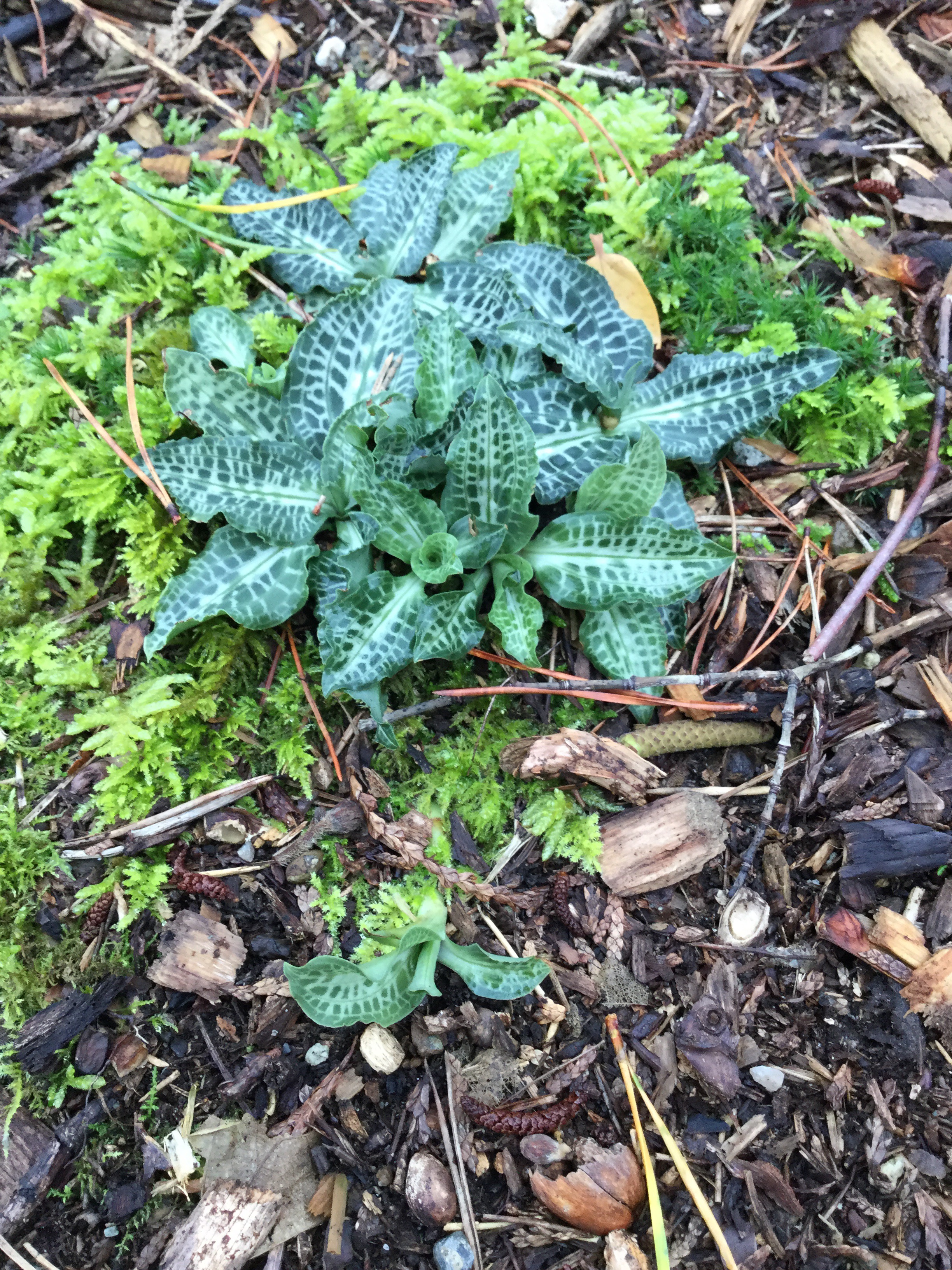
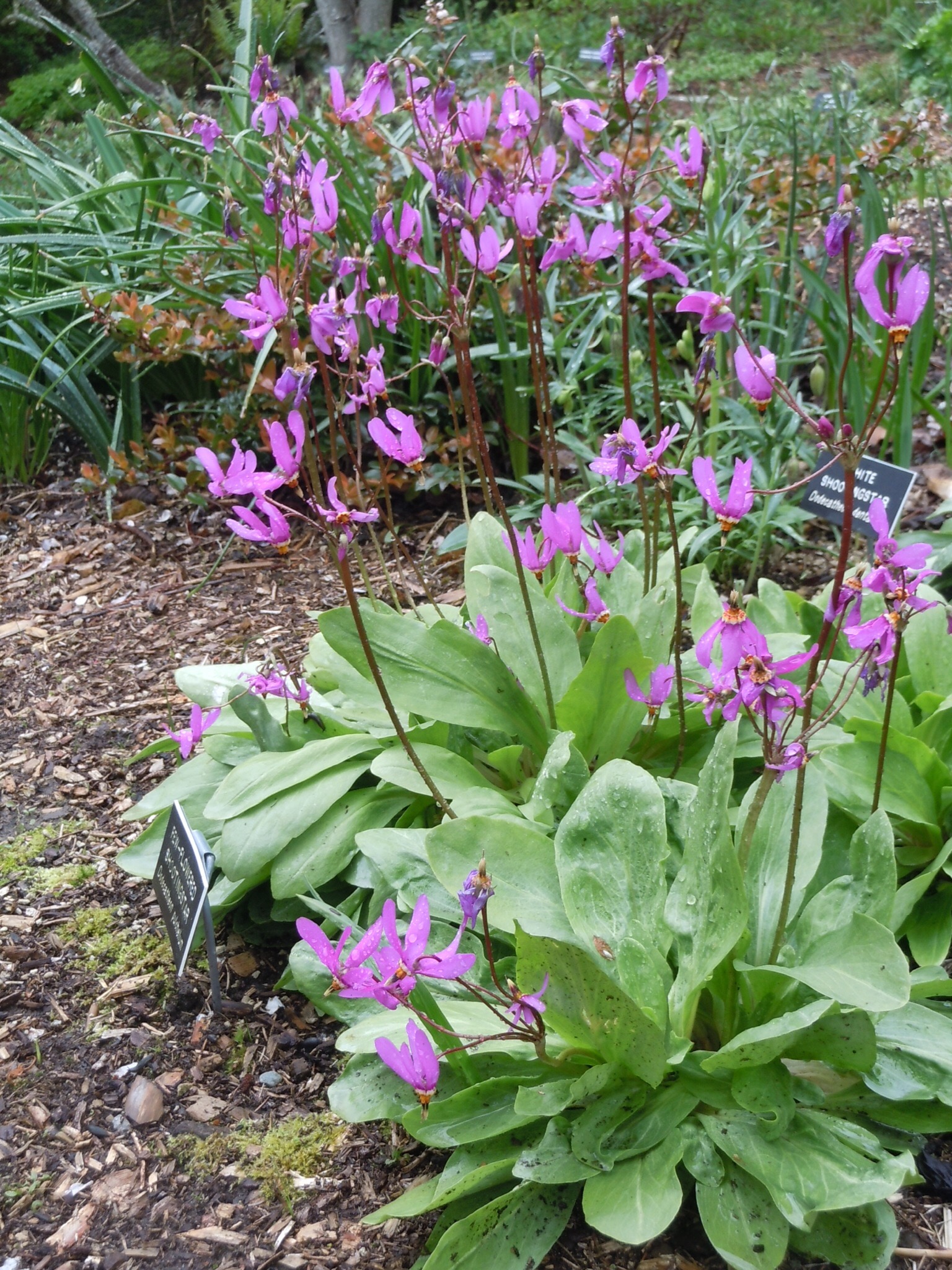
Shooting stars (pulchellum, or few flowered) are starting to come up this last week (feb ~10). They do NOT look like this yet, however!- at this point in time they have barely poked out of the ground. This is quite a late appearance compared to last year, when there were sightings of these in early January, about a month earlier. But then again, last year was way early. The appearance of some other plants is also relatively later, also, including the tritelliaea, Camas (light blue and white), Hookers onions. As far as seeds go, only the yellow Desert Parsley has germinated, but there is a big mound and some shoots showing, so there will undoubtedly be dozens or more of these! Others anticipated, especially Woodland Penstemon, Iris Chrysophylla, Indian Paintbrush and Pink Fawn lillies, all of which have so far been elusive. 

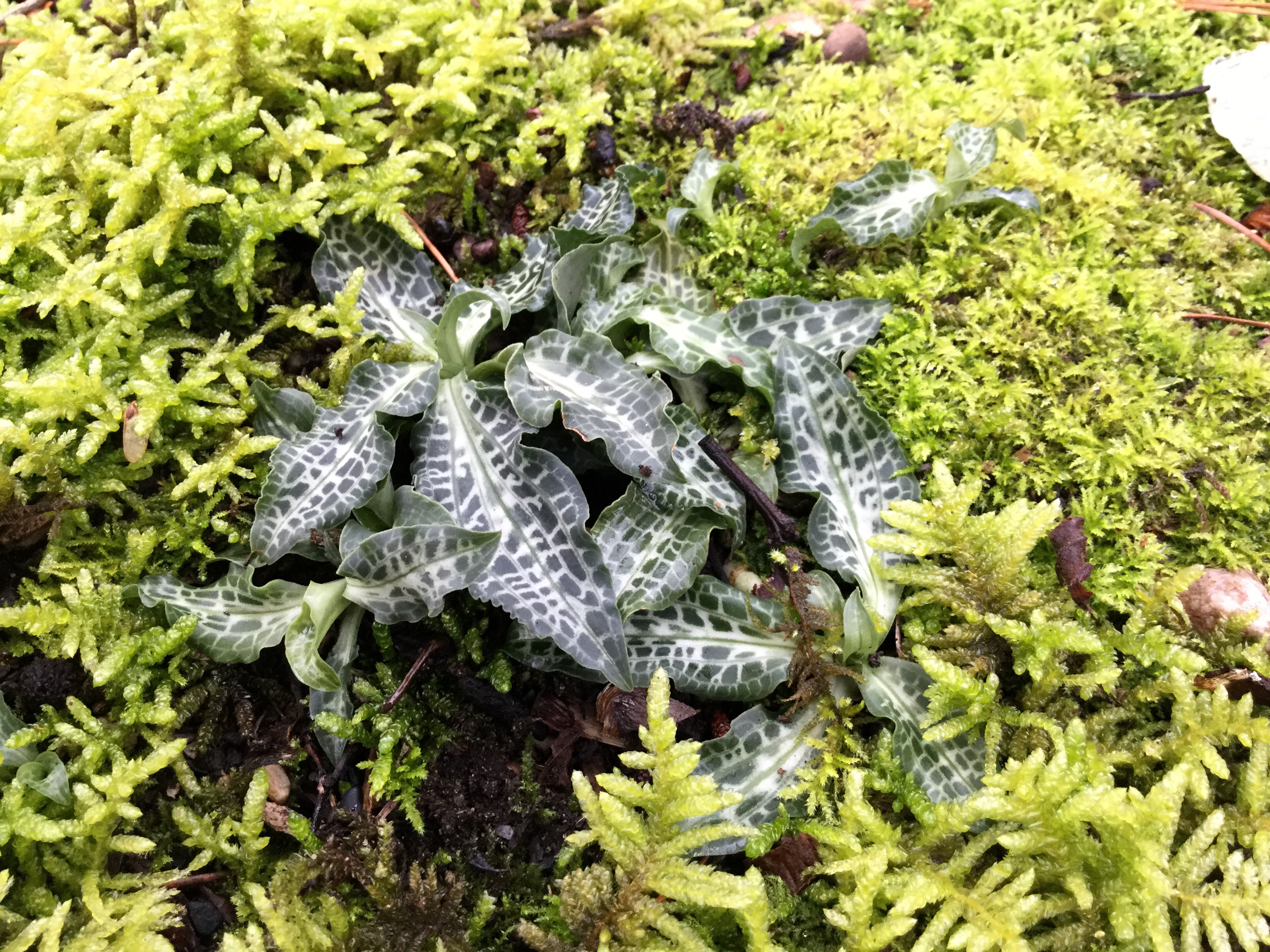
In review of the post from a year ago, I had found two barely live plants that had returned from the missing or dead, I’ll call them Lazarus the Rattlesnake plantain and Phoenix the Wild Ginger plant. Both are thriving now, despite their rough and slow starts. The Wild Ginger had been tortured by slugs, until I covered it with a cloche last year, the plantain I just kept uncovered by pine needles, and now nature has taken over. 

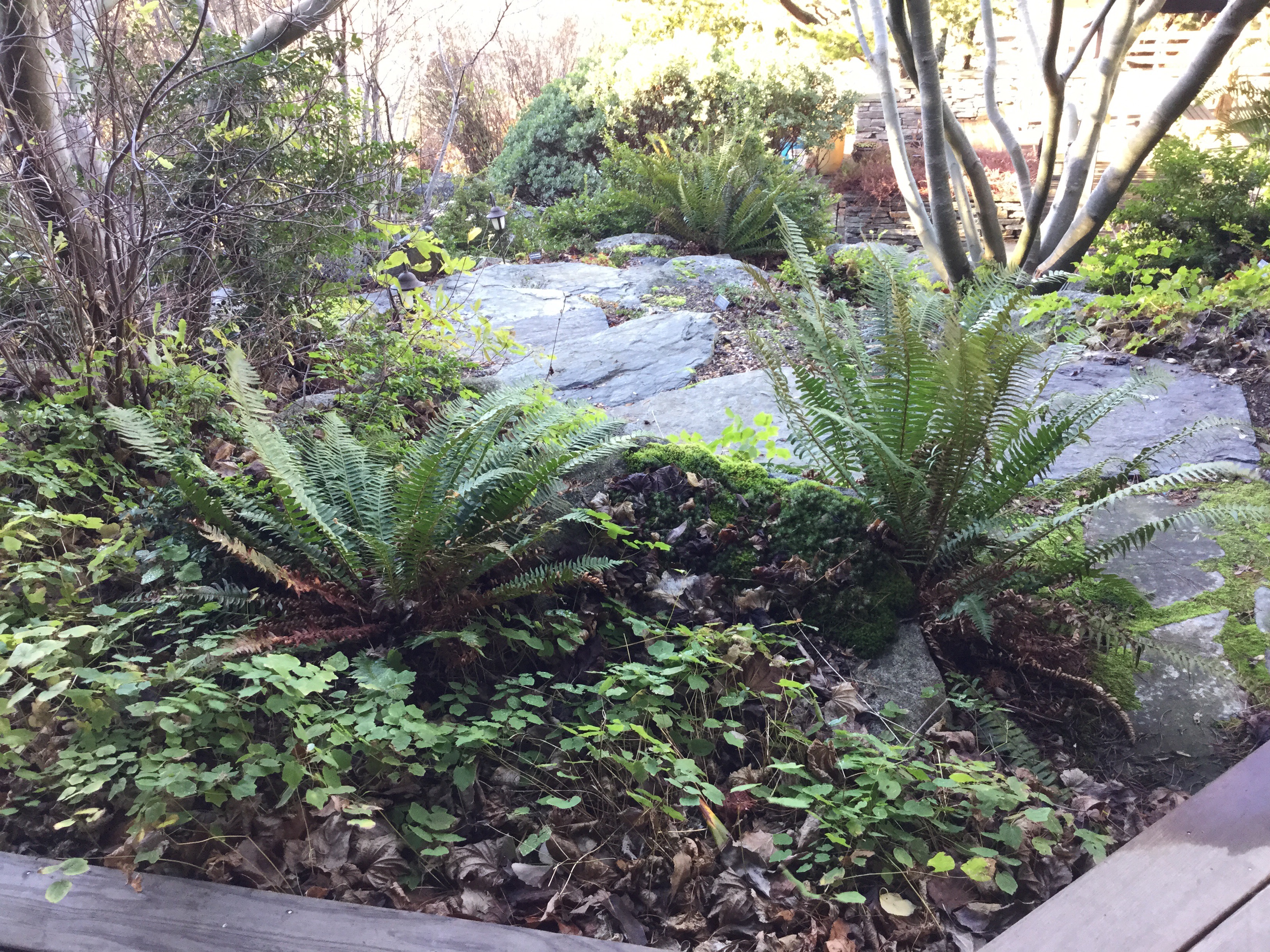
We are having a number of small trees taken out, which have outgrown their sites. Four of these are evergreen trees inside the raised planter bed, in the north backyard. These have gotten too large and compete wth each other for sun, each growing way out over the deck and making a mess as well as ending up distorted by each other. These were all deliberately planted years ago: a moderate size Madrona (litters large leaves onto the deck), a Strawberry tree (which leaves a nasty mess with mushy berries and flowers on the deck), and two tallish Bay leaf trees. I had already planted two Myrtle trees BEHIND the raised planted bed, which are each about 6-7 feet tall now but are not getting enough sun, leaning over and with wimpy branches. Taking these four trees out will give the Myrtles lots of sun and they should fill in the screen border (I may throw a viburnum in between for good measure). Unfortunately there will be a paucity of screen in the meantime, so we’ll have to use the umbrella a lot. Fortunately though, the row of Myrtles, Viburnums, and Strawberry trees along this same border nearer the house have matured and near completely screen out the neighbors. This is more of a continuation of the same screen row pushed out of the yard, to reclaim the raised bed space. I’ll have to do a. It of  LITTER cleaning once the trees are out, since the area under those trees is thick with leaves, small branches and pine needles. This is a pic from a several years ago looking at several of those trees (towards the right, around the red rhodie), they had already filled in the planter space:
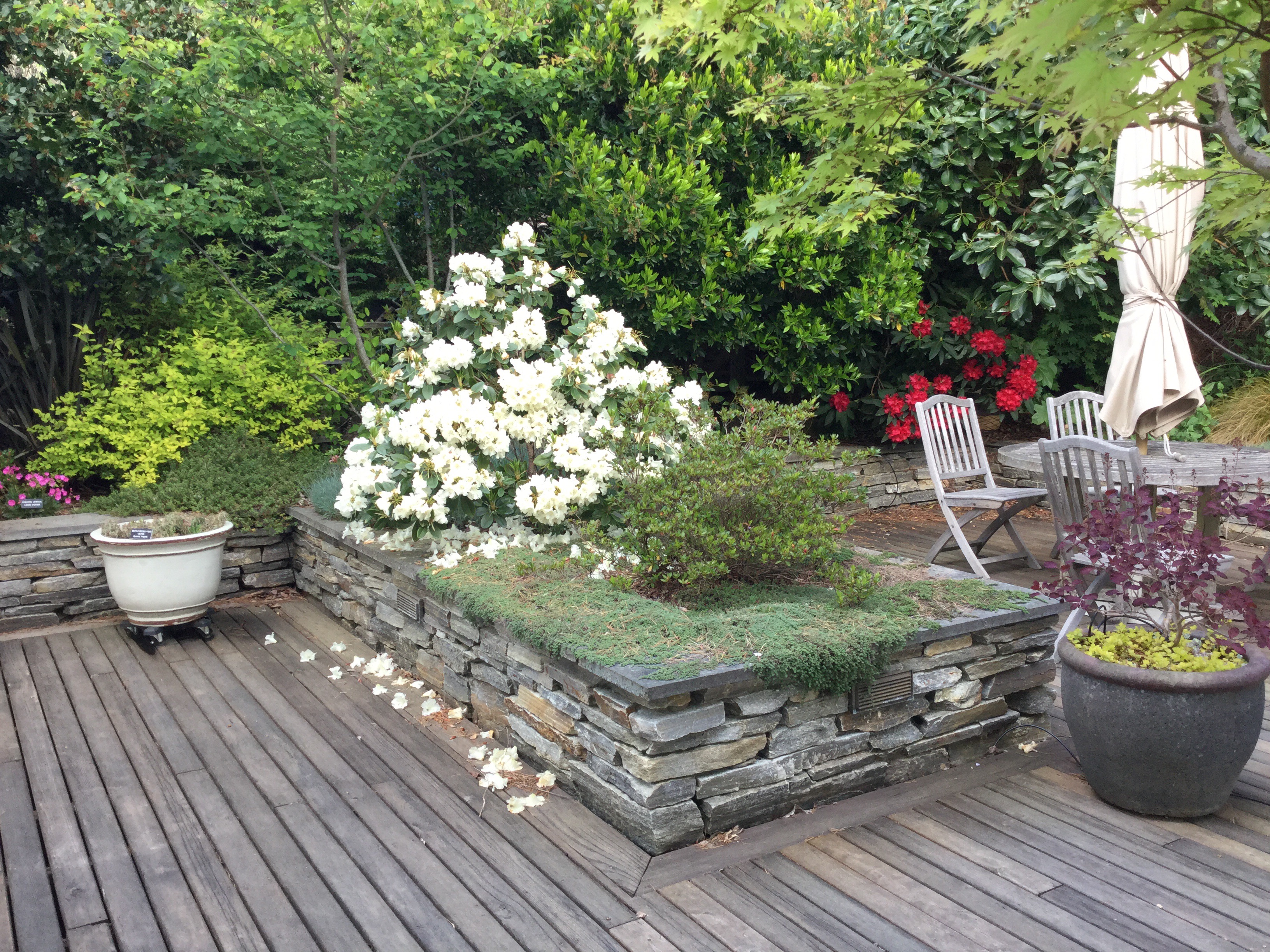
Several other trees will be taken out here and there. This also includes several NON-NATIVE American Cranberrys, which turned out to be the European variety, and there were three that we need out (the fourth, which has grown almost as a trellis over the stream, will be kept). We found a true Native American Cranberry which will be planted. And some lowering of Vine Maples and pruning of some Pine branches. 
February news

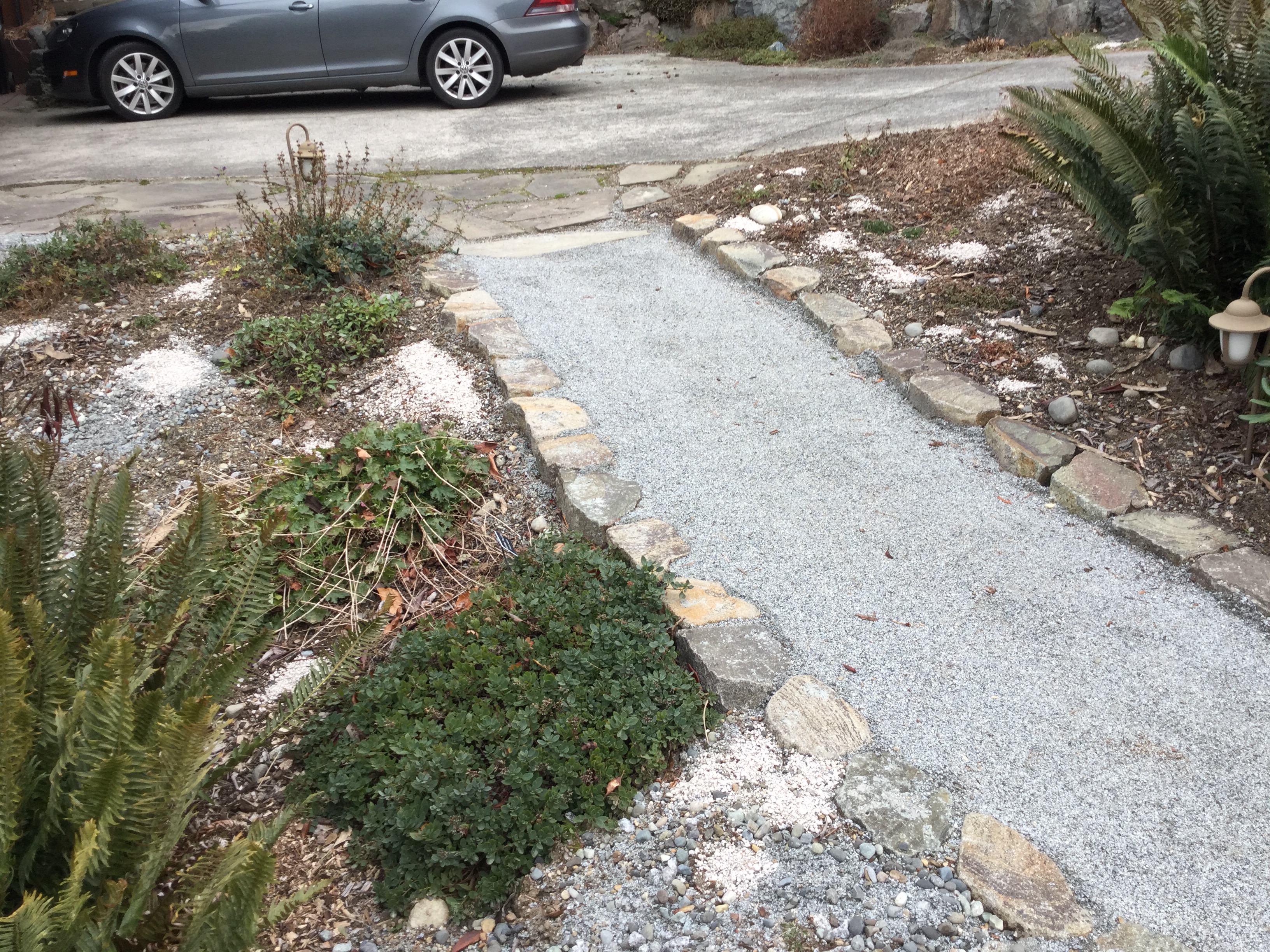
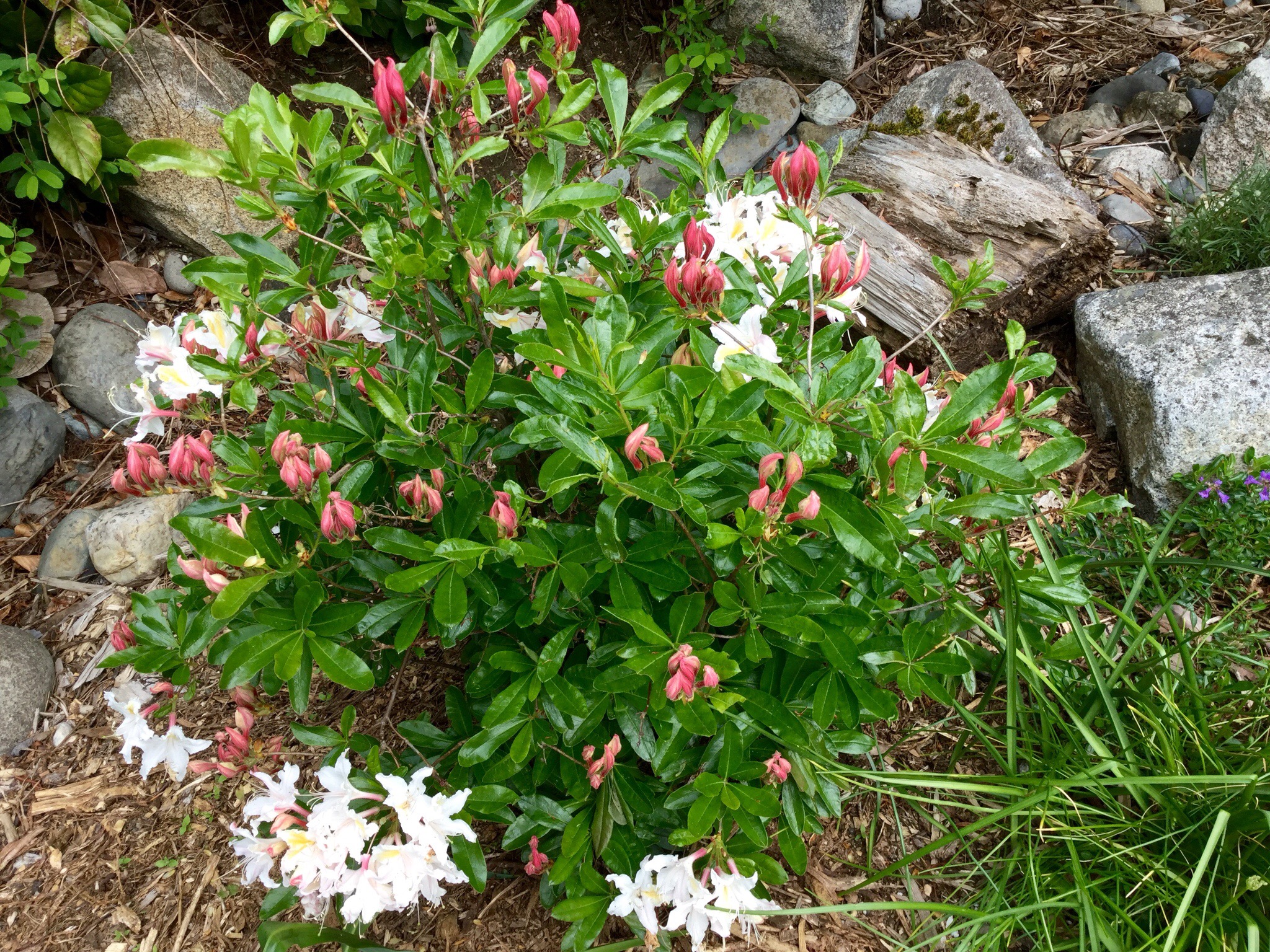
Last week of January the White Tritellia and  Delphinium came out (Harvest brodiaeas and camass previously). This past  week it was the beginnings of the Shooting star,  Ookow, and Brodiaea Congesta showing up.  Budding starting on the red flowering currents and of course the Indian Plums, which should actually bloom soon. It looks like the two layerings of Deciduous Rhodies in the front have made it through the winter and will produce small bushes on either side of the gravel path ( update 10/17, the dominant one is doing great with mult. New branches the one with tenuous roots did OK for a while and then died out in the heat. These are pretty peach colored flowers which are scented.

Winter shelter for the birds

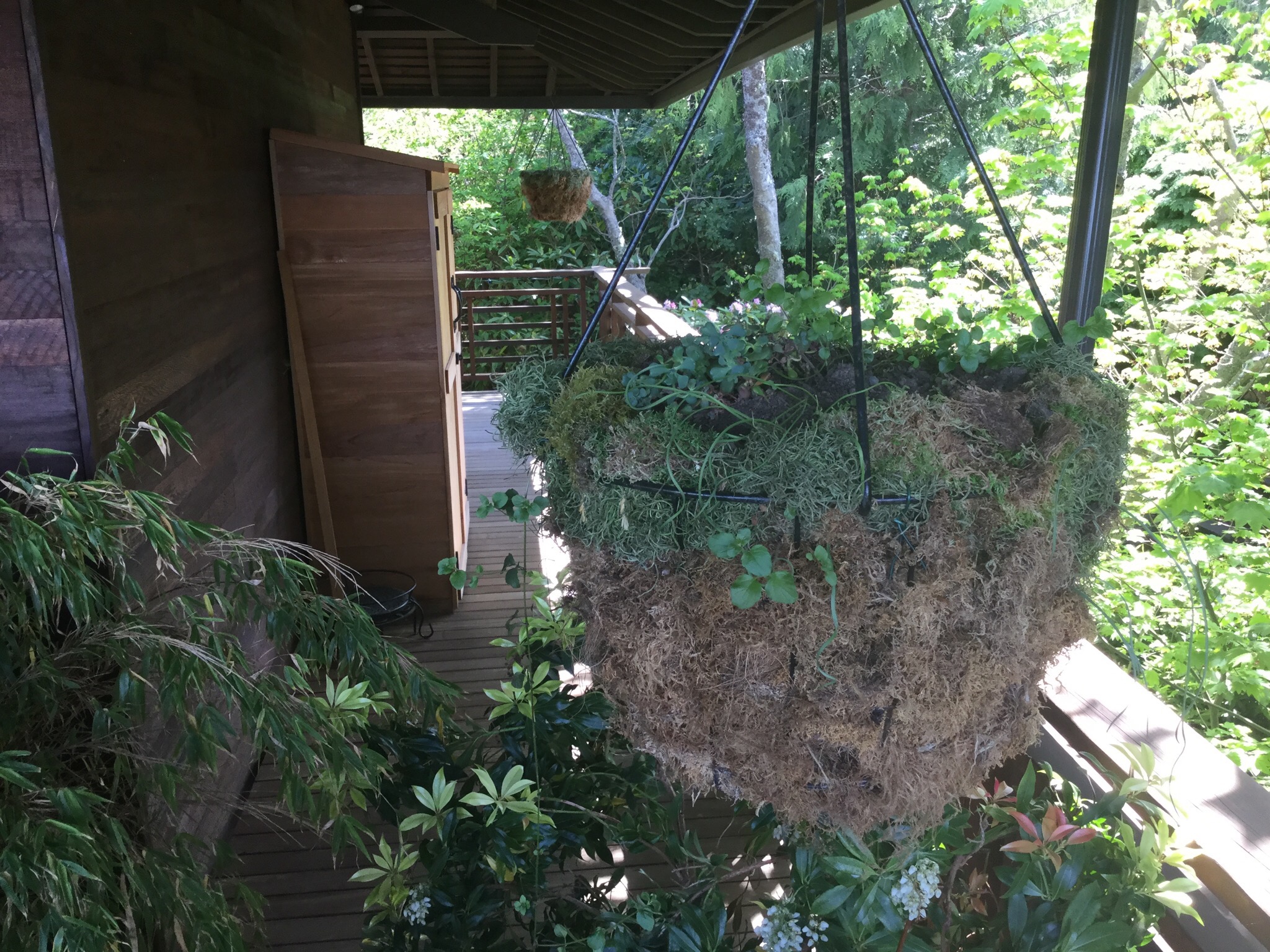
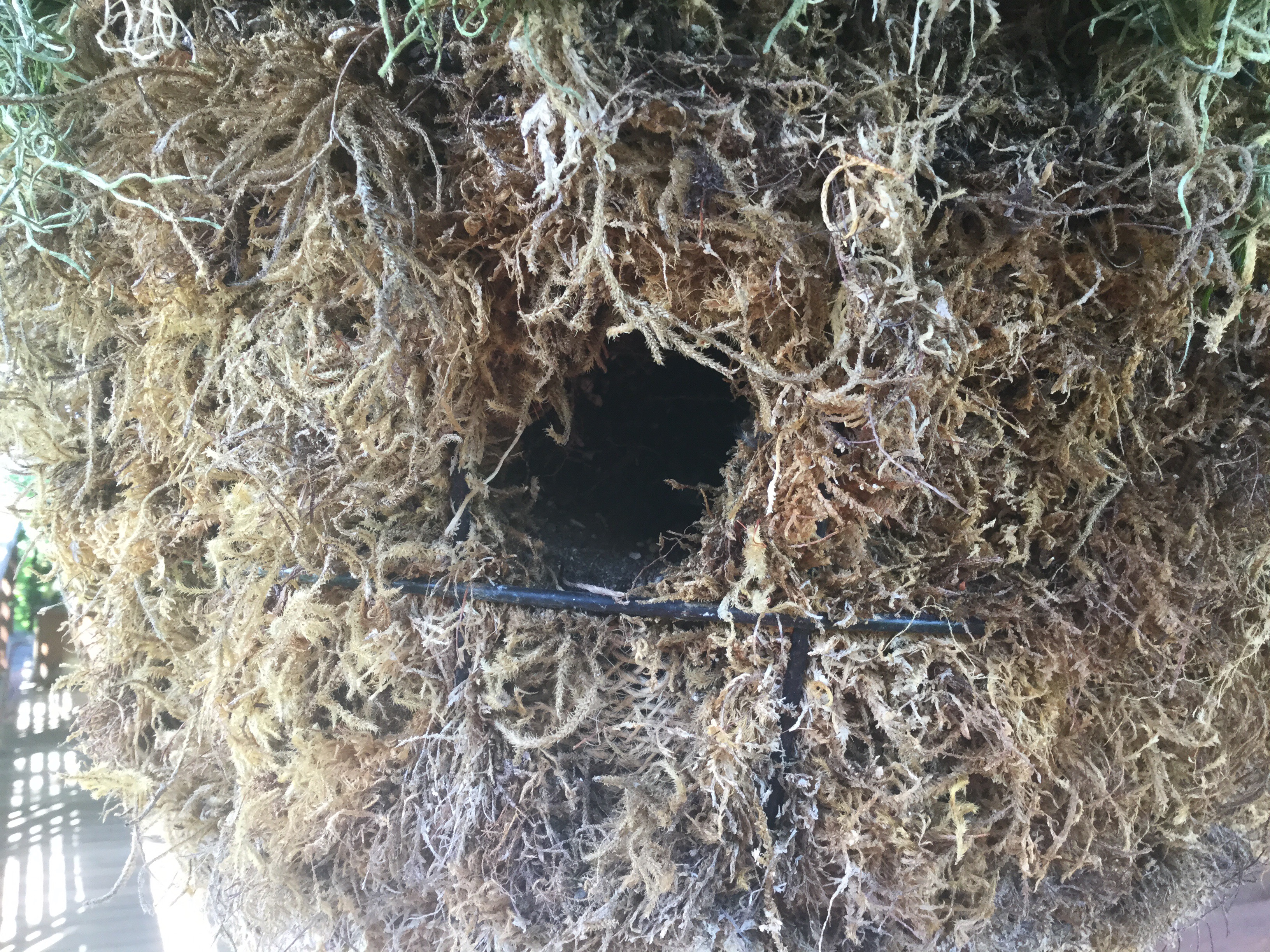
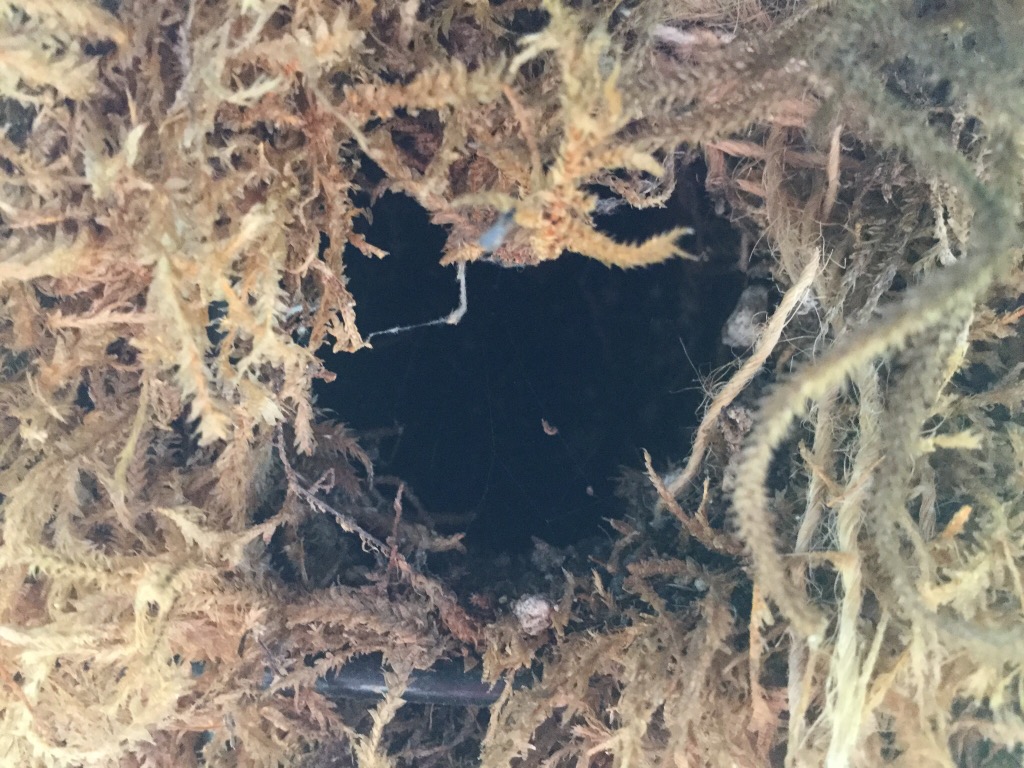
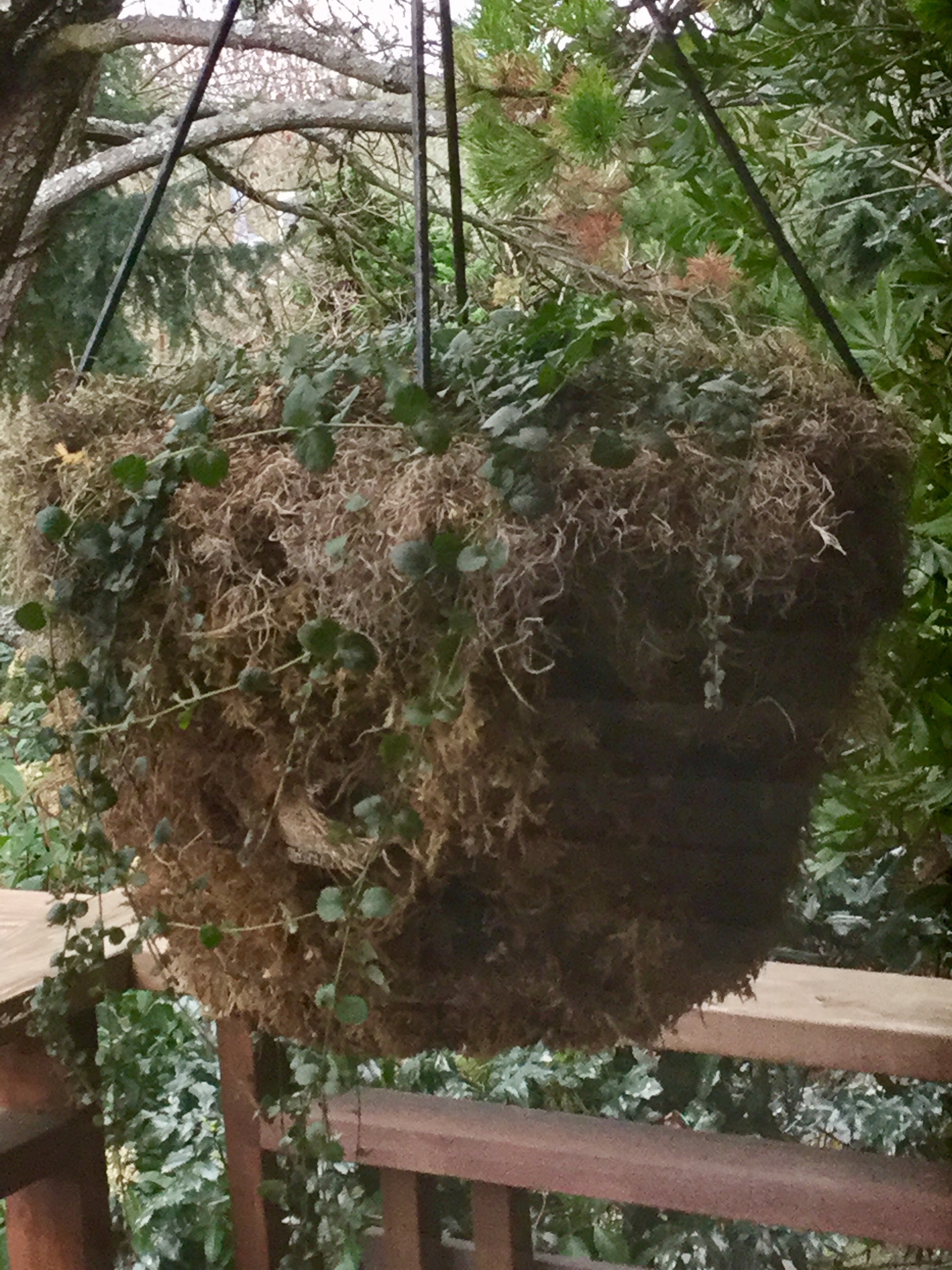
At least the wrens and maybe chickadees. The wrens have long commandeered our three hanging baskets for their hostels to sleep in overnight, except for when they are nesting. These are perfect shelter in that they hang just under the roof of the covered deck, and are heavy so they don’t swing in wind. Being within deck territory, they are predator-free. There are 3-6 holes in each which are about 1 1/2 ” wide  x  3-5″ deep, horizontally oriented into the planters, dug through the moss,  burlap and soil in the planter, to make individual little lofts. A couple are a little bigger, maybe they hold three or so. 

I recently rehabbed these planters specifically for the wrens, and shored them up with new moss and burlap but made sure to avoid damaging the wren holes. I added garlands of Spanish moss wired along the rim, topped them each with extra soil and sand, and planted Yerba Buena vines, which grow better than most things there. When I water the plants, the water seems diverted around the wren holes, so they might be sealing them.  Below are pix:

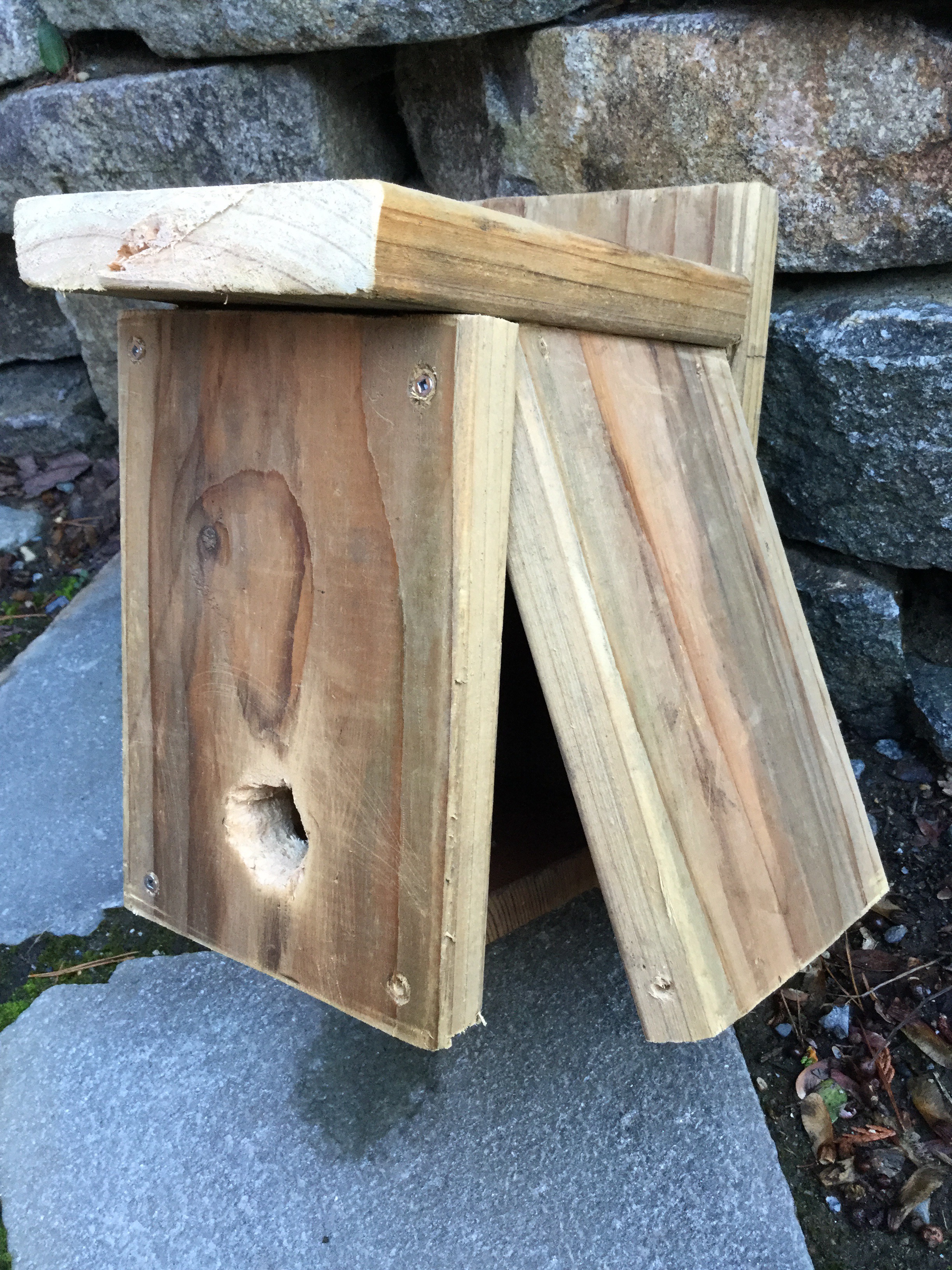
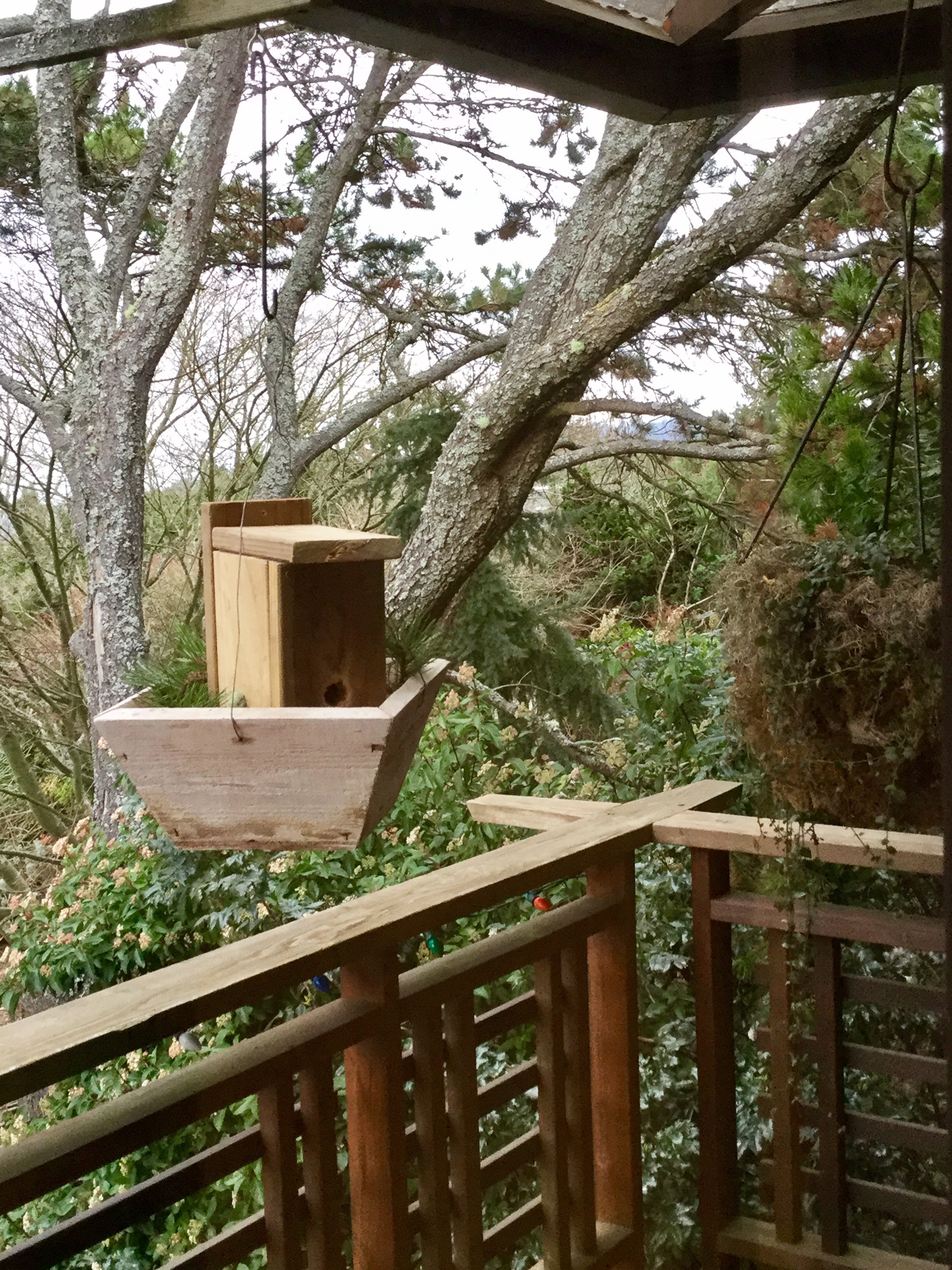
Now I’ve made a more formal abode for any leftover wrens that haven’t found a hole. I know there are a bunch of wrens out there but I don’t know where they all roost. It’s freezing weather off and on (now on) the last week or so, so I thought I’d provide some extra emergency shelter for them.  

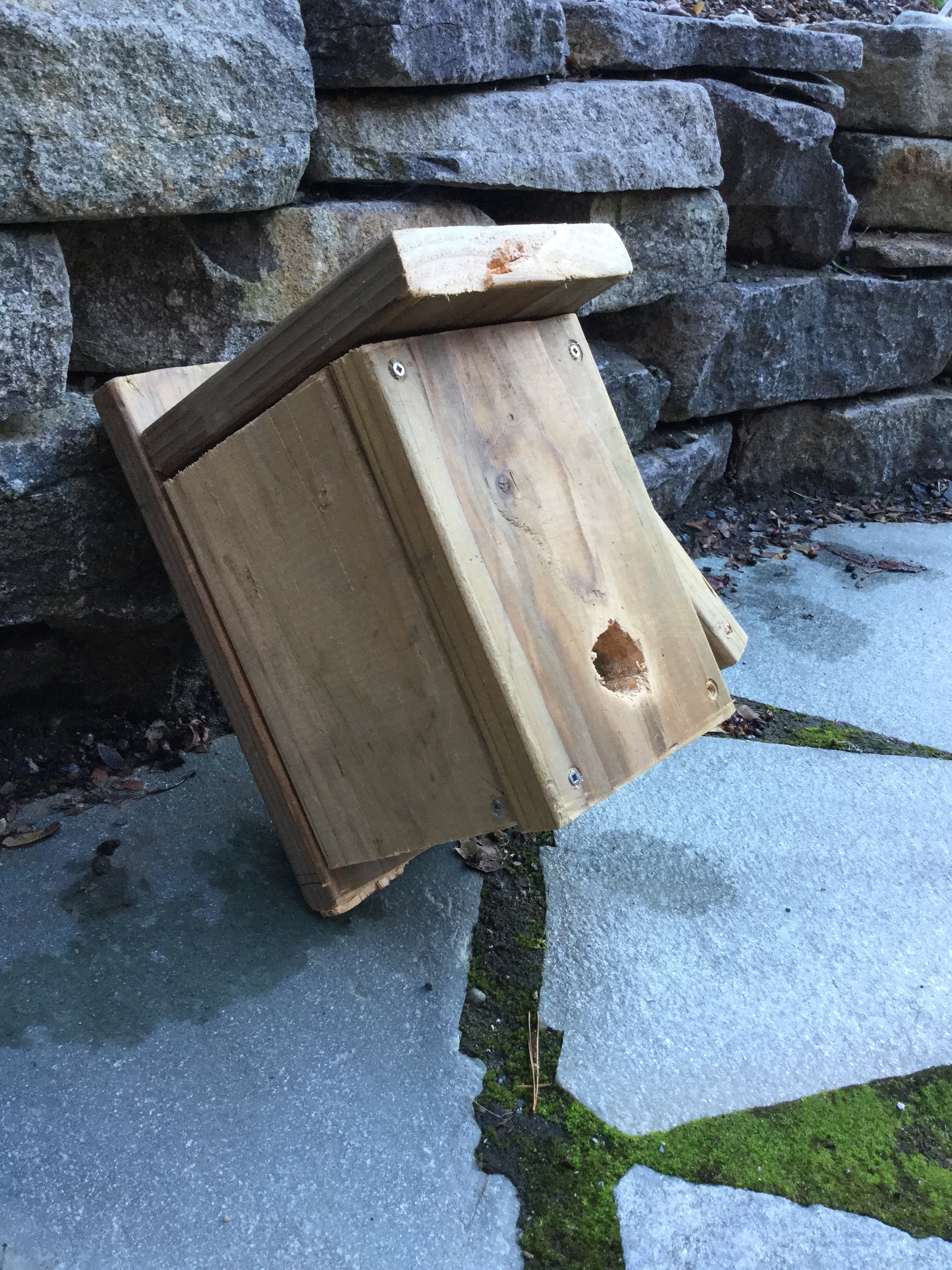
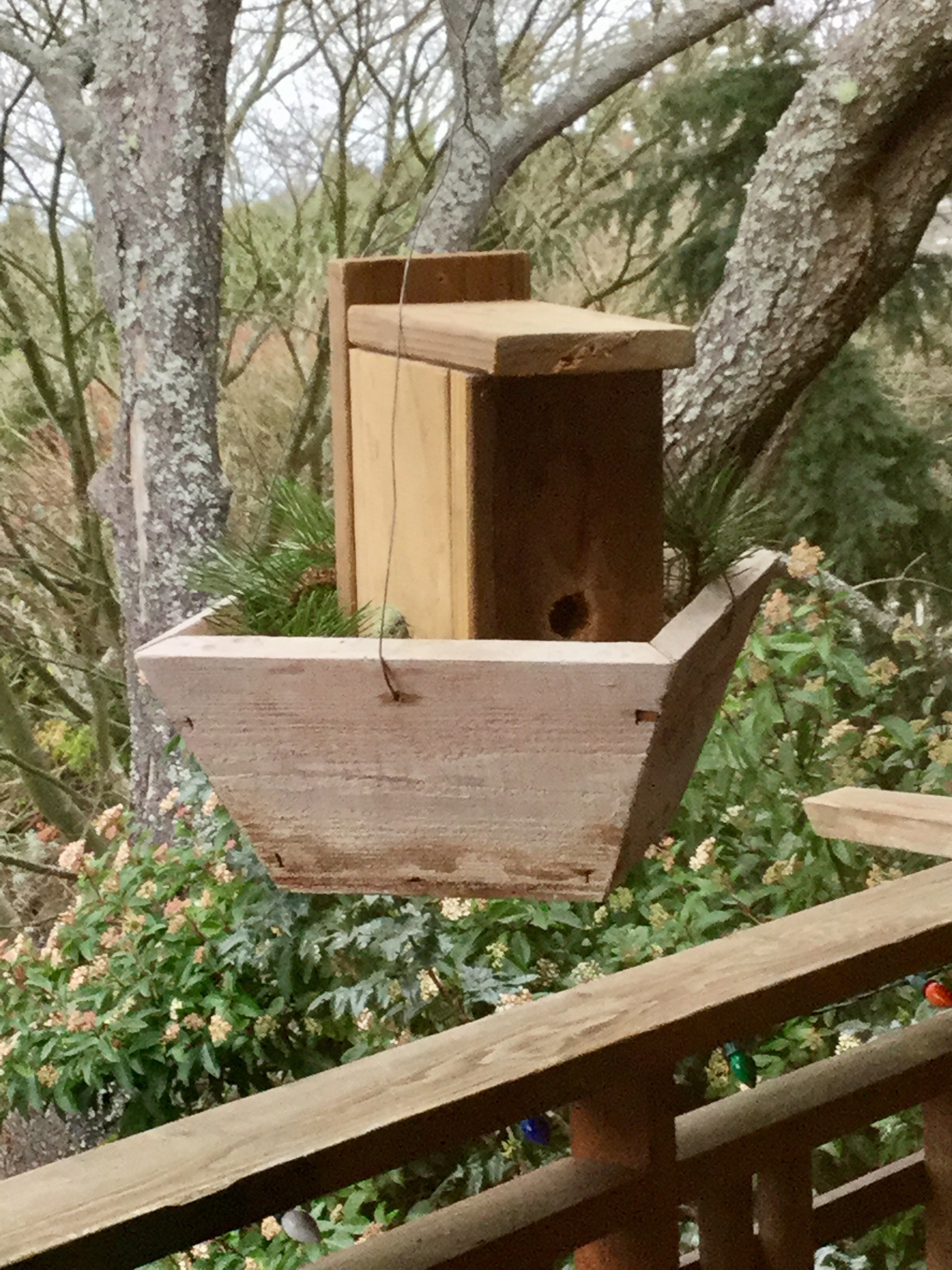
So I made a ROOSTING BOX for the wrens, wth provisions for possible chickadee use. The specs for these birds are 1 inch thick walls, 4 x 5 1/2 inches base by 8 inch height, with overhanging roof.  One of the side panels swings out a bit for cleaning, secured during use by birds. Right now, I left it unsecured so I can figure this out. Roosting and nesting needs are different, so there is a twice a year clean out and modification for nesting purposes.

For Roosting:

1.the hole for bird entry should be towards the bottom, so that the rising heat generated by the congregation of shivering birds doesn’t just go out a hole at the top. Some bird types can lose up to 10% of their weight overnight from keeping warm in very cold climates.

2. Some sites advise adding pegs/dowels for perching, but other sites say that wrens and chickdees don’t need perches and that they are detrimental by encouraging their competitors. The birds sleep on the floor, and on each other as they add up. Apparently the largest number of wrens observed coming out of a bird box was 31, presumably from a larger house than mine.

3. You can add wood shavings, grass, or other material, as long as it doesn’t risk obstructing the hole and trap birds.  Short yard pieces or animal hair and fur are recommended. There are some who convert bird feeders to nesting/roosting material dispensers, and in fact these are now available commercially.  I put short thin strips of old t shirt to just cover the botttom. 

4.The hole size of 1 inch will limit admission to wrens. A hole size of 1.125 inches will also allow chickadees, but not destructive house wrens, sparrows or other competitors. 

5.No perch on the outside either, to limit larger competitors. 

6. Wrens don’t mind a hanging house (hey, they made themselves at home at each of my three hanging baskets), but chickadees and other birds do.  I don’t know what it means if the house is hanging but very stationary. I ended up using a shallow old hanging basket which was empty except for some dirt to use as a hanging device, so the bird house is sitting in it.

For Nesting:  the hole should be towards the top, to allow the nest and eggs/young to be protected from predators, and it also allows better ventilation of heat during the warm months. This can be accomplished easily by removing the screws on the front panel and inverting the panel for the season during cleaning. Also add several floor drainaing holes and few top ventilation drill holes, all of which are covered over during the winter (done).

 I placed the box on top of the dirt and used the planter box as a device to hang up the Roosting Box in a stable protected environment. In fact, it is about 3 feet away from the northwest hanging basket, a site they chose on their own. The new box is hanging from a wooden attachment to the overhang, then two wire hanging parts that I hope will help keep the rats out. I won’t have any food there and they won’t nest there. So, wrens, it has been hanging there 36 hours, time to wake up! I know you are out there cuz I saw you….!.

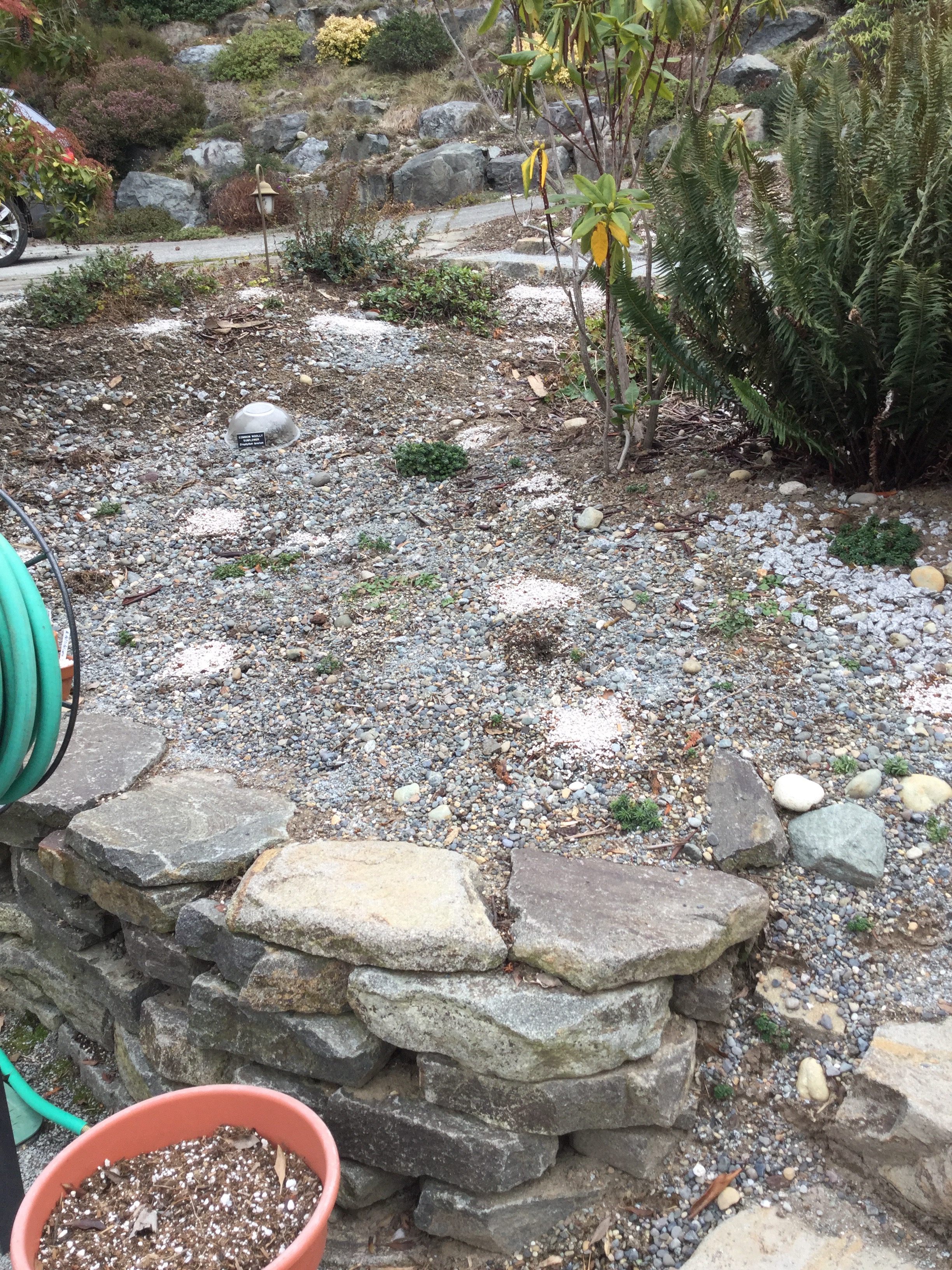
Plants poking up only include the usual, the light blue camas and the brodiaea. Few trilliums are also just visible, but they usually don’t do much for months. Lots and lots of patches of Pumice, which I placed on top of every small patch of seeds or bulbs that I put Everywhere:
Plants poking up only include the usual, the light blue camas and the brodiaea. Few trilliums are also just visible, but they usually don’t do much for months. Lots and lots of patches of Pumice, which I placed on top of every small patch of seeds or bulbs that I put Everywhere

 I also transplanted the old patch of Spotted Saxifrage, which has been moved several times. It is now one of the first plants put in the new front yard rock garden, trying to supply it with the right amount of sand/grit and soil, sun but not too much. It is a great plant but it got shaded out and overwhelmed by Twinflower Linnea, and there is only one other 2″ patch remaining in the back yard, and so this needs to work!

Fall into winter, almost in time.

It’s December 6 and there are Lots of greens still around, due to the combination of evergreen stuff (ferns, salal), green mosses and persistent herbaceous stuff like Vancouvaria. Most deciduous trees lost their leaves but the Rhodies down below still have their reddish green leaves. A few plants like the Red Pussytoes even trying to bloom.

Below, two plots of Rattlesnake Plantain starts from Lopez which are thriving at two different spots ( A third non Lopez one has come up from the dead from a few years back….I’d transplanted it as well as others to get it out of the dry and sun, and they had disappeared until this last year). They have spread from about three leaves/plants to about ten or so each.  I took the two plant starts, a little soil and the in situ moss from Lopez, too, which is like ours but a little brighter and should have the fungus the R.P. needs.

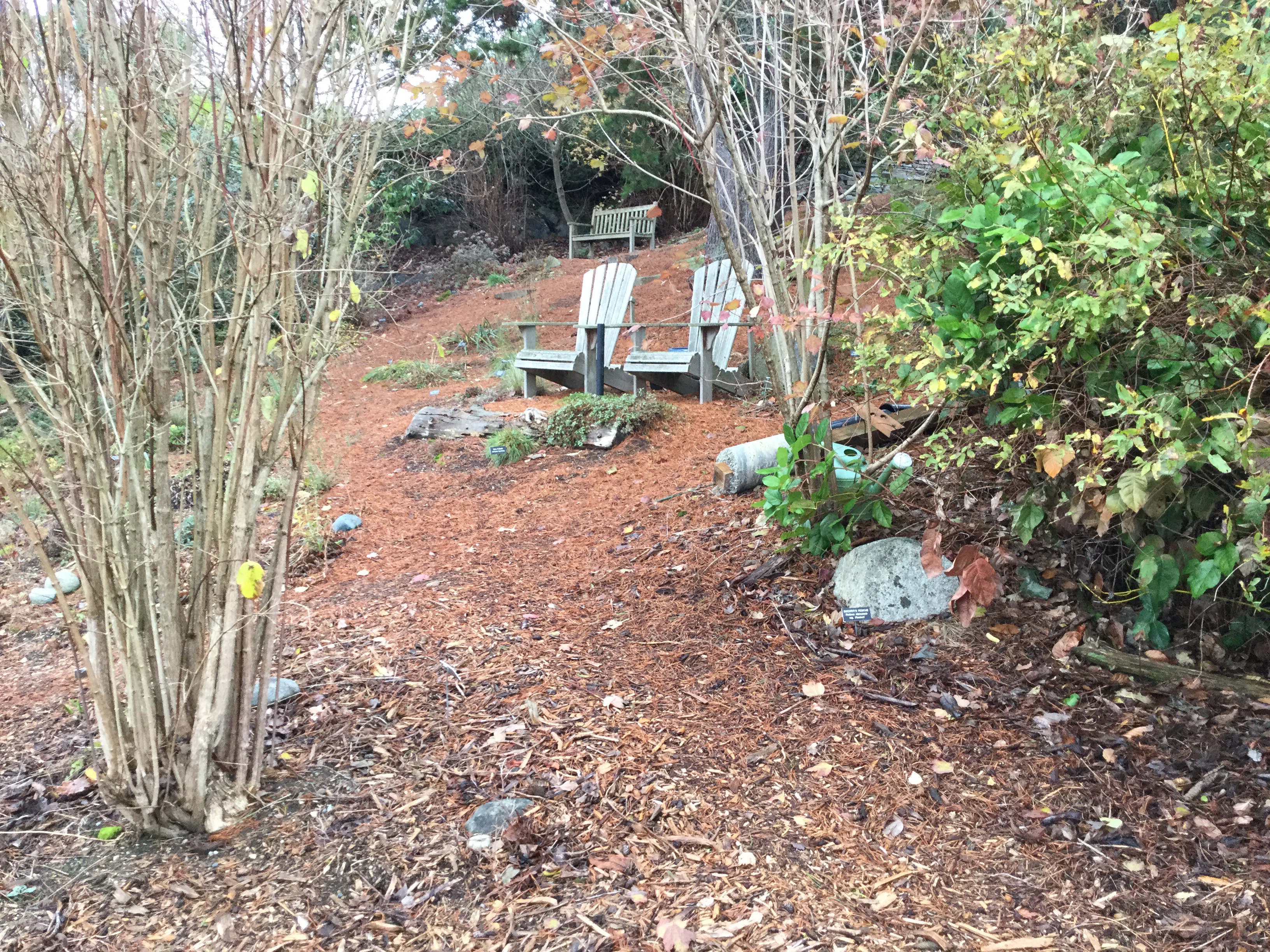
Lower back yard, pathways and places to sit. Though it is excellent screen in warmer months, some of the screen is deficient in the winter. I am still working on evergreen screen for the yard borders, but it’s getting petty good.


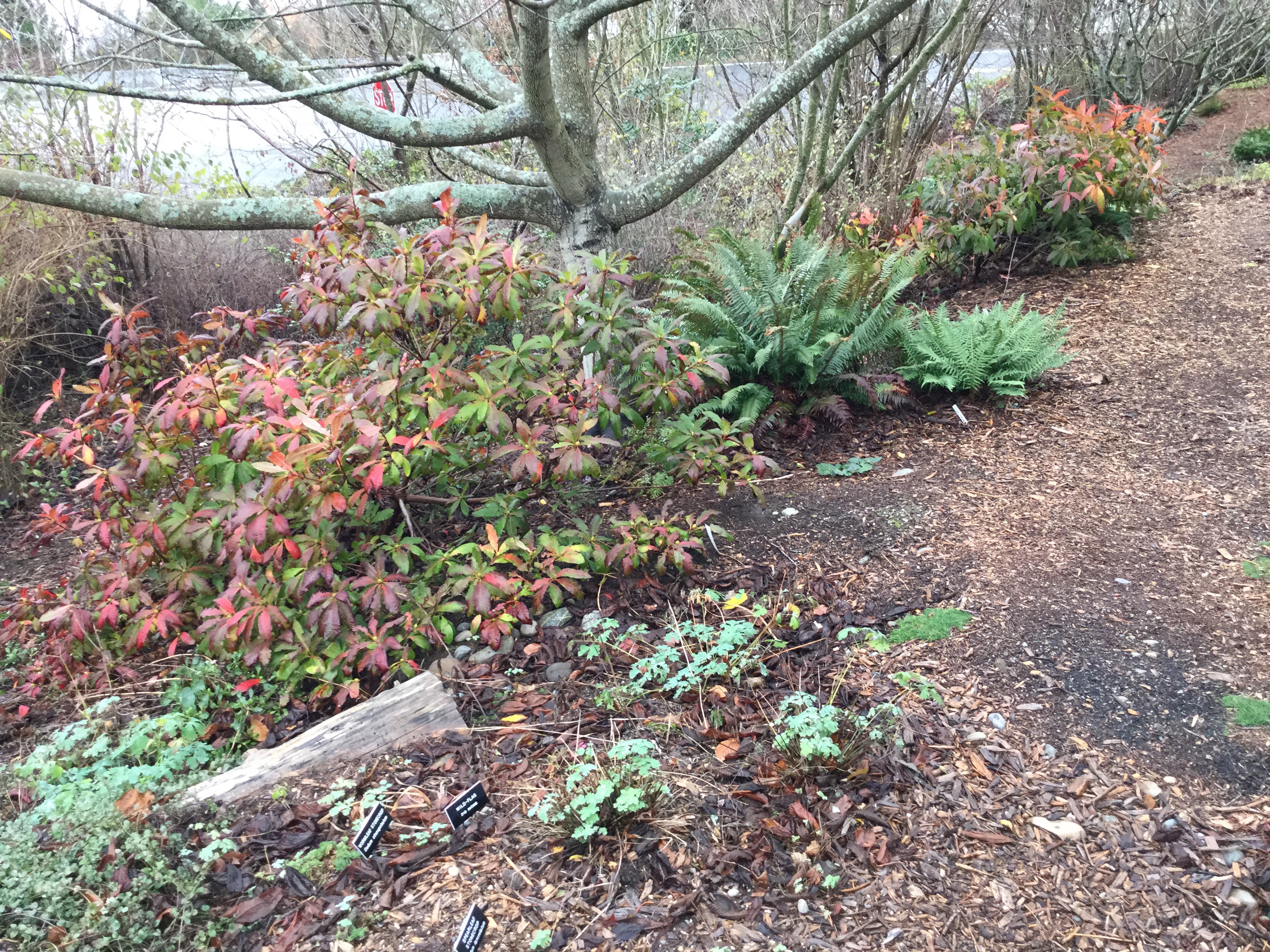
Deciduous Rhodies below, with their persistent leaves that turn reddish yellow in the winter.

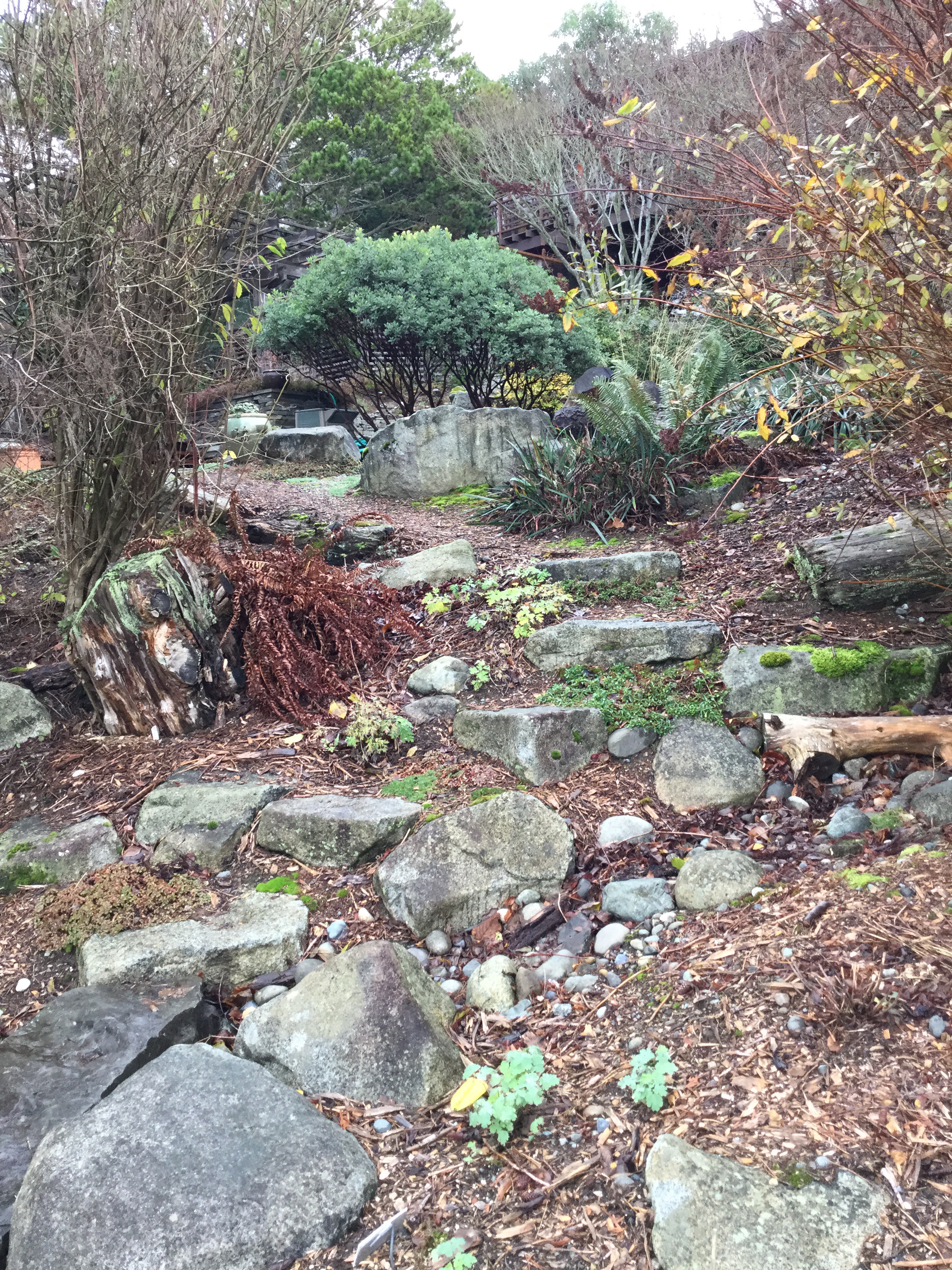
Below:The pathway up from the meadow to the pond, them looking back down to the lower yard from nearby. The cloche is on a few Desert Yellow Daisy starts from last summer.


The temps have stayed in the 50s-60s during the day and only to the 40s or higher at night. It just got down to 33 last night, with some frost on some of the ground and some ice in the pond, at least in front. I had covered three plants with glass ‘cloches’, but the rest and the seeds are on their own (of course I’ll protect anything that gminates in the winter).

My “special”seeds which rate being put in a pot: Eriogonum sphaerocephalum (Rock Buckwheat), Pink Fawn lily, Bear grass, Iris Chrysophylla, Indian Paintbrush (orange red), Desert Yellow Daisy, Woodland Pemstemon (notochelone nemerosa), Desert Parsley,Allium, Globemallow, Hookers onion, Silkflower, and Gaillardia.

First out

20131117-163339.jpg

Very first is western trillium, which shows up early fall. Now there are several other plants starting to break ground, like shooting stars: dodacatheon pulchellum and dodacatheon dentatum, Trillium chloropetulatum (fragrant), and a couple of rattlesnake plantains (though these are returning there are very few, small plants).

Collected Munro’s Globemallow seeds, looks like ~100 seeds or so. One of the two plants I had is not looking good after transplanting out of a container, so I’m back down to one. Last time I used the seeds, I got exactly one living plant from all of them. They need dry conditions and the containers aren’t ideal.

Almost all the leaves have fallen, so I did my yearly chores of cleaning out the stream and raking the steps. The chickadees seems to appreciate it, they were taking baths in the stream this afternoon.

20131117-164128.jpg

We finally did the annual cranberry harvest, from two of the three plantings (the newest didn’t produce any). Record haul, slightly over three gallons! We should be in honey-dried cranberries all year!….or at least until we finish them all.

20131123-121613.jpg

October 20 2012

20121023-203056.jpg

20121022-190907.jpg

Mallard ducks came back for the afternoon, two females and a male, hanging around the pond to feed. They’re on their way down south for the winter. They usually only come around for a couple of months in the spring, I haven’t seen them here in the fall. Incidentally we have just adopted about 20-30 new goldfish, but we can barely see a one of the fish. They are all hiding out, and the pond is now full after the rains. I guess the nice dry late summer is over!
Images from the yard, October 2012. The garden is sure growing up! Lots of foliage still around from our good leaf-growing weather we’ve had this past summer, though not as colorful as it could be. Still a little color in the yard and still a few flowers…

20121022-191025.jpg

20121022-191123.jpg

20121022-191216.jpg

20121022-191312.jpg

20121022-191521.jpg

20121022-191813.jpg

20121022-192035.jpg

20121022-192613.jpg

20121022-192757.jpg

20121022-192944.jpg

20121023-204049.jpg

July is like spring

Tiger lillies blooming, here’s some below with Brodiaea:

20110731-105232.jpg

Gaillardia, Brodiaea, Yellow wooly flower, bluebell and Penstemon richardsonii blooming. Lots of green leaves still, due to all the cool weather and summer rains.

The Rattlesnake plantain that I boke off (accidentally) and replanted is sending up a new leaf, as is the ‘mother’ plant, with several shoots. This appears to be a useful method of propagation, as the seeds didn’t come up.

Continue reading “July is like spring”

May 2011

False lily of the valley:

20110522-082122.jpg

Most deciduous trees and perennials have leafed out, and there are a lot of different greens, looking very lush in places. We have our privacy back in the back yard, and soon the front yard, too.

20110805-104826.jpg

20110805-105458.jpg
Green shady area next to pond. (^) The oxalis, vancouvaria, false solomon’s seal, false lily of the valley, trilliums and bleeding heart all duke it out here.

Continue reading “May 2011”

April fools

20110402-084828.jpg

Tons of Camas, Brodiaea, Chocolate lily, and 2-3 yr leopard lily. White fawn lily seedlings thriving, as are the Dodacatheon/ Shooting stars, Delphiniums, and Wild blue flax. Maybe Rainier or Lopez “penstemon “. Rainier “tufted hairy” seeds germinating, which is probably an Anenome.

Mr Squirrel is busy foraging, and screaming at us when we get too near. We’ve moved the logs hiding his cache of nuts and pinecones more than once this year – next year should be more stable for him/ her.

20110402-084107.jpg