Seed story, beginning of spring (march 26)

Seeds coming up now: Oregon geraniums, Desert Parsley and some Allium, and maybe Gaillardia in pots. Definitely some seedlings out in the yard, maybe gaillardia, Indian Paintbrush, and maybe Woodland Penstemon. Desert Parsley seeds germinate well but seem to be getting eaten out in the yard.

Bought 3 tall Red Ovalleaf huckleberry bushes (4 ft tall and narrow) and transplanted two smaller ones into the south west lower back yard, in an area cleared by removing a maple tree. It gets dappled and indirect sun, and the soil is better and moister than where the two i transplanted were. We have two thriving in a similar environment. Other understory plants put there, some  earlier and  some recently: several Wild Ginger txs, several bluebell rotundifolia txs, clusters of brodiaea, Fairy bells, Trillium Chloropetalum and Ovatum, Pink Fawn Lily, Kitten tails, Miterwort, Hookers Onion, Prunella, and Loganberry. 

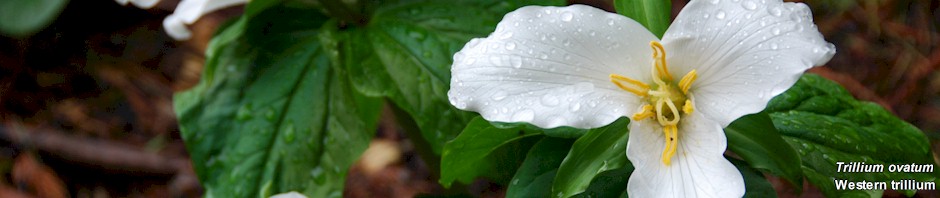
Transplanted about half the cluster of Trillium Ovatum in the lower back yard, which I had sown many years ago, maybe six. I transplanted ten bulbs with their three-leave tops into another area, to give the remaining ones a little more room. There are about ten or more left. There are more than germinated the first year or two, and they are of varying maturity. I think some of the seeds are latent or take longer to appear above ground. The cholorpetalum doesn’t seem to do that, I left the 8 or so plants alone.

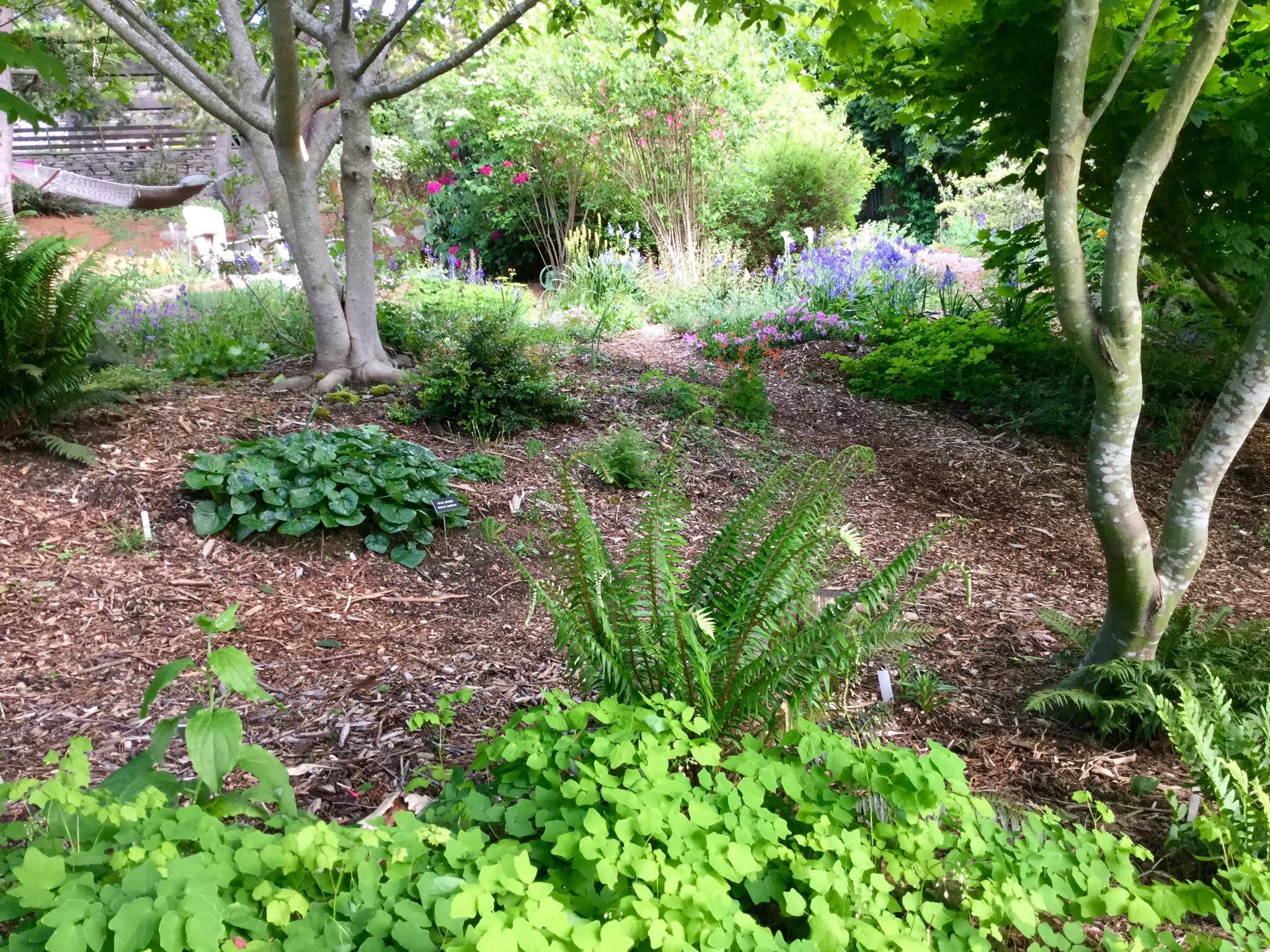
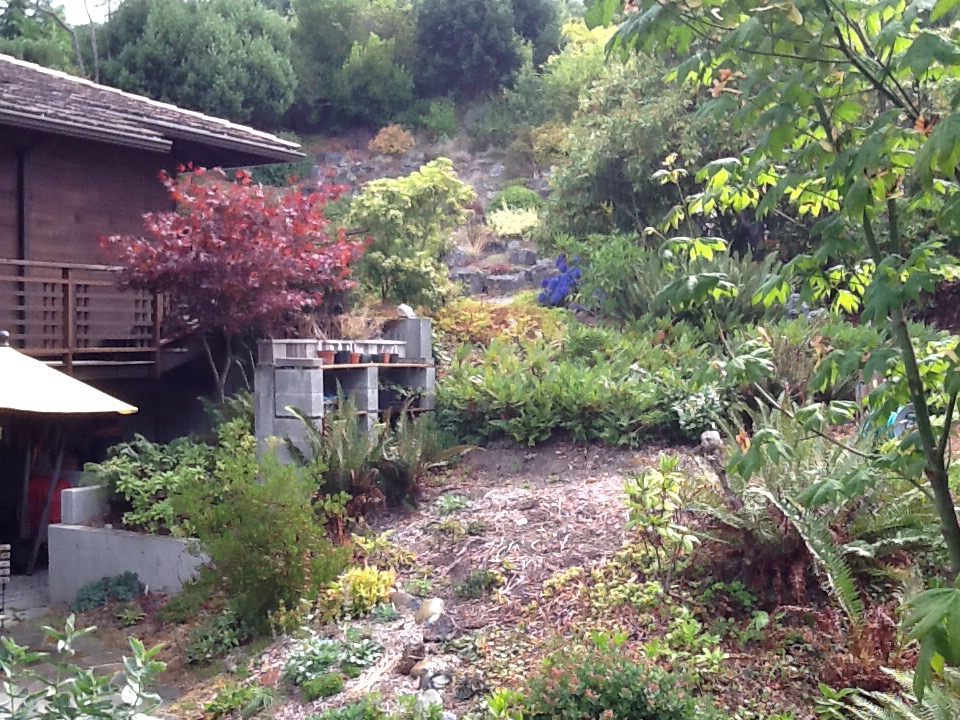
The lower back yard (west) is getting to be a GROTTO with FERNS (thriving licorice, leather leaf, sword and maiden hair) as well as TRILLIUM, HUCKLEBERRIES and the other ground covers like Wild Ginger. Turns out we don’t have very many pictures of this area, probably because it had never been particularly photogenic, it is a shady slower growing area and we’ve cleared the area relatively recently.  But now it is starting to fill in, and a rangy maple taken out (full disclosure, my fault, I kept it low for view), so here are the “before” pics: I may wait for a couple of months for the follow up “during” or “after” shots, as much of it is herbaceous, deciduous and/ or growing still!       

BEFORE PIX: circa 2013 or so    .
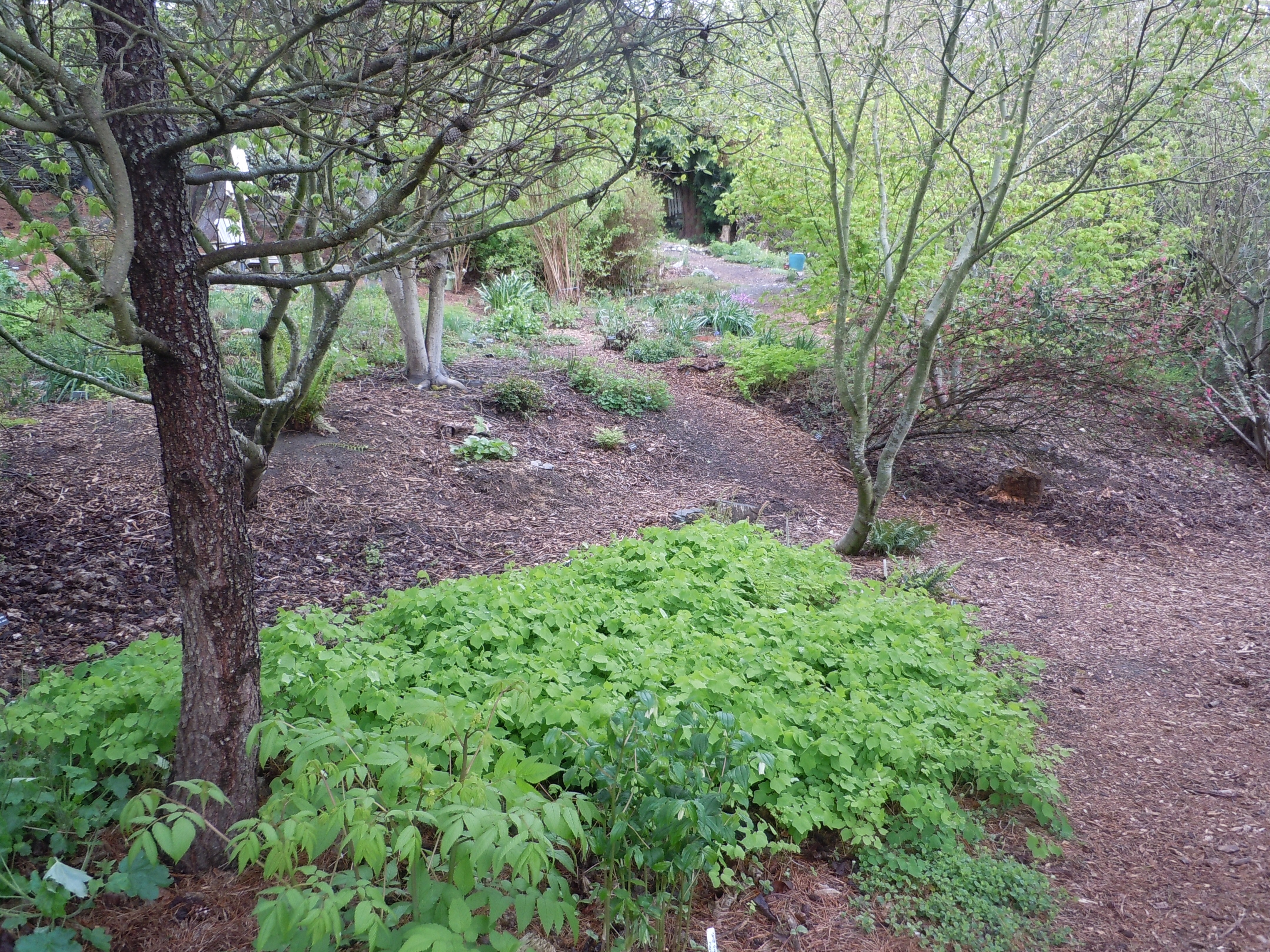
Looking south towards new grotto area (upper right in photo)
 Above: The foreground is Vancouvaria and Goats beard coming up…the ‘grotto’ area is in the background. The pic below is taken from the grotto area itself, looking back east.

Spring is here, or march madness (march 19)

What’s up this week? I FINALLY found a Trillium Chloropetalum var. Gigantum at Kruckenbergs garden, which is the one with fragrant deep red/brown and straight-edged trillium flowers instead off white ones (that we have about three of and some maturing seedlings of). I planted it near my maturing off white Chloropetalum and T. Ovatum seedlings in the back yard, that will form an interesting and big Trillium cluster, since the Ovatum flowers are bright white that transition to mauve,and the leaves are plain green heart shaped, and the cholorpetalum are heavily dappled and rounded. I also found a couple of new PINK  fawn lilies there, and planted those with some of my white and yellowish Fawn lily plants and with an off white trillium. Maturing bunch of pink Fawn lillies are planted  with some developing white ones – mix them up a bit for color

Leafy bracked aster is coming up, so far not ravaged by slugs or eaten by voles. In fact I haven’t seen slugs all winter

Chocolate lily up everywhere. I think there are a bunch of Indian Paintbrush (or something) coming up in one of the myriad piles of pumice that I left around the yard, to mark my sowed seeds……I wish I’d marked this one spot, but you know, you can’t have literally hundreds of white plastic markers sticking up all over the yard all winter and not let it get to you! I have to leave these seedlings alone, I’ve been known to pull up I. P. Seedlings by mistake. There are a bunch of bulbs seeds of some kind coming up, either blue or white brodiaea. Desert Parsley (yellow) and Oregon Geranium seeds are all opening up. Maybe a few ( or if they are real, a lot) Indian paintbrush seedlings in the pot. I transplanted three small Yellow Desert Daisy seedlings into the newer ROCK GARDEN INNIS ARDEN, which is to say our new rock garden:

Still march, more updates

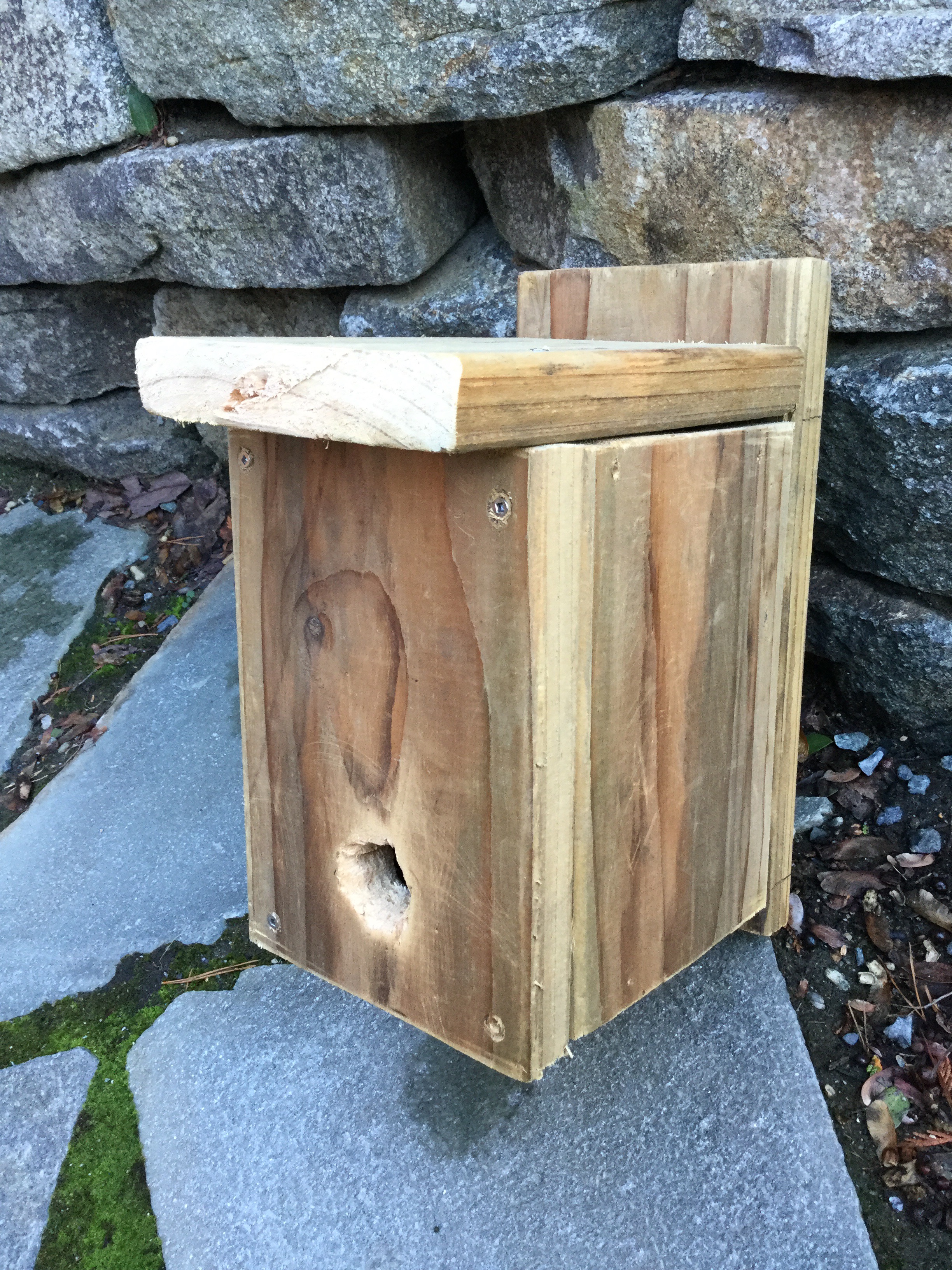
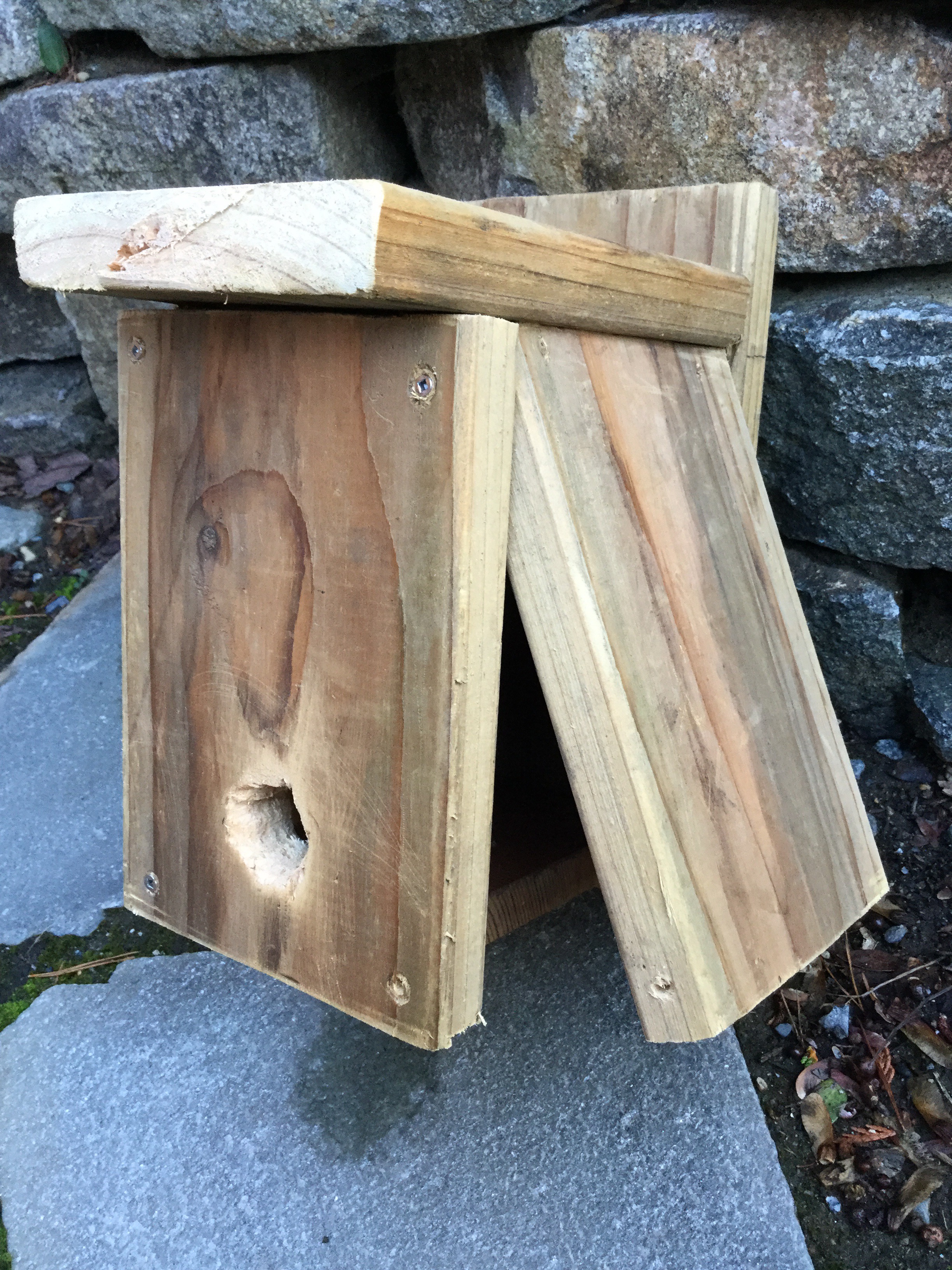
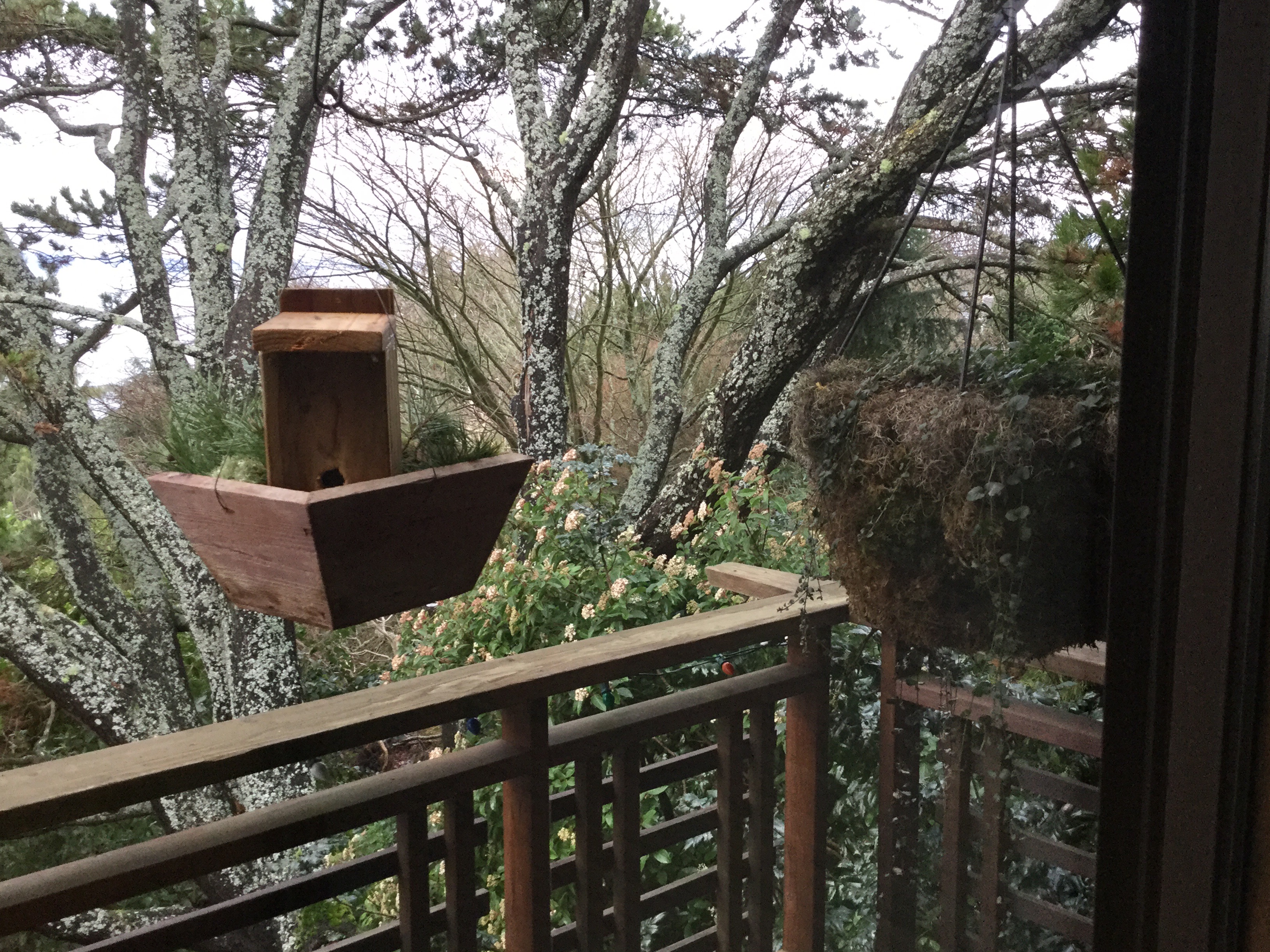
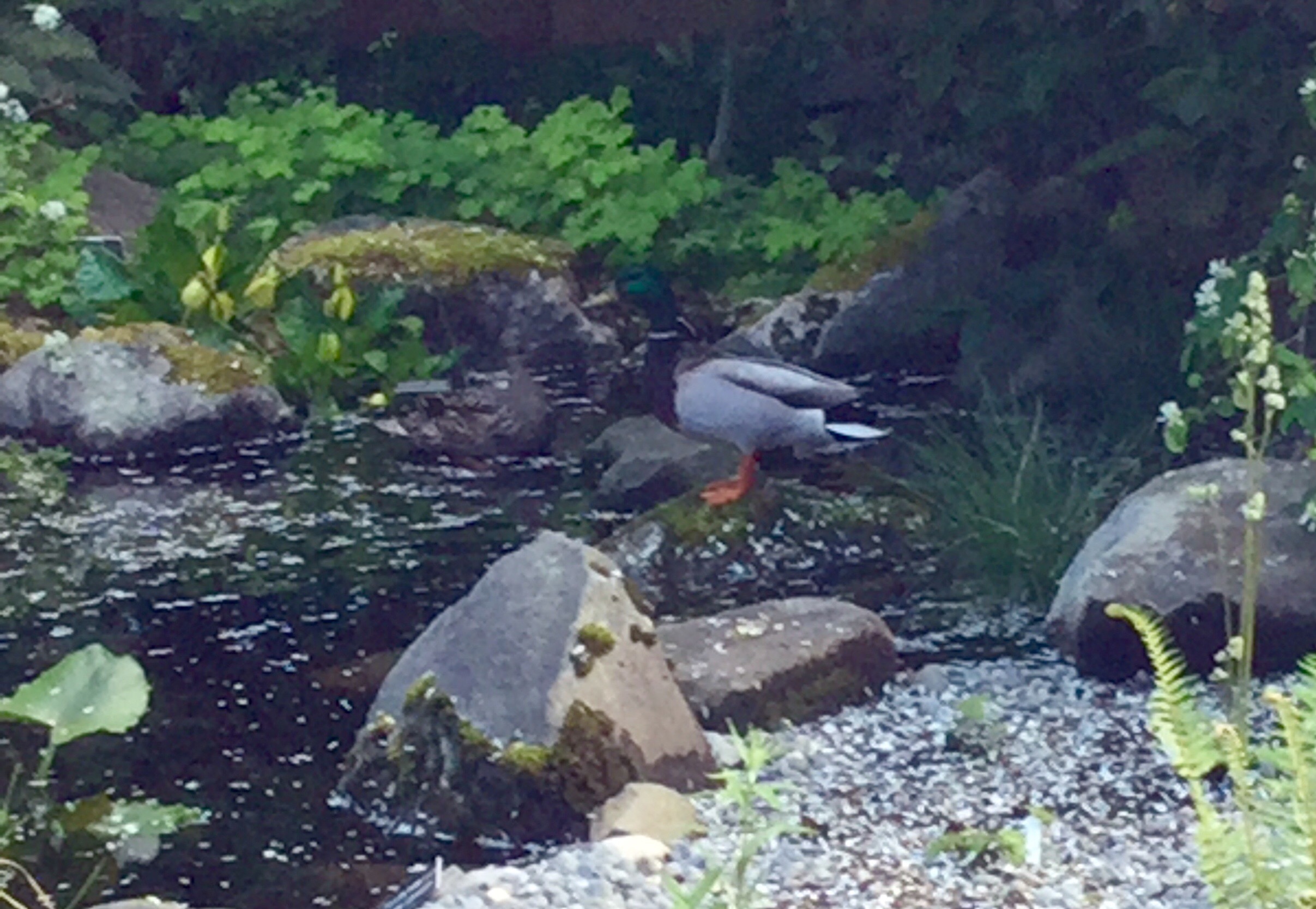
Rufus hummingbirds back, the yard is noisier than ever with those things now. Lots of ducks coming and going in the pond, often four but mostly two now. They don’t seem as skittish this last week, the female walked and rested around the yard, neither flew away when I just walked by. Still no wrens trying out my nesting box – I converted the ‘roosting box’ a couple of weeks ago by inverting the front, so the hole is towards the top. That way there is ventilation (hole in bottom during winter to keep heat in) and some protection for the babies. 

The nesting box is hanging by itself now (not sitting in planter), but is in the same spot. Hoping the wrens are comfortable enough to use it here. If not, will move it for the second brood.

Fawn lillies coming up, including the pink, white and off white! Some Leopard lillies and chocolate lillies just poking up. Oh, and my trilliums from seed…..in the back yard are the oldest ones, I can’t remember if they are arlund 4 or 5 years old now, but there are about 6 of them and they are all going to have the three leaves of a more mature seedling. Any flowers??? Can’t tell yet. But the oldest group also looks like they areTRILLIUM CHOLOROPETALUM (Giant Trillium).  I’ll have to look that up and see whether I recorded the seed sowing or not. Those trilliums are cool, they have blotchy purple spots on the leaves….the flowers are fragrant and straighter in appearance.

OK,  I just looked it all up…..According to my site entries, I apparently sowed some Trillium Chloropetalum seeds in the late summer 2010! That would mean these plants will be 7 years old and should flower this year, even if small.  But, is the first winter considered the “first year”, or does the counting start the next spring? I kind of thought they may be only 5 or 6 years old, judging from how many times I remember watching for them to come up…but how time flies!  In 2012, I even mentioned that I planted out the T.Chloroptelaum ‘bulbs’ along with the mention of the other propagated seedlings (trilliums take two years to ‘germinate’). Anyway, I also wrote that I planted Trillium Ovatum seeds outside and in pots in 2011, so those would be 6 years old now (and POSSIBLY flower), but the plants coming up don’t look that mature. How is it possible to lose track of plants that grow so slowly??! 

March madness – duck saga

I happened upon a BUNCH of ducks in our pond yesterday ….a raft or team of ducks, apparently. They are only called a flock while in flight. I didn’t even see them and FOUR of them flew away. As I approached more, TWO MORE flew away. That makes SIX DUCKS in the pond at the same time, not fighting. Today I scared away four ducks, two at a time. And by scare away I mean simply walk down the steps….these are real ‘fraidy ducks. I think they have become that way because of the growth of the shrubs around the pond…their potential emergency exit isn’t what it used to be. I used to be careful not to get too close but so far this year I couldn’t even walk into the yard without scaring them away. Too bad for them!

Trillium seedlings starting to come up!  I think these are from sowings about 4-6 years ago  – the one patch showing up has seedlings from two different years. One of this patch had three leaves last year, and at least three of them now look like they are fairly mature looking as they poke up. They typically take 7 years to flower from seed, but can be as soon as 5 depending on the conditions. Exposing seeds to warm conditions early can cause this, maybe it happened naturally. Last year there only a few trillium flowers, maybe they didn’t  like those early warm springs we’ve had, so maybe not so good for the flowering as it is for forcing the seedling. And almost no seeds, only the Trillium Chloropetalum produced seeds last year, which will not appear until next year (if they do). Trilliums take two years to appear above ground.

February news

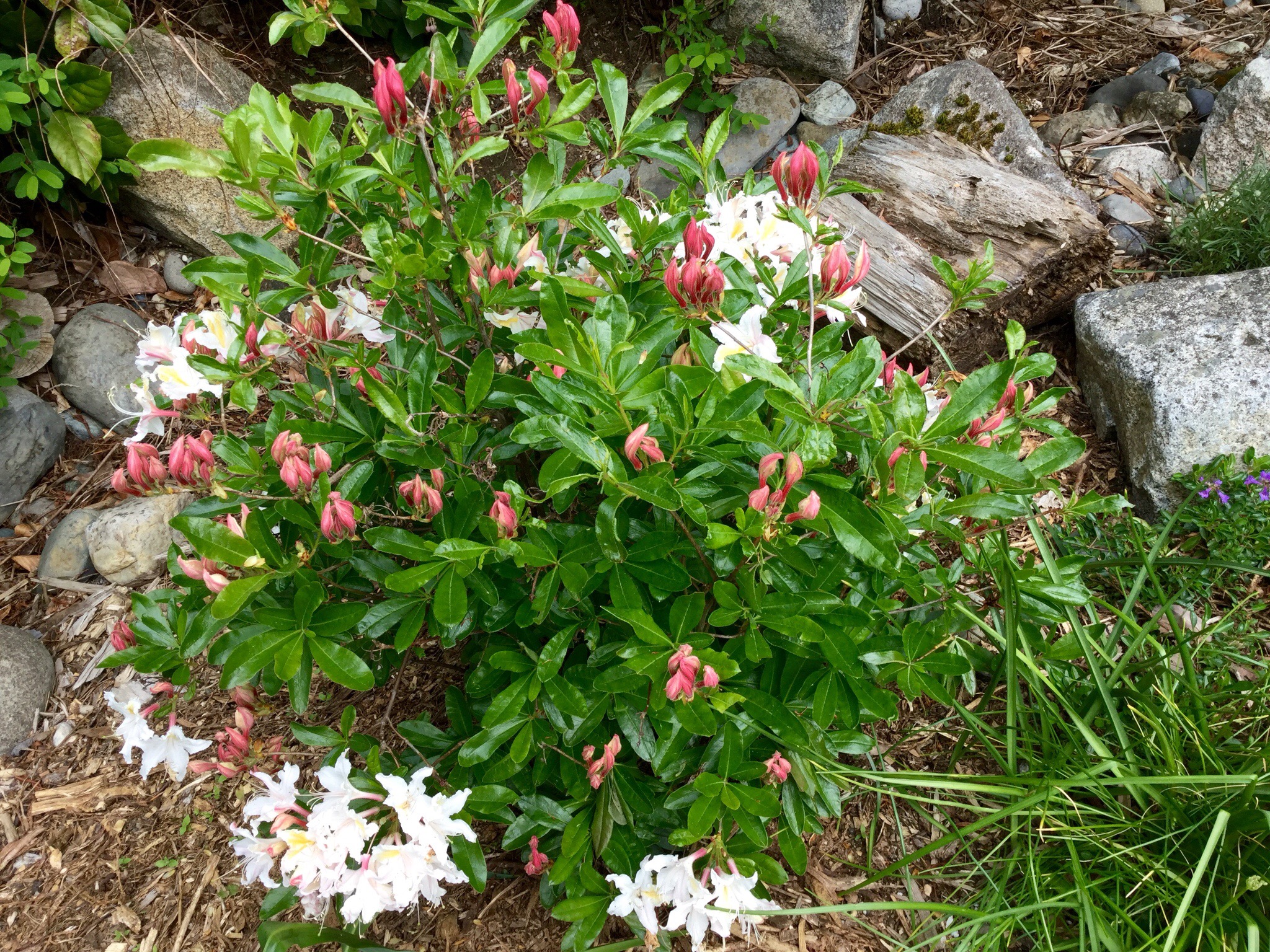
Last week of January the White Tritellia and  Delphinium came out (Harvest brodiaeas and camass previously). This past  week it was the beginnings of the Shooting star,  Ookow, and Brodiaea Congesta showing up.  Budding starting on the red flowering currents and of course the Indian Plums, which should actually bloom soon. It looks like the two layerings of Deciduous Rhodies in the front have made it through the winter and will produce small bushes on either side of the gravel path ( update 10/17, the dominant one is doing great with mult. New branches the one with tenuous roots did OK for a while and then died out in the heat. These are pretty peach colored flowers which are scented.

Front yard landscaping project …..

WordPress acting up FOR MANY MONTHS by not saving posts, etc. Multiple false starts with pix and everything, and something would then happen to cause an error. Dave had to change the server back to WordPress, which gives up the plant directory links and stuff, but at least it will keep the posts.

Lots of stuff going on. Continue reading “Front yard landscaping project …..”

New Year’s news

It’s January and the relative warmth continues. It’s been in the 50s /40s for a long time with a brief spell of 30s. Coming up a little early also are the shooting stars, which appeared a few weeks ago. The Ookow/Brodiaea Congesta is sprouting up, as are the white Tritellias now scattered all over the back yard, white  Camas (2 light blue ones already coming up, we’ll see if they decide to bloom this year).  There may be one group of Hookers Onion coming up. A small plant spike near it has always come up but has never turned into anything. Maybe it will first not get eaten by slugs and then actually bloom this year, and I can then decide if it is worth protecting. I put some slug bait around those two and the nascent daisy.
The greenery of the yard is somewhat maintained through January, by virtue of the increasing size and extent of the evergreen, though there is a ways to go: ferns, evergreen Penstemons, Heucheras, Silal, irises, evergreen ground covers like cranberry, Yerba Buena, and Twinflower.

 
The Rattlesnake Plantain looks good, it is growing new leaves at the two sites we transplanted it in the lower back yard wooded area (from Lopez Island). One other old rattlesnake plantain plant appears to have come back from the dead. I’d transplanted it out of the sun at lest several years ago -in an unlikely place for it, to be honest. It surprised me by coming back up last fall. Maybe it was there but invisible…..it is less  dramatic in the rattlesnake pattern but it is one. There is a nearby plant that I’m not sure of, it superficially looks like it, though I would not likely have planted anything there as it is in the walkway. That one is under surveillance. A third one nearby is likely a weed, that one will likely get booted soon.

We took out the now monstrous Garrya tassel bush from the back yard near the deck, which was crowding out all the adjacent plants, and causing the Hairy Manzanita to be deformed. It was over 8 feet tall and spread widely. It also was stunting the adjacent Pink Honeysuckle, Penstemon and deciduous Rhodie- it had to go. It was too big to transplant. I hacked all the limbs off, and Dave dug it out. Much more sun for all those plants near the hot tub deck and steps. We planted a new Garrya Fremontii which is a smaller shrub and put it where it has room to grow for screen. Here’s a pic of the tassels. Pretty tree but it IS a monster!  


Late fall news

Some early shooting star coming up as well as the Brodiaeas, mostly the blue harvest Brodiaea. Some seeds germinating at the west yard that I think are Gillia, and I out a glass bowl cloche over them. They seem to like that . Also put one over some of the short purple asters and an old, non thriving stem of Wild ginger that I thought was dead a long time ago, it has one leaf and some shoots to protect from the slugs (fast forward two years to 2017, it’s a big healthy plant now, go figure).

Two new Rattlesnake Plantains I squirreled from Lopez island, along with their dirt and moss. They seem OK so far with some new growth. Also, a couple of plugs of Rattlesnake plantain popped up near a small Red Flowering Current, I must have planted them there long ago. So that’s three sites. Previous attempts have all failed, I think for versus reasons, sometimes it was the tentative health of the bought plants.
Seeds sewn this fall, in the middle of November, were about eight or so plants that I collected seeds from that I don’t have that many of, or at least want to increase:

In planter pots: Pink Fawn Lily, Oregon Fawn Lily (off white), Wild Blue Flax (two pots), Hookers Onion, Yellow Avalanche Lily (fawn lily), Common (small) Camas,

In the yard, around other plants:Camas: white, small purple, tall blue,  white and magenta Shooting stars,  trillium (very few this year), Brodiaeas, Lamium /Yellow Desert Parsley, Penstemons, Ookow.

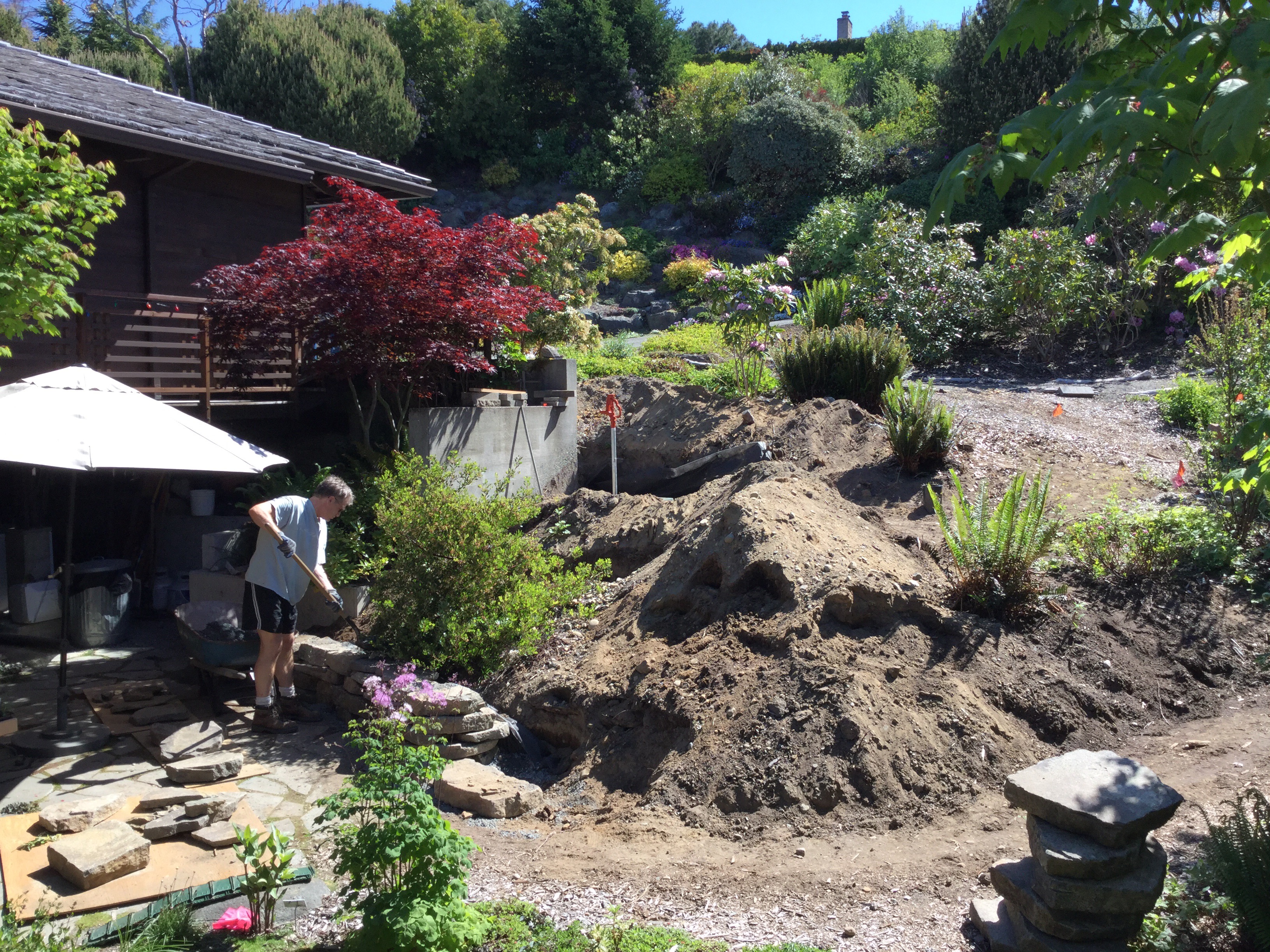
We are going to have a minor landscaping project done in the front yard, which has never been addressed and is now quite an eyesore. In waiting for a particular landscaper, I ended up doing some of the tear out work, which should save us some money, anyway! I tore out the mahonia patch that was taking over the front yard.  For this project, I am going to have large stone steps added from our patio up to the walkway, possibly in two spots. That is the route we usually take on foot anyway, and it will clean up the area for a true rock garden. Just hope the moles and voles aren’t able to mess with them too much.

Below, pix of the before and after (added pic of fall 2016):

Fall is now here

Because daylight savings was over mid November.,Interestingly, as difficult as the summer was on our plants what with the heat and dry, the September rains and the heat finally breaking caused a lot of greenery to develop, even some flowerings in October and now November! The plants that bounce back when it rains like Bleeding Heart, Bluebells, pussytoes, columbines, Penstemons,Heucheras  Lewesias,nodding onion, boykinias and trifoliate foamflowers all came back and are still quite prominent despite the date, due to the persistent mild weather in the 50s and 60s. Fortunately the Globemallow (orange flowers) is doing great this year, it must have liked the sun and heat.  It used to get rust on the leaves and fail when it was in planters. Also liking dry sun without fading first: Beargrass, Wild Blue Flax, Monardella Ordorissima, Gilia (although they don’t much like the pine needles where they are), all the Buckwheats, Yerba Buena, Sea Thrift, and Asters.

 There are other plants that are still flowering, even in November. They include pussytoes, though the pic above is not from now-they are still in the bud stage right now. But Deciduous Rhodies, Penstemon Tolmei, Lewisia Columbiana are actually in bloom. The hummingbirds go after the strawberry tree  buds and our feeder, of course. 

  Brodiaea is coming up at multiple places, as of the LAST WEEK OF OCTOBER! This pic is from last year’s Brodiaea experiment, but there are several sites up this year, too.

Fall news

Oh good, another couple of WordPress updates!

I’m sure this will all run together as one paragraph,  even though that is never how I create the documents…..instead relying on lots of  dots.

This summer was very unusual, and pretty hard on the plant life around here. 80’s and 90′ for weeks at a time, and no rain from June 1 to around  end of August. It wasn’t until the temps dropped back down into the 70’s that any of the plants came back to life. Even the mature Rhodies looked wilted and near death while it was still hot, despite  my providing some sprinkler assistance to some sites. But because we don’t have humidity to speak of, which also goes along with no rain, it was pretty pleasant for humans, especially into the evenings. We are used to it getting chillier at night, but we didn’t have to bundle up at night this summer. If we’d had a little more rain, some of the plants wouldn’t have been so stressed, and some might not have died.

BUT, the real stars  of “drought resistant” gardens here in the Pacific Northwest, meaning they not only survived but they looked OK   Delphoidea/Arrowleaf, Monardella odorissima, all the buckwheat species including ground covers and shrubs, Penstemons Richardsonii and Tolmei, Beargrass, Desert Parsley, Indian paintbrush (castilleja), many heuchera, Globemallow, the two pussytoes, and of course the sedums and all the spring emerging plants that are not subject to the drought because they die back in the summer anyway (bulbs, irises,  Columbines).  Some plants did OK if they were not in the sun, but there were literally sunscorched areas of otherwise alive plants where the Suns Rays were strongest, especially afternoon light (why did it capitalize “Suns” on me, twice now? This must be part of the upgrade).

I have found a new ‘feature’ fatal flaw in this version of WordPress. You may not appreciate it because this is a static document, but there is a huge lag time for typing the keystrokes and seeing the words being typed out, very frustrating. Guess I’ll wait a while till they fix this bug to come back. Bye bye!